
Introduction
Many bloggers struggle with a common problem: their blog gets content published, but income never follows. They apply for AdSense, get rejected, or earn very little despite consistent effort.
This is where understanding how content marketing helps you monetize blogs with AdSense becomes essential. Content marketing is not about writing more—it’s about writing the right content that Google trusts, users engage with, and AdSense supports.
What Is Content Marketing for Blog Monetization?
Content marketing for blog monetization is the strategic creation of helpful, search-focused, and audience-driven content that attracts organic traffic and earns revenue through platforms like Google AdSense.
It focuses on value, consistency, and trust—rather than shortcuts or promotional tactics.
Why Content Marketing Matters Today
Google’s algorithms and AdSense policies now prioritize helpful, people-first content. Blogs that publish thin, copied, or overly promotional articles rarely succeed.
Content marketing matters because it:
- Builds long-term organic traffic
- Improves user engagement and dwell time
- Increases AdSense approval chances
- Supports sustainable, policy-safe monetization
Understanding how content marketing helps you monetize blogs with AdSense is especially important in 2026, as competition and AI-generated content increase.
How Content Marketing Helps You Monetize Blogs with AdSense

Here is a clear, step-by-step explanation:
- Attracts Search-Intent Traffic
SEO-optimized content brings users who are actively searching for answers, increasing ad visibility. - Improves User Engagement Signals
Helpful content increases time on page and page views—signals Google values. - Builds Topical Authority
Publishing related articles around one theme improves rankings and trust. - Supports AdSense Policy Compliance
Educational, original content aligns with AdSense quality guidelines. - Creates Multiple Monetization Opportunities
One strong article can earn via ads, affiliates, and internal links.
This is exactly how content marketing helps you monetize blogs with AdSense in a safe and scalable way.
Real-World Use Cases
Example 1: Educational Blog
A blog publishing in-depth guides on blogging, SEO, or writing attracts consistent traffic and earns steady AdSense revenue without aggressive ads.
Example 2: Niche Content Website
A niche blog using content marketing strategy for blogs (topic clusters + FAQs) improves rankings and ad impressions.
Example 3: Personal Brand Blog
Creators sharing experience-based content see higher trust, repeat visitors, and better ad performance.
Benefits of Content Marketing for AdSense Monetization
- Builds organic, free traffic
- Increases AdSense approval success
- Improves CTR and RPM naturally
- Works well with SEO content for AdSense
- Creates long-term passive income potential
- Keeps monetization policy-safe
These benefits explain why content marketing for bloggers remains one of the most reliable monetization approaches.
Challenges & Limitations
To stay honest and AdSense-safe, it’s important to understand the limitations:
- Results take time (not instant income)
- Requires consistency and planning
- Needs basic SEO understanding
- Low-quality or copied content fails
- Over-optimization can harm trust
Balanced expectations are crucial when learning how content marketing helps you monetize blogs with AdSense.
Best Practices & Tips (Actionable)
- Write problem-solving, informational content
- Target long-tail, low-competition keywords
- Use clear headings and simple language
- Add FAQs and internal links
- Avoid clickbait or misleading claims
- Focus on depth, not quantity
These AdSense monetization tips align with Google’s Helpful Content System.
(FAQs) for How Content Marketing Helps You Monetize Blogs with AdSense
1. How does content marketing help with AdSense approval?
Content marketing focuses on original, helpful, and user-first content. This aligns with AdSense quality guidelines, improving approval chances by demonstrating value, trustworthiness, and consistency across your blog.
2. How content marketing helps you monetize blogs with AdSense long term?
By attracting organic traffic, improving engagement, and building authority, content marketing creates sustainable ad revenue without violating policies or relying on paid traffic.
3. How much content is needed before applying for AdSense?
There is no fixed number, but most successful blogs have 20–30 high-quality, well-structured articles that clearly serve a purpose and audience.
4. Is SEO necessary for AdSense monetization?
Yes. SEO content for AdSense ensures your articles are discoverable, indexed, and ranked—bringing the traffic required for consistent ad impressions and clicks.
5. Can new bloggers earn with AdSense using content marketing?
Yes, beginners can succeed by focusing on informational content, long-tail keywords, and consistent publishing instead of shortcuts or aggressive monetization.
6. What type of content performs best for AdSense?
Evergreen guides, how-to articles, FAQs, and educational posts perform best because they attract steady traffic and keep users engaged longer.
7. How content marketing helps you monetize blogs with AdSense faster than random blogging?
Content marketing helps you monetize blogs with AdSense faster because it focuses on search intent, structured topics, and helpful information. Instead of publishing random posts, a strategy-driven approach attracts consistent organic traffic, improves user engagement, and increases ad impressions—key factors for sustainable AdSense earnings.
8. Is content marketing necessary to earn consistently from AdSense?
Yes, content marketing is necessary for consistent AdSense income. Without a content marketing approach, traffic remains unstable. When you understand how content marketing helps you monetize blogs with AdSense, you create evergreen, SEO-optimized content that continues to attract visitors and generate ad revenue over time.
9. How content marketing helps you monetize blogs with AdSense without violating Google policies?
Content marketing helps you monetize blogs with AdSense by focusing on educational, original, and user-first content. When blogs avoid misleading claims, keyword stuffing, and aggressive monetization, they align with Google’s Helpful Content and AdSense policies—resulting in better approval chances and long-term, policy-safe revenue.
Conclusion
Understanding how content marketing helps you monetize blogs with AdSense is not about tricks—it’s about trust, value, and consistency. When you focus on helping users, Google rewards you with visibility, and AdSense rewards you with monetization opportunities.
Content marketing remains one of the safest, most reliable, and future-proof ways to build blog income in 2026—especially when done with integrity and SEO best practices.
Author Bio
Dr. Rekha Khandelwal is a content strategist, academic writer, and AI-enabled SEO expert with experience in content marketing, digital publishing, and research-driven writing. She helps writers and businesses create Google-friendly, AdSense-safe content that builds authority, traffic, and long-term value.
She is the founder of AspirixWriters, where she shares practical insights on content writing, SEO, AI tools, and ethical digital growth.
References
- Google AdSense Program Policies – https://support.google.com/adsense
- Google Search Central (SEO Guidelines) – https://developers.google.com/search
- Stanford University – Web Content Quality Research – https://stanford.edu
- Microsoft Learn – Content & Search Experience – https://learn.microsoft.com
- UNESCO – Digital Content & Trust – https://www.unesco.org
Must read
Content Marketing Strategy That Ranks on Google (Complete Guide)
How to Build an Effective Personal Brand: A Complete Guide for Writers
How to Pitch Articles to Blogs and Magazines: A Complete Guide for Write
- Academic Writing
- Editing & Proofreading
- SME Writing Services
- SEO Blogwriting Services
- Creative & Ghostwriting
- Academic Writing
- AI Ethics & Future
- AI in Academic Research
- AI in Business & Marketing
- AI in Content Creation
- AI in Design & Development
- AI in Education/Teaching
- AI in Research
- AI Tools & Review
- Indian Laws
- Motivation
- SEO & Digital Marketing
- Writing & Content Creation

Content Marketing Strategy That Ranks on Google (Complete Guide)
How to Build a Content Marketing Strategy That Ranks on Google Many websites publish content…
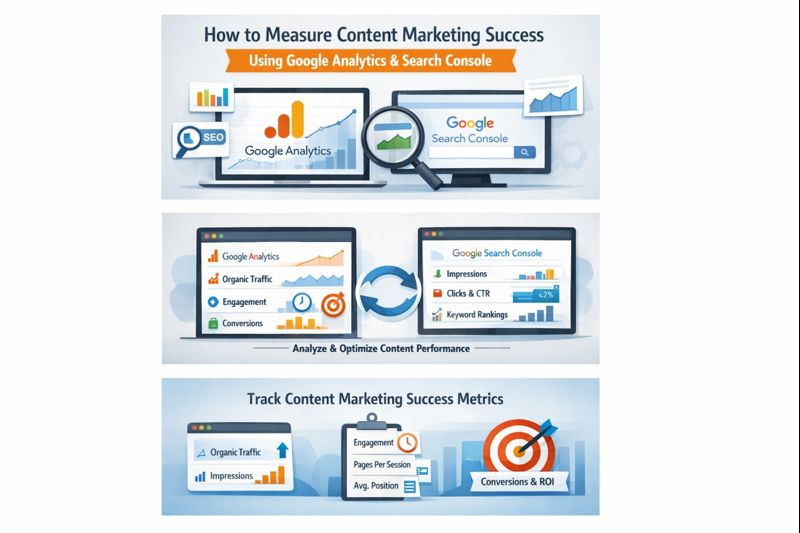
Content Marketing Success Using Google Analytics & Search Console
Introduction Creating content is only half the work. Without measurement, even high-quality content becomes guesswork….
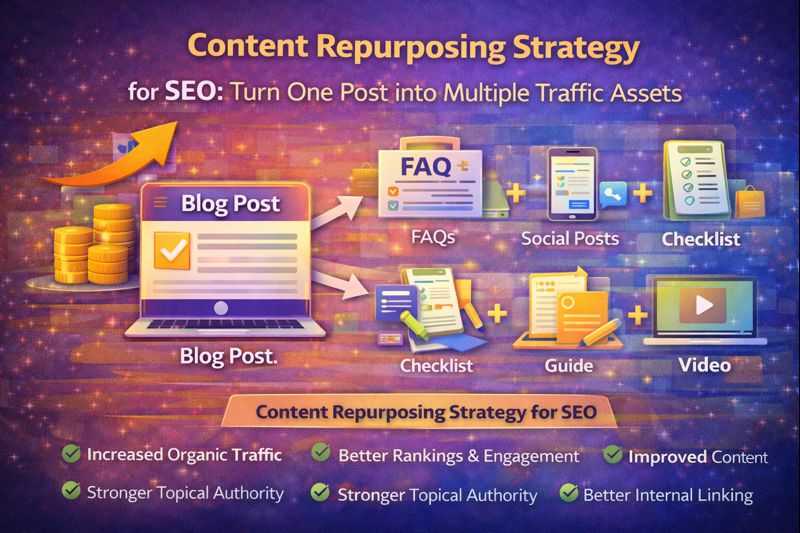
Content Repurposing Strategy for SEO: Boost Traffic Without Writing More
Introduction Creating high-quality content takes time, effort, and research. Yet many websites publish a post…
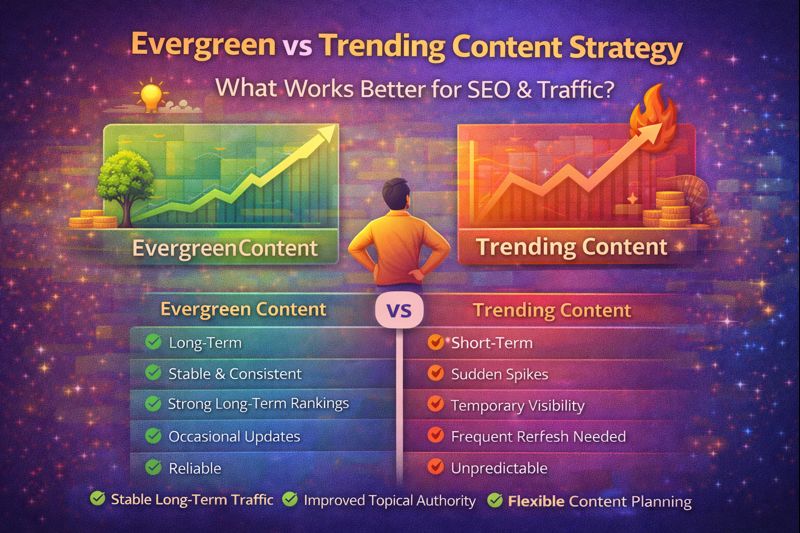
Evergreen vs Trending Content Strategy: What Works Better for SEO?
Introduction Content creators often face a common dilemma:Should you focus on evergreen content that lasts…

How Content Marketing Helps You Monetize Blogs with AdSense (2026)
Introduction Many bloggers struggle with a common problem: their blog gets content published, but income…
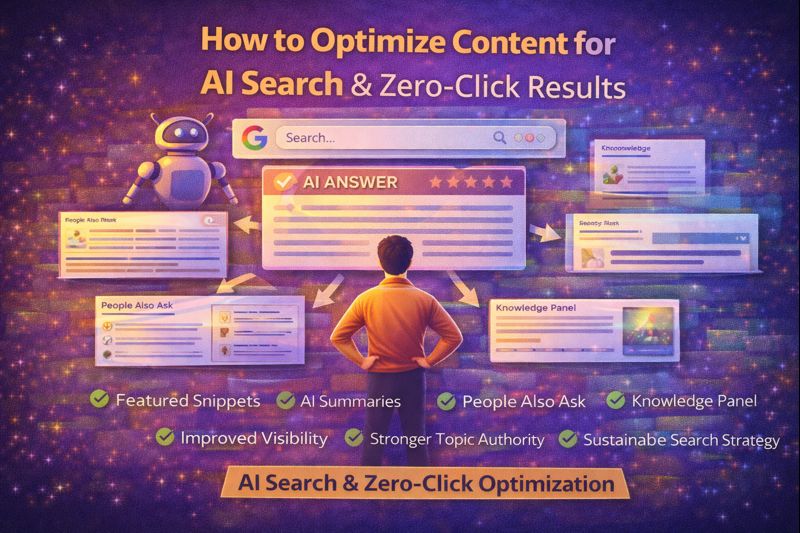
How to Optimize Content for AI Search & Zero-Click Results Smartly
Introduction Search results are no longer limited to blue links. Today, users often find answers…
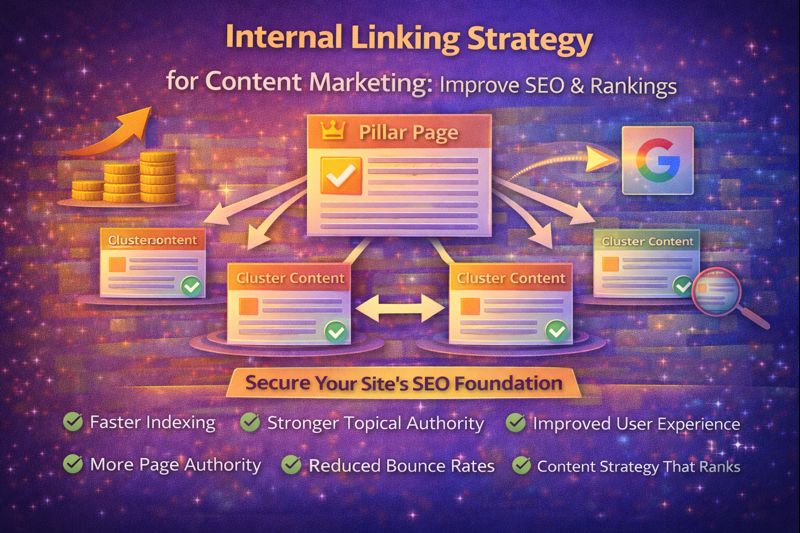
Internal Linking Strategy for Content Marketing: Boost SEO Rankings
Introduction Many websites focus heavily on publishing new content but overlook one of the most…

Low-Competition Keyword Research for Content Marketing (Step-by-Step)
low-competition keyword research for content marketing – One of the biggest mistakes content creators make…
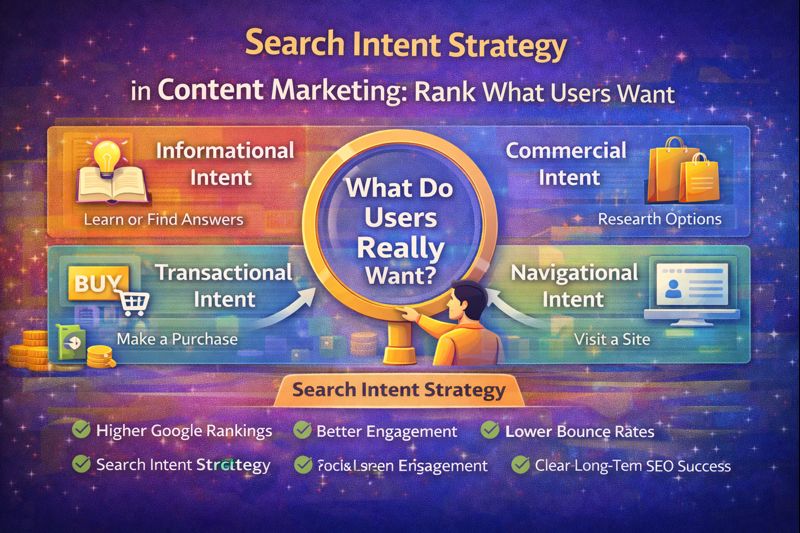
Search Intent Strategy in Content Marketing: Rank What Users Want
Introduction One of the biggest reasons content fails to rank is not poor writing or…
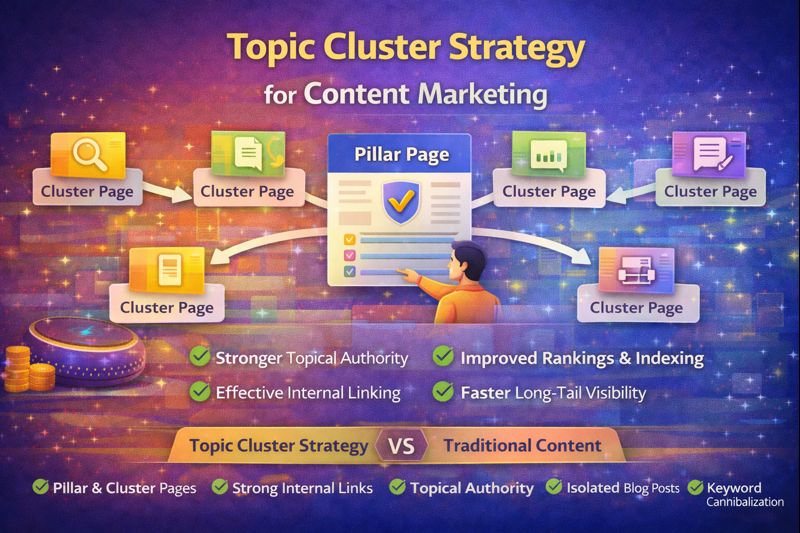
Topic Cluster Strategy: How to Build Topical Authority with Content Marketing
Introduction Many websites publish high-quality content regularly, yet struggle to rank consistently on Google. The…

Voice Search & Conversational Content Strategy for SEO (2026 Guide)
Voice Search & Conversational Content Strategy – Search behavior has changed dramatically. People no longer…

What Is Generative SEO and How Content Marketers Can Use It in 2026
Introduction What Is Generative SEO – Search engines are changing faster than ever. Traditional SEO…