Last Updated: July 22, 2026
Academic Writing Master From Concept to Submission Series
Academic Writing Mastery
Whether you are writing a PhD thesis, a Master’s dissertation, or a research paper for journal submission — this guide covers all three. It takes you from research idea to published paper, defended thesis, or funded grant across 10 modules and 60+ posts.
Whether you are writing a PhD thesis, a Master’s dissertation, or a Research Paper — this guide covers all three. It takes you from research idea to published paper, defended thesis, or funded grant across 10 modules and 60+ posts, covering every stage of the research lifecycle.
Research paper vs article: A research paper is an original piece of academic work that contributes new knowledge — new data, new findings, new frameworks, or new doctrinal analysis. A journal article is what a research paper becomes once it is peer-reviewed and published. A review article synthesises existing knowledge but does not generate new findings. This guide focuses on original research papers — the kind that examiners assess, grant committees fund, and journals peer-review before publication.
Thesis vs dissertation: In India and the UK, PhD-level work is called a thesis and Master’s-level work is called a dissertation. In the US and Australia, PhD-level work is often called a dissertation. This guide uses both terms and clarifies where conventions differ. Everything here applies to both — scope and depth expectations are noted where they differ.
Most academic writing guides tell you to ‘write clearly’ and ‘organise logically.’ This guide tells you exactly how — with worked examples, decision frameworks, India-specific regulatory context, and honest accounts of where researchers actually get stuck.
It is built for social science and law researchers at Indian and international universities, and goes deeper than any general academic writing guide because it was written from inside the research process — not above it.
The Problem This Guide Solves
The rejection rate for academic papers is not primarily a quality problem — it is a communication problem. Research that is methodologically sound, intellectually original, and practically significant fails to get published, funded, or examined because it is not communicated in the forms that journals, grant committees, and examiners expect.
Most researchers were never explicitly taught these forms. They absorbed implicit norms through supervision, through reading others’ work, and through the painful feedback of rejection letters. This guide makes those implicit norms explicit.
It covers ten dimensions of the research-to-publication process that every researcher must navigate:
| Module 1 | Research Paper and Thesis Structure The architecture of academic arguments — 10 posts: IMRAD framework · Introduction writing · Methods section · Results and discussion · Complete Thesis structure · Structural mistakes, How to write Journal Article Abstract, Systematic Review & PRISMA Guidelines, Legal Research Methods |
| Module 2 | The Academic Writing Process From blank page to submission-ready manuscript — how to start, maintain progress, revise effectively, manage citations, and prepare for submission. 6 posts: Starting to write · Clear academic prose · The revision process · Citation styles · Reference management · Submission-ready documents |
| Module 3 | Research Methodology Designing research that can answer your question — quantitative, qualitative, mixed methods, doctrinal, sampling, and the ethics of methodology choices. 7 posts: Research paradigms · Quantitative design · Qualitative design · Qualitative analysis · Mixed methods · Sampling · Research ethics in methodology |
| Module 4 | Data Analysis and Presentation From raw data to published results — data preparation, descriptive and inferential statistics, statistical assumptions, qualitative data presentation, and writing the results section. 6 posts: Data preparation · Descriptive statistics · Inferential statistics · Statistical assumptions · Qualitative presentation · Writing results |
| Module 5 | Thesis and Dissertation Writing The specific demands of thesis and dissertation writing — architecture, synopsis writing, abstract and introduction, academic tone, formatting for institutional submission, and the final submission week. 6 posts: Thesis and dissertation architecture · Abstract and introduction · Academic tone · Formatting for institutional submission · Final week submission checklist · Writing the PhD synopsis |
| Module 6 | Peer Review and Publication Navigating the journal system — understanding decision letters, writing response letters, making revisions, preparing for the viva, and building a publication strategy. 5 posts: Decoding the decision letter · Writing the response letter · Making revisions · Viva preparation · Publication strategy |
| Module 7 | AI Tools in Academic Research Using AI tools responsibly and effectively — what AI helps with, where it harms, prompt engineering for research tasks, disclosure requirements, and the evolving policy landscape. AI research toolkit · Where AI helps and harms · Prompt engineering · Disclosure and documentation · AI policy landscape |
| Module 8 | Grant Writing and Research Funding From identifying funding sources to submitting competitive proposals — the Indian funding landscape, abstract and problem statement writing, methods and budget, the review process, and international funding. Indian funding landscape · Abstract and problem statement · Methods and budget · Review process · International funding |
| Module 9 | Academic Career Development Building a research career from PhD to first position — academic CV, conference strategy, job application package, the Indian academic job market, and alternative career paths. Academic CV · Conference strategy · Job application package · Indian academic job market · Alternative and hybrid careers |
| Module 10 | Research Ethics and the IRB Process Protecting participants, maintaining integrity, and meeting regulatory requirements — ethics committee applications, informed consent, privacy and data security, vulnerable populations, and research integrity. Ethics committee application · Informed consent · Privacy and data security · Vulnerable populations · Research integrity |
What Makes This Guide Different
It focuses on original research — not review articles or commentaries
A research paper contributes new knowledge. A review article synthesises existing knowledge. A commentary offers the author’s perspective. These are fundamentally different activities, and most ‘academic writing guides’ blur the distinction by giving the same advice for all three.
This guide is built exclusively around original research — empirical studies, doctrinal legal analysis, theoretical frameworks, and mixed methods work that advances knowledge rather than summarising it. Every structural, methodological, and ethical post in this series is written with original contribution as the baseline assumption.
It covers research paper, thesis, and dissertation — not just one
Research paper, PhD thesis, and Master’s dissertation have different requirements — different word limits, different examiner expectations, different structural conventions, different institutional submission processes. This guide specifies which guidance applies to which document type throughout. The underlying principles are the same; the implementation differs.
It is honest about where researchers actually struggle
The most common cause of thesis examination failure is not poor research — it is a literature review that does not connect to the methodology. The most common cause of research paper rejection is not weak findings — it is a discussion that does not connect findings to existing literature. The most common cause of ethics application delay is a vague risk section. This guide is built around those specific failure points.
It covers the Indian research context specifically
Most academic writing guides are written for North American or British researchers. This guide integrates the Indian regulatory and institutional context throughout: ICMR ethical guidelines, UGC regulations, ICSSR and SERB funding, the API scoring system, Shodhganga submission requirements, UGC-NET qualification, NLU-specific conventions, and the DPDPA 2023. Where India-specific context differs from international conventions, both are covered.
It includes a dedicated section for law researchers in every post
Every post in this series includes a ‘For Law Students’ section covering doctrinal research methodology, legal citation (Bluebook for India and the US, OSCOLA for UK-affiliated institutions, AGLC for Australia), law review publishing, NLU career pathways, and the specific ethical considerations that apply when research subjects are litigants, lawyers, or judges.
How to Use This Guide
If you are starting your PhD, MPhil, or Master’s dissertation
Master’s dissertation students: begin with Module 1 (Research Paper Structure) for document architecture, then Module 3 (Research Methodology) for research design, then Module 5 Posts 1 and 2 for dissertation-specific structure and abstract writing. Your research proposal is covered in Module 5 Post 6.
PhD students: begin with Module 1 for structure, Module 3 for methodology, then Module 5 Post 6 (Synopsis Writing) — the document most Indian PhD students underestimate and most DRCs scrutinise most carefully.
If you are writing your research paper or thesis
Module 2 (Writing Process) for starting and maintaining progress. Module 4 (Data Analysis) for presenting your findings. Module 1 for structural architecture. Module 5 for thesis and dissertation-specific demands. Read these as a set, not sequentially.
If you are preparing to submit
Research paper submission: Module 6 (Peer Review and Publication) for the journal system and Module 2 Post 6 for the submission checklist.
Thesis or dissertation submission: Module 5 Post 5 (Final Week) for institutional submission requirements, Shodhganga deposit, and formatting checks.
If you are building your research career
Module 8 (Grant Writing) to secure funding. Module 9 (Academic Career Development) to build the professional record. Module 7 (AI Tools) to work more efficiently without compromising research integrity.
The Most Important Things This Guide Will Teach You
1. A research paper contributes — a review article summarises
The moment you begin writing, know which one you are writing. A research paper makes an original contribution: new empirical findings, a new doctrinal framework, a new theoretical synthesis. Every structural decision — from the introduction’s gap statement to the discussion’s contribution claim — follows from this. A paper that does not know whether it is contributing or summarising reads like neither.
2. Structure is argument
The structure of a research paper, thesis, or dissertation is not a container for your argument — it is part of the argument. Where you place the research question, how the literature review is organised, what appears in the results versus the discussion: all communicate what you claim and how confident you are in it. Module 1 covers this in depth.
3. The gap must be specific
‘There is limited research on X’ is not a research gap — it is a vague gesture toward one. The gap that justifies a PhD thesis, a Master’s dissertation, or a research paper is specific enough that a reader understands exactly what question has not been answered, why it matters, and why your study is the one to answer it. Module 1 Cluster Post 2 and Module 5 Cluster Post 6 show what specific gap statements look like.
4. Abstract, synopsis, and executive summary are different documents
PhD thesis abstract: 300–500 words, past tense, written after completion, for Shodhganga and the examiner. Master’s dissertation abstract: 200–350 words, same purpose, narrower scope. Research paper abstract: 150–250 words, standalone, written to persuade readers to engage with an original contribution — not a summary of existing knowledge. Synopsis / research proposal: future tense, written before research begins, for DRC or supervisor approval. Module 5 Cluster Posts 2 and 6 cover all four.
5. Methodology must be justified, not just described
Stating that you used semi-structured interviews is a description. Explaining why — because the research question requires understanding participants’ own frameworks that closed survey items cannot capture — is a justification. Reviewers and examiners assess methodology by whether it is appropriate for the question, not just whether it was competently executed. Module 3 covers this throughout.
6. Ethics is not a box to tick
The ethics committee application, the informed consent process, and the data security protocol are not administrative obstacles between you and data collection. They are the infrastructure that makes original research trustworthy. A dataset collected without ethics approval may be unpublishable regardless of how good the findings are. Module 10 covers what genuine ethical research practice requires.
7. Career development starts in Year 1, not Year 4
The research papers, conference presentations, grant applications, and professional relationships you build during the PhD are the primary inputs to your first academic job application. A researcher who waits until the final year to think about career development is working with a thin record. Module 9 covers what to build and when.
8. AI tools accelerate your work — they do not do it
The distinction between acceleration and substitution is the foundational principle in Module 7. AI is appropriate when it makes your intellectual work faster or better expressed. It is inappropriate when it performs the intellectual work — the original thinking, the analysis, the argument — in your place. The test: can you explain, in your own words, every claim that appears in your research paper or thesis?
Navigate the Complete Series (From Concept to Submission: A Complete Guide to Research Paper, Dissertation and Thesis Writing)
Module 1 —Understanding the Structure of Research Papers and Theses from Concept to Submission Series
Complete Guide – The Complete Guide to Research Paper and Thesis Structure
- The IMRAD Framework: Why It Exists, How It Really Works, and Where It Breaks Down
- How to Write a Research Introduction That Reviewers Cannot Ignore
- How to Write a Methods Section That Reviewers Will Trust
- The Results Section: How to Present Findings Without Letting Interpretation Slip In
- The Discussion Section: How to Turn Findings Into Knowledge
- Complete Thesis Structure: A Chapter-by-Chapter Guide
- 10 Structural Mistakes That Get Research Papers Rejected — And How to Fix Every One
- How To Write A Journal Abstract That Gets Your Paper Read
- Systematic Review And PRISMA: How To Conduct And Report A Review That Meets Publication Standards
- Legal Research Methods: A Complete Guide To Doctrinal, Empirical And Comparative Legal Research
Module 2 — The Academic Writing Process
Complete Guide – The Academic Writing Process: Complete Guide from First Draft to Submission (2026)
- How to Start Writing and Keep Going
- How to Write Clear Engaging Academic Prose
- The Revision Process: How to Turn a Draft Into a Submission
- Citation Styles Explained: APA, MLA, Chicago, IEEE, and Bluebook
- Reference Management: Zotero and Mendeley from Setup to Submission
- Preparing A Submission Ready Document: The Complete Pre-Submission Checklist
- Legal Writing Process And Citation: A Complete Guide For Law Students And Legal Researchers
Module 3 — Research Methodology
Complete Guide – Research Methodologies: Complete Guide to Quantitative, Qualitative, Mixed Methods & Legal Research (2026)
- Research Paradigms: Why Your Philosophical Stance Shapes Everything
- Quantitative Research Design: From Hypothesis to Valid Results
- Qualitative Research Design: Choosing the Right Approach
- Qualitative Data Collection and Analysis: Interviews, Coding, and Trustworthiness
- Mixed Methods Research: When and How to Combine Approaches
- Sampling: Choosing Who To Study And How Many
- Research Ethics in Practice: What Ethics Forms Don’t Tell You
Module 4 — Data Analysis and Presentation
Complete Guide – Data Analysis and Results Presentation: Complete Guide for Quantitative, Qualitative & Legal Research (2026)
- Preparing Your Data: The Work That Determines Analysis Quality
- Descriptive Statistics: What to Report and How to Read Them
- Inferential Statistics: Choosing and Reporting the Right Test
- Statistical Assumptions: The Checks Most Researchers Skip
- Presenting Qualitative Findings: Quotes, Themes, and the Balance Between Showing and Telling
- Writing the Results Section: Separating Findings from Interpretation
Module 5 — Thesis and Dissertation Writing
Complete Guide – Organization and Academic Tone: Complete Guide to Professional Scholarly Writing (2026)
- The Complete Thesis Architecture: Chapter Functions and Proportions
- Writing the Thesis Abstract and Introduction
- Academic Tone: From Principles to Practice
- Formatting Thesis and Dissertation for Institutional Submission
- The Final Week: Preparing a Submission-Ready Document
- Writing the PhD Synopsis & Master’s Dissertation: India’s Most Underestimated Document
Module 6 — Peer Review and Publication
Complete Guide – Peer Review and Publication: Complete Guide from Submission to Acceptance (2026)
- Decoding the Decision Letter: What Editors and Reviewers Are Really Telling You
- Writing the Response Letter That Gets Your Paper Accepted
- Making Revisions That Actually Work
- Preparing for Your Viva Voce
- Publication Strategy for Indian Academic Careers
Module 7 — AI Tools in Academic Research
Complete Guide – AI Tools in Academic Research: Opportunities, Ethics, and Best Practices (2026)
- The AI Research Toolkit: What Each Tool Actually Does and When to Use It
- Where AI Helps and Where It Harms: The Line That Matters
- Prompt Engineering for Researchers: Getting Useful Output
- Disclosure Documentation and AI Integrity
- AI Policy Landscape for Indian and Global Researchers
Module 8 — Grant Writing and Research Funding
Complete Guide – Grant Writing and Research Funding: Complete Guide to Finding Money for Your Research (2026)
- The Indian Research Funding Landscape: What’s Actually Available and Who Gets It
- Writing the Proposal Abstract and Problem Statement That Get Funded
- Methods and Budget: The Two Sections That Lose Most Grants
- The Proposal Review Process: How Grants Are Actually Decided
- International Funding for Indian Researchers: Fulbright, DAAD, Commonwealth, and Beyond
Module 9 — Academic Career Development
Complete Guide – Academic Career Development: Complete Guide to Building Your Professional Life in Research (2026)
- The Academic CV: Building a Record That Gets You Interviews
- Conference Strategy: Choosing, Presenting, and Networking Effectively
- The Academic Job Application Package: Cover Letter, Research Statement, Teaching Statement
- The Indian Academic Job Market: UGC-NET, API, Promotions, and Navigating the System
- Alternative and Hybrid Careers for Indian Research Scholars
Module 10 — Research Ethics and the IRB Process
Complete Guide – Research Ethics and the IRB Process: Complete Guide to Doing Research Responsibly (2026)
- The Ethics Committee Application: Writing a Submission That Gets Approved
- Informed Consent in Practice: Designing Forms and Processes That Actually Protect Participants
- Privacy Data Security and Confidentiality: What Researchers Get Wrong
- Ethical Research with Vulnerable Populations: Power, Protection, and Genuine Respect
- Research Integrity: Data Handling Authorship Ethics and the Indian Regulatory Framework
Who This Guide Is For
- PhD students at Indian and international universities navigating the research process — from synopsis writing and DRC approval through to viva examination and Shodhganga submission.
- Master’s dissertation students writing their first extended research document — whether a 15,000-word LLM dissertation, a 25,000-word social science dissertation, or any format in between. Everything in this guide applies; scope and depth expectations are noted where they differ from PhD-level work.
- LLM and LLB researchers at NLUs and other law faculties who need guidance on doctrinal and empirical legal research, OSCOLA citation, law review publishing, and the specific career pathways available to law researchers in India and internationally.
- Early-career researchers preparing their first journal submissions, their first grant applications, or their first academic job applications.
- International researchers who want to understand how their work connects to or differs from Indian research conventions — all posts cover international conventions alongside Indian-specific guidance.
- Supervisors and research directors looking for structured guidance to recommend to their research students.
Your research deserves to be read, cited, and used. Whether you are writing a PhD thesis, a Master’s dissertation, or a journal article — the communication skills in this guide are what close the gap between research that exists and research that has impact.
Academic Writing Mastery Series — All 10 Modules | 56+ Posts | February 2026
Series continues to update as research norms and Indian regulatory frameworks evolve.
FAQs
What is academic writing and why is it important?
Academic writing is a formal style of writing used in universities and research. It is important because it helps students present ideas clearly, support arguments with evidence, and contribute to academic knowledge.
2. What are the key features of academic writing?
Key features include clarity, formal tone, structured format, evidence-based arguments, proper citations, and avoiding plagiarism.
3. How do I start writing a research paper or thesis?
Start by selecting a clear research topic, conducting a literature review, creating an outline, and then writing sections like introduction, methodology, results, and conclusion step by step.
4. What is the difference between a thesis and a dissertation?
A thesis is usually written for a master’s degree, while a dissertation is more detailed and written for a doctoral (PhD) program, involving original research.
5. How can I avoid plagiarism in academic writing?
You can avoid plagiarism by citing sources properly, using quotation marks when needed, paraphrasing correctly, and using plagiarism checker tools.
6. What is the best structure for an academic paper?
The most common structure is IMRAD:
Introduction
Methods
Results
Discussion
This format ensures clarity and logical flow of research.
7. What are the best tools for academic writing and research?
Popular tools include:
Grammarly (for grammar)
Turnitin (for plagiarism check)
Zotero/Mendeley (for references)
Google Scholar (for research sources)
Author
Dr. Rekha Khandelwal, a legal scholar and academic writing expert, is the founder of AspirixWriters. She has extensive experience in guiding students and researchers in writing research papers, theses, and dissertations with clarity and originality. Her work focuses on ethical AI-assisted writing, structured research, and making academic writing simple and effective for learners worldwide.
Author Profile Dr. Rekha Khandelwal | Academic Writer, Legal Technical Writer, AI Expert & Author | AspirixWriters
References
- UGC (Minimum Standards and Procedures for Award of Ph.D. Degree) Regulations 2022.
- Shodhganga National Repository of Theses and Dissertations, INFLIBNET.
- Shodhgandhi Anti-Plagiarism Tool, INFLIBNET.
Editing & Proofreading | AspirixWriters
Academic Writing Mastery: The Complete 2026 Guide to Research Papers, Thesis & Dissertation Writing
Academic Writing Master From Concept to Submission Series Academic Writing Mastery Whether you are writing…
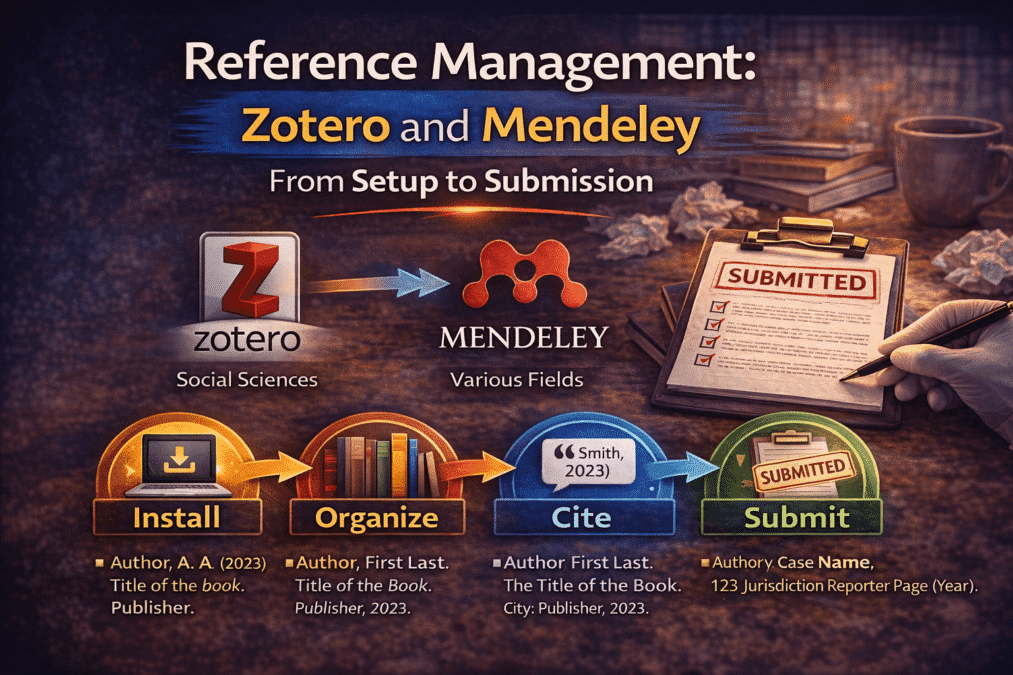
Reference Management: Zotero and Mendeley from Setup to Submission
Reference Management Module 2: The Academic Writing Process From Concept to Submission Series | 2026 Academic…
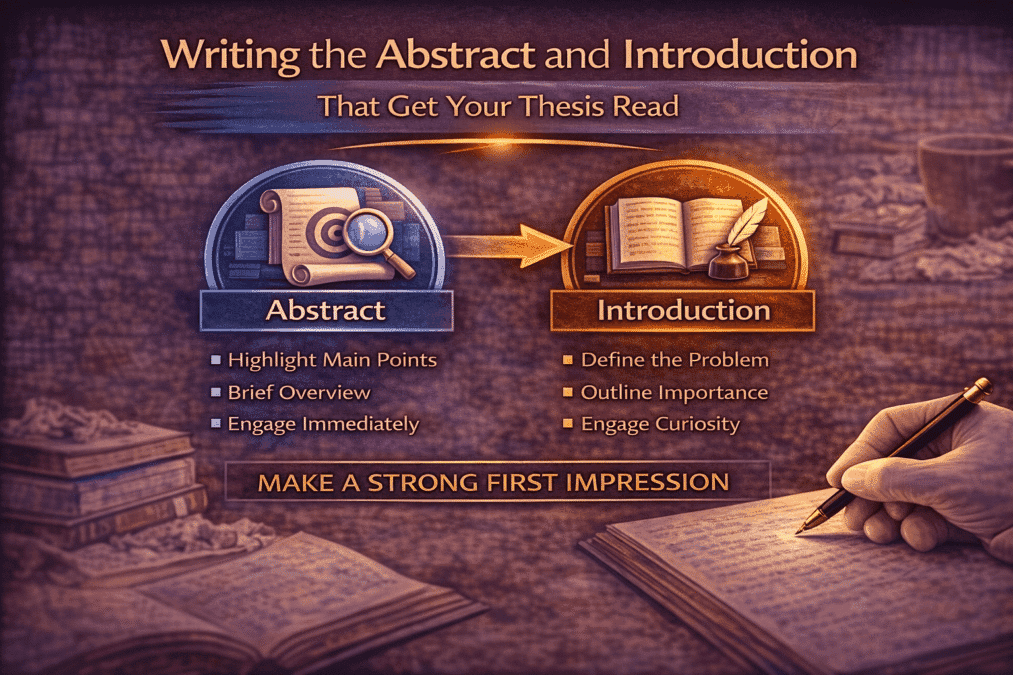
Writing the Thesis Abstract and Introduction
Cluster Post 2 | Module 5: Thesis Writing and Submission From Concept to Submission Series …
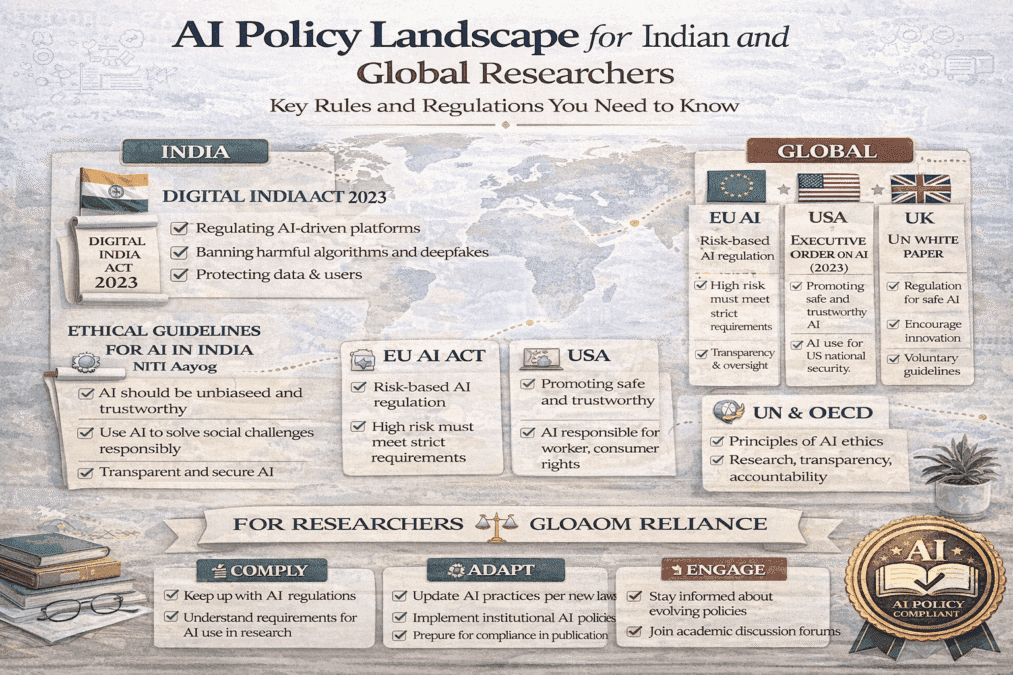
AI Policy Landscape for Indian and Global Researchers
Cluster Post 5 | Module 7: AI Tools in Academic Research — Opportunities, Ethics, and…
Research Integrity: Data Handling Authorship Ethics and the Indian Regulatory Framework
Cluster Post 5 | Module 10: Research Ethics and the IRB Process From Concept to…
NEET Paper Leak 2026: Impact on Students, and Future of India’s Medical Entrance Exams
For over 22 lakh students across India, NEET UG 2026 was supposed to be the…