
Dr. Rekha Khandelwal

Dr. Rekha Khandelwal is an academic writing expert and founder of Aspirix Writers, supporting PhD scholars, researchers, and professionals with ethical AI use, research writing, and publication guidance. Her work focuses on helping learners achieve academic excellence with clarity, confidence, and integrity. She is also a motivational speaker and certified meditation trainer, inspiring individuals to grow with inner balance and purpose.

International Treaties as a source of International Law

International Treaties as a Source of International Law | LL.B. Notes

International Treaties as a Source of International Law Introduction International treaties are one of the principal sources of International Law. Article 38(1)(a) of the Statute of the International Court of Justice refers to international conventions, whether general or particular, establishing rules expressly recognized by the contesting States. The modern law governing treaties between States is
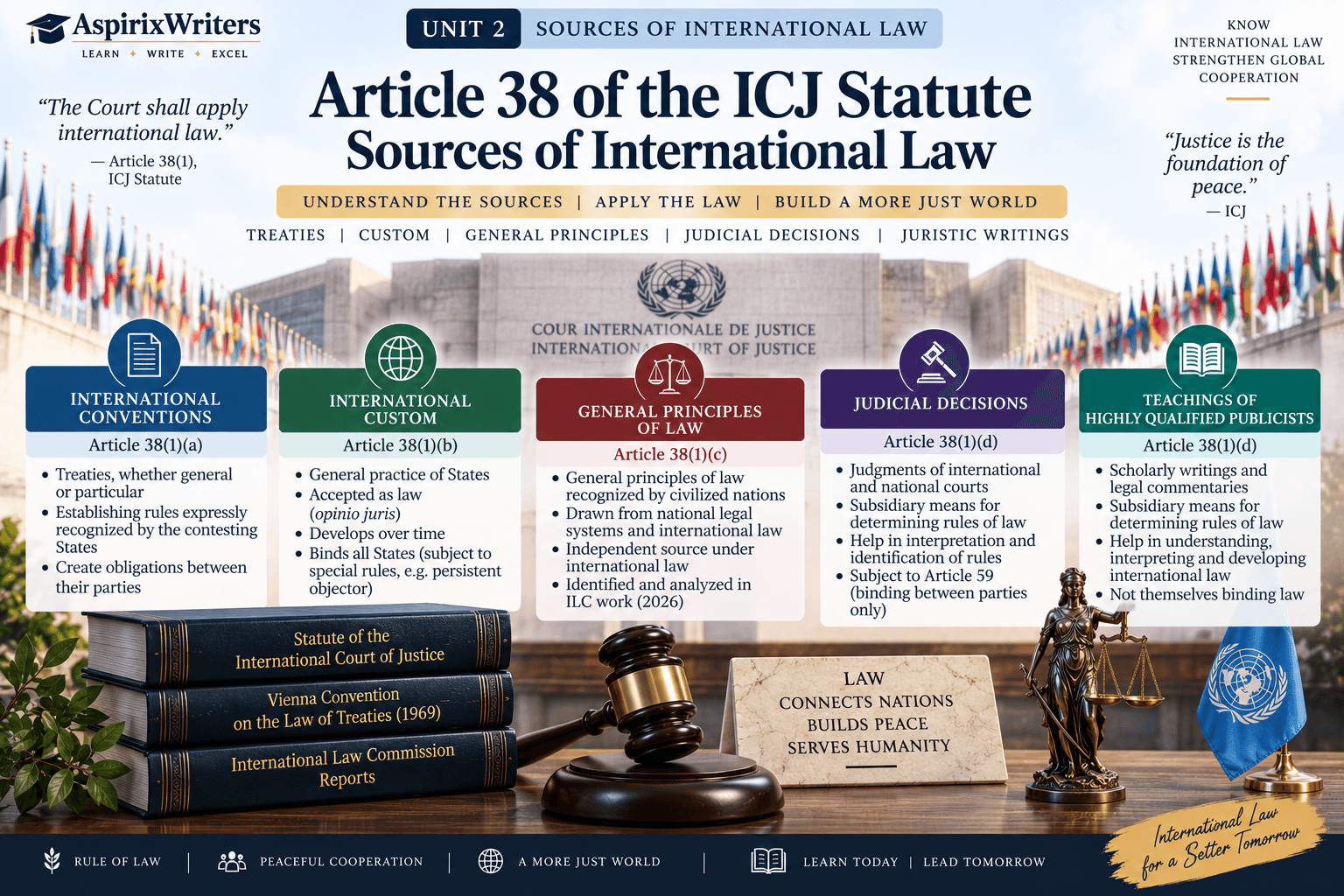
Article 38 of ICJ Statute

Article 38 of ICJ Statute: Sources of International Law | LL.B. Notes

Article 38 of ICJ Statute: Sources of International Law Introduction After understanding the basic meaning and nature of International Law, the next important question is: From where do the rules of International Law come? The principal starting point for answering this question is Article 38 of the Statute of the International Court of Justice (ICJ).

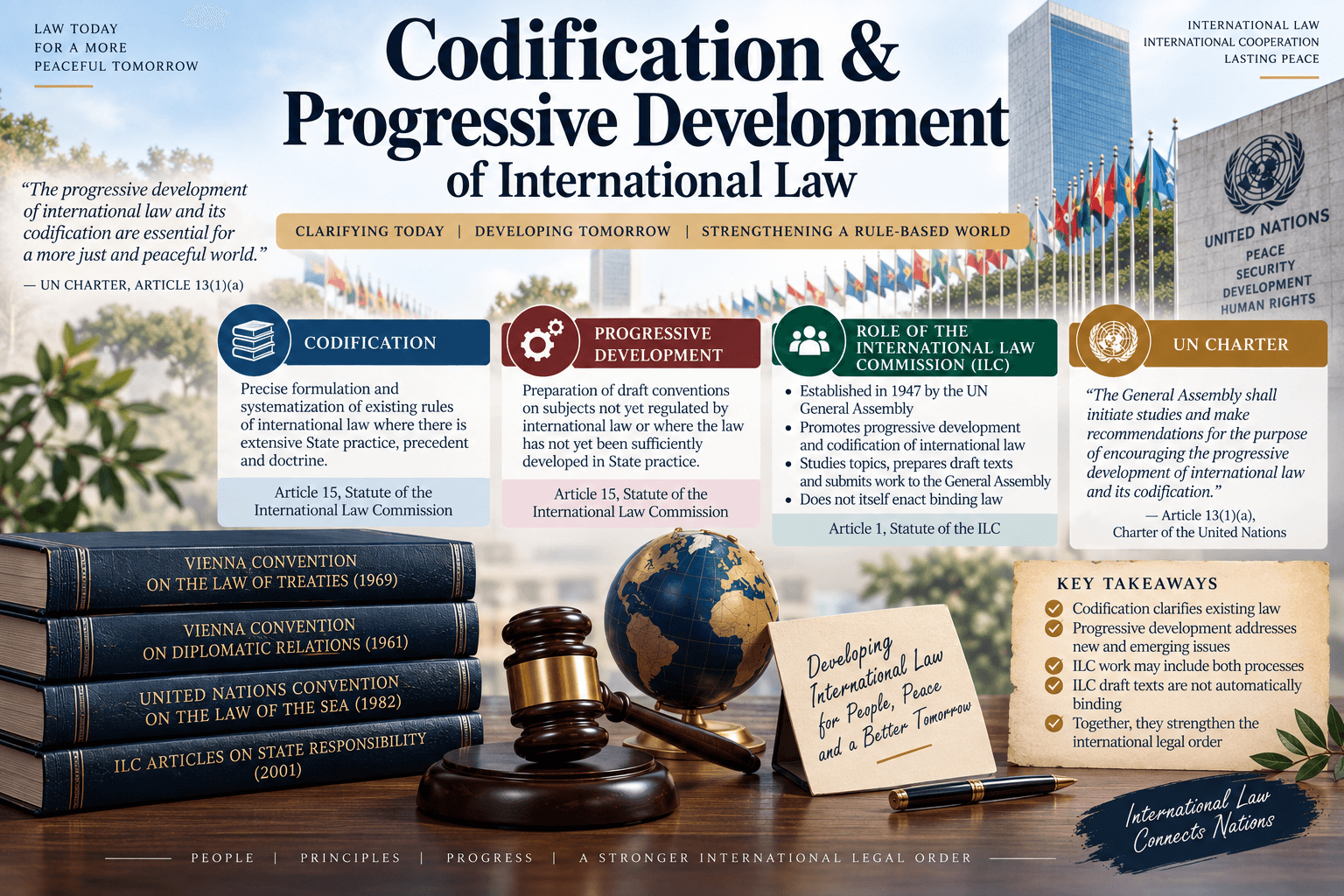
Codification and Progressive Development of International Law

Codification and Progressive Development of International Law | LL.B. Notes

Codification and Progressive Development of International Law Introduction International Law is not a completely static body of rules. It develops through treaties, customary international law, judicial decisions, State practice, decisions and resolutions of international institutions, and the work of international law-making and law-developing bodies. Two important processes in the development of International Law are codification

Statehood and Sovereignty in International Law

Statehood, Sovereignty & Recognition | International Law Notes

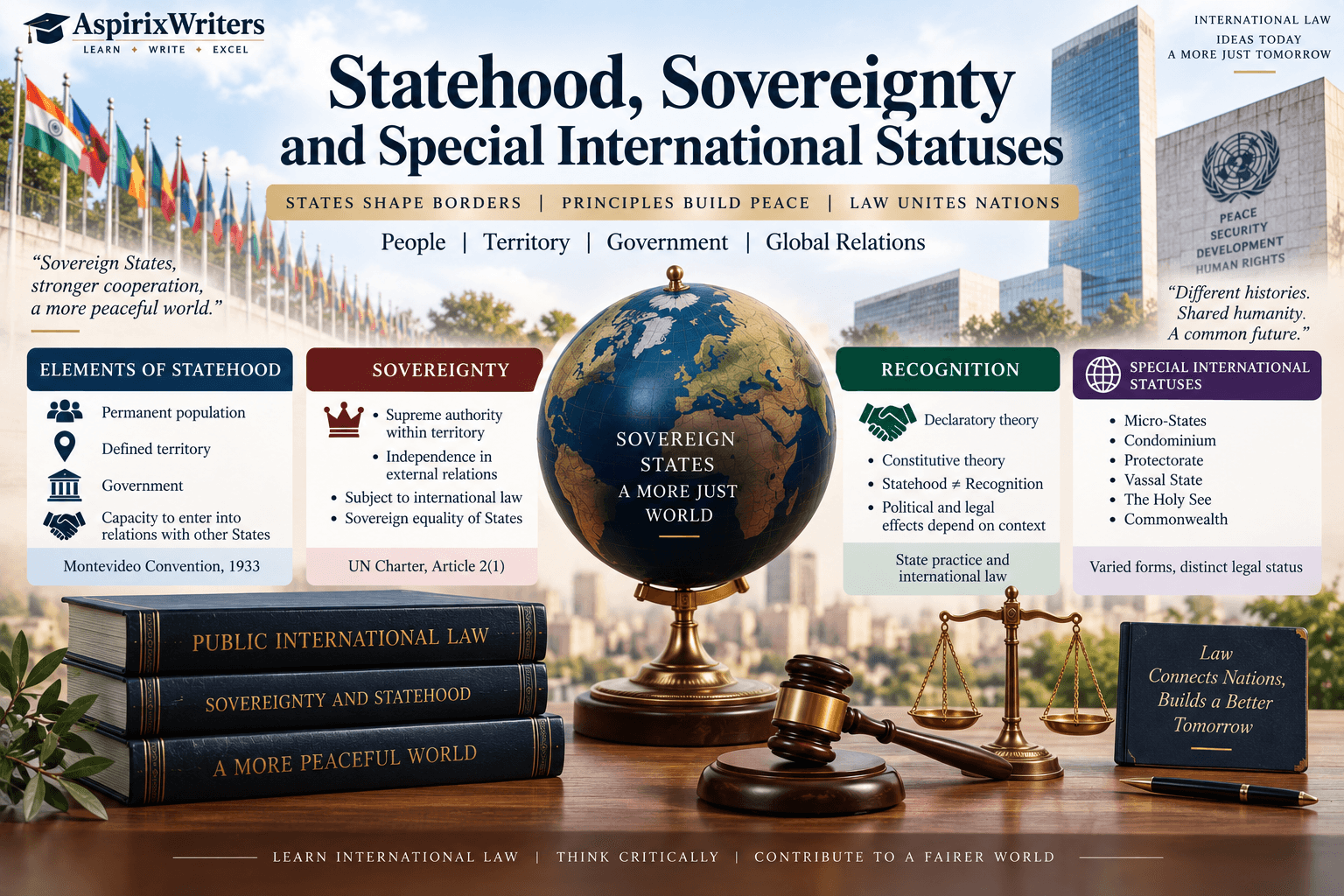
Statehood and Sovereignty in International Law Introduction The concept of the State is central to Public International Law. States remain the principal subjects of the international legal order and possess the broadest range of international rights, obligations and legal capacities. To understand International Law, it is therefore necessary to understand: The traditional concept of statehood

Subject of International Law

Subjects of International Law | Meaning, Types & Legal Personality

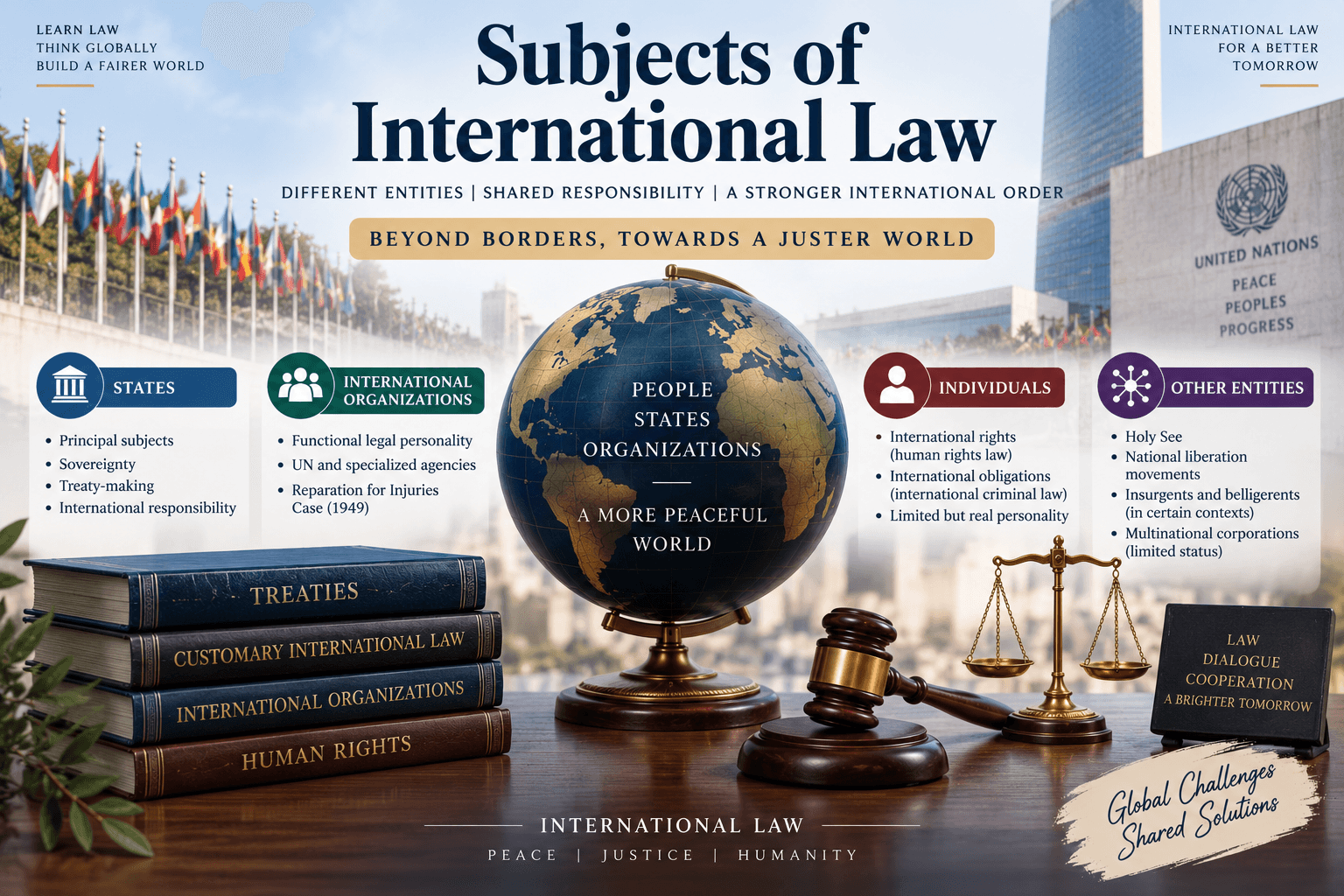
Subjects of International Law Introduction The concept of Subjects of International Law is fundamental to understanding who can possess rights, bear obligations, and have legal capacity under international law. Traditionally, States were regarded as the principal subjects of international law. With the development of international organizations, international human rights law, international criminal law and other

International Law and Municipal Law

International Law and Municipal Law | Monism, Dualism & India

International Law and Municipal Law Unit 1 – Foundations of International Law 1. Quick Answer International Law and municipal law operate in different legal spheres, but they interact closely. International Law regulates legal relations and obligations on the international plane, whereas municipal law operates within the domestic legal order of a State. The relationship between

Sources of International Law Basic Introduction

Sources of International Law — Basic Introduction

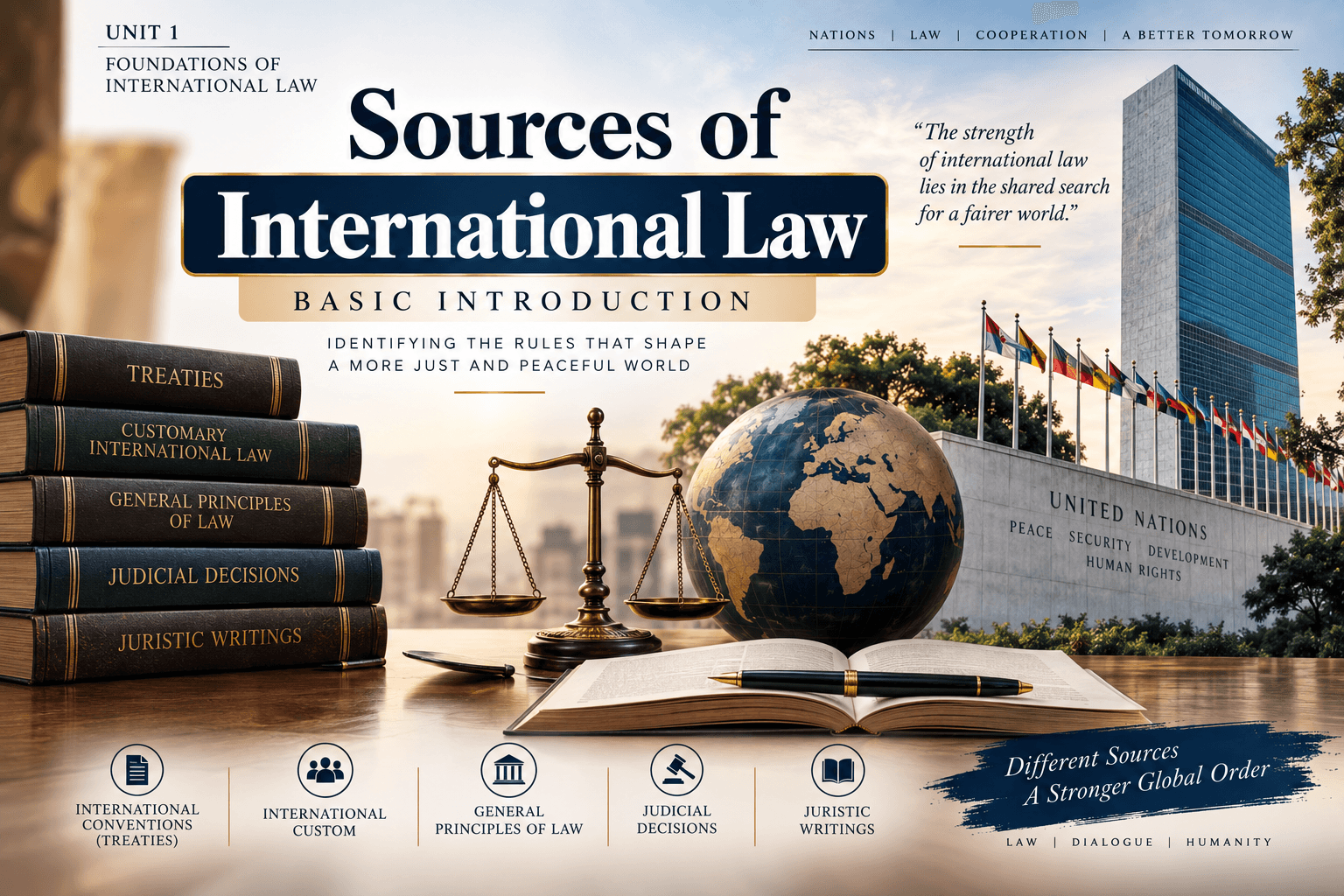
Sources of International Law Quick Answer: What are the Sources of International Law? The sources of International Law are the recognized legal materials and processes through which international legal rules are identified, established, developed or applied. The most important starting point is Article 38(1) of the Statute of the International Court of Justice (ICJ). It

History & Development of International Law

History and Development of International Law

History and Development of International Law Quick Answer: How did International Law develop? International Law did not emerge at one particular moment. It developed gradually through treaties, diplomatic practices, customary rules, ideas of jurists, international conferences, judicial institutions and international organizations. Unit 1: Foundations of International Law Ancient and medieval societies already practised forms of

Basis, Binding Force, and sactions of international law

Basis, Binding Force and Sanctions of International Law

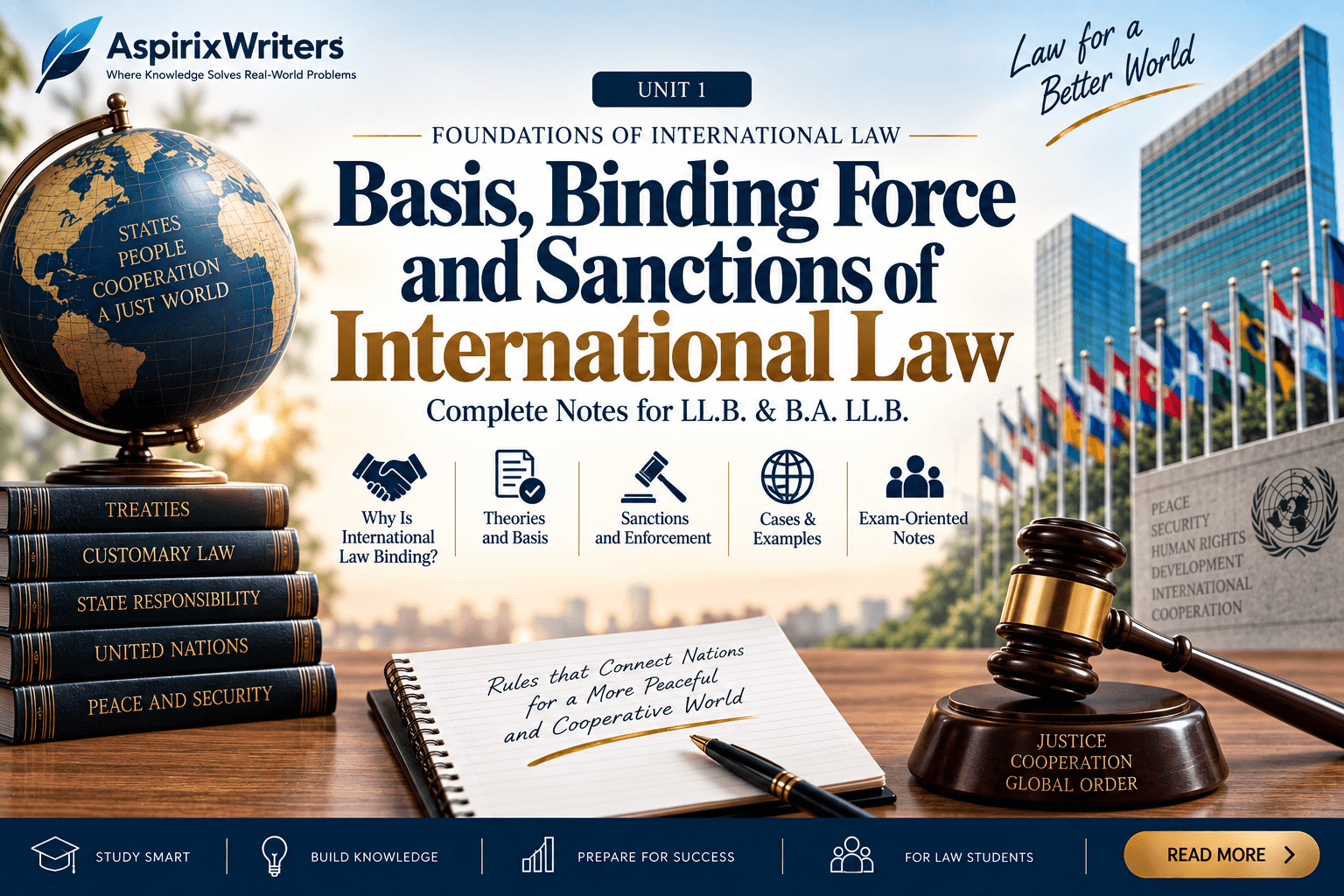
Basis, Binding Force and Sanctions of International Law LL.B. & B.A. LL.B. Notes | Public International Law Unit 1: Foundations of International Law Meaning, Definitions, Nature, Scope and Importance of International Law Quick Answer: Why Is International Law Binding? International Law is binding because recognized international legal rules create rights and obligations for States and

Meaning, Definitions, Nature, Scope and Importance of International Law

Meaning, Definitions, Nature, Scope and Importance of International Law

Meaning, Definitions, Nature, Scope and Importance of International Law International Law Notes for LL.B. and B.A. LL.B. Students International Law, traditionally known as the Law of Nations (Jus Gentium / Droit des Gens), is one of the fundamental branches of Public International Law. It regulates legal relations within the international legal order and provides rules

Foundations of International Law

Foundations of International Law – International Law Notes | LL.B. & B.A. LL.B.

Foundations of International Law International Law is the body of legal rules and principles governing relations and responsibilities in the international community. It regulates the conduct of States and, in appropriate areas, international organizations and individuals. The United Nations describes international law as defining the legal responsibilities of States in their relations with one another

Jurisprudence and Other Social Sciences – LL.B. and B.A. LL.B. Notes

Jurisprudence and Other Social Sciences: Relationship with Law

Jurisprudence and Other Social Sciences Introduction Law does not operate in isolation. It develops within society and is influenced by political institutions, economic conditions, historical developments, social values and ethical ideas. Jurisprudence, as the systematic and theoretical study of law, therefore has a close relationship with various social sciences. Studying these relationships helps law students

Jurisprudence and Legal Philosophy notes for LL.B. and B.A. LL.B. students

Jurisprudence and Legal Philosophy: Meaning, Relationship & Difference

Jurisprudence and Legal Philosophy Introduction Jurisprudence and Legal Philosophy are closely related fields concerned with the fundamental and philosophical questions surrounding law. Jurisprudence studies the nature, meaning, principles and concepts of law, while Legal Philosophy examines law through deeper philosophical questions concerning justice, morality, rights, obligation, authority and the purpose of law. Modern jurisprudence courses

Jurisprudence and Legal Theory Notes for LL.B. and B.A. LL.B. students

Jurisprudence and Legal Theory: Meaning, Relationship & Difference

Jurisprudence and Legal Theory Introduction Jurisprudence and Legal Theory are closely connected areas of the theoretical study of law. In many law programmes, the terms are used together or even interchangeably. Jurisprudence studies the nature, meaning, foundations, principles and concepts of law, while Legal Theory provides theoretical and analytical approaches for understanding these questions. For

Scroll to Top