Last Updated: May 1, 2026
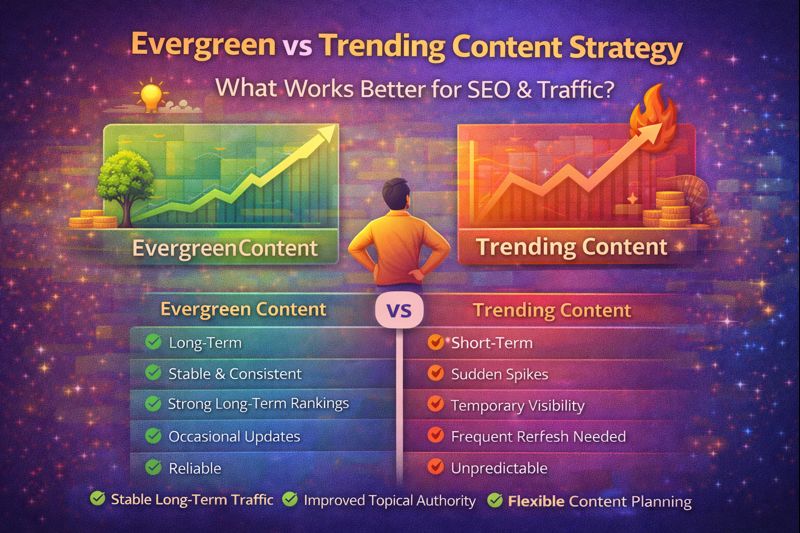
Evergreen vs Trending Content Strategy
Topic Cluster Strategy: How to Build Topical Authority — Complete Guide 2026
The Question Every Blogger Gets Wrong Early On
Here’s a decision that trips up almost every new blogger — and plenty of experienced ones too.
Do you spend your time writing timeless guides that rank for years? Or do you chase what’s trending right now and grab quick traffic while the topic is hot?
Most beginners default to one extreme. Either they write only evergreen tutorials and wonder why growth is slow in the first year — or they chase every viral trend and find themselves on a content treadmill that stops the moment they stop running.
When I started building content seriously, I made the second mistake. I was obsessed with trending topics. A new app launch? I’d write about it. A Google algorithm update? I was publishing within 24 hours. A viral Twitter debate in the writing community? You guessed it.
For a few weeks at a time, the traffic spikes felt amazing. Then the trend died, the search volume dried up, and my analytics looked like a mountain range — peaks followed by sharp drops, with no stable base underneath.
What changed everything was understanding that these aren’t competing strategies. They’re two tools that serve different purposes — and the smartest content marketers use both deliberately.
This guide breaks down exactly what each strategy is, when to use it, and the specific content mix that delivers sustainable, compounding SEO growth.
How to Optimize Content for AI Search and Zero-Click Results in 2026
What Is Evergreen Content? (And Why It Matters)
The simple definition: Evergreen content is content that remains relevant, useful, and searchable long after it’s published — because it addresses topics that don’t expire.
The name comes from evergreen trees — the ones that stay green and full regardless of the season. Your content equivalent holds its value regardless of what’s trending that week.
Real-world examples of evergreen content:
- “How to write a blog introduction” — people will always need this
- “What is SEO and how does it work” — foundational, timeless
- “How to file ITR online in India” — annual relevance, consistent search volume
- “Content writing tips for beginners” — searched every single month by new writers
- “What is compound interest and how is it calculated” — financially timeless
Why evergreen content is the foundation of sustainable SEO:
Every evergreen article you publish is essentially a permanent traffic asset. It gets indexed, starts ranking, and — if it’s good — compounds in authority over time. The article you published 18 months ago can be driving more traffic today than it did in its first week.
This compounding effect is what makes evergreen content the closest thing to passive income in the blogging world.
The real benefits:
- Consistent, month-over-month organic traffic without re-promotion
- Stronger keyword rankings that build over time
- Higher AdSense revenue potential because traffic is steady and predictable
- Lower maintenance — update once a year, not every week
- Builds topical authority that benefits your entire site
The honest drawbacks:
- Slow to gain initial traction — most evergreen articles need 3–6 months before ranking meaningfully
- High competition for popular evergreen topics — established sites have a head start
- Requires thorough research and depth to outrank existing content
- Can feel unrewarding in the first few months when traffic is minimal
In my experience, beginners underestimate both the patience evergreen content requires and the reward it eventually delivers. The writers who push through the slow early months are the ones whose blogs look unshakeable two years later.
Low-Competition Keyword Research for Content Marketing (Step-by-Step)
Evergreen vs Trending Content analytics
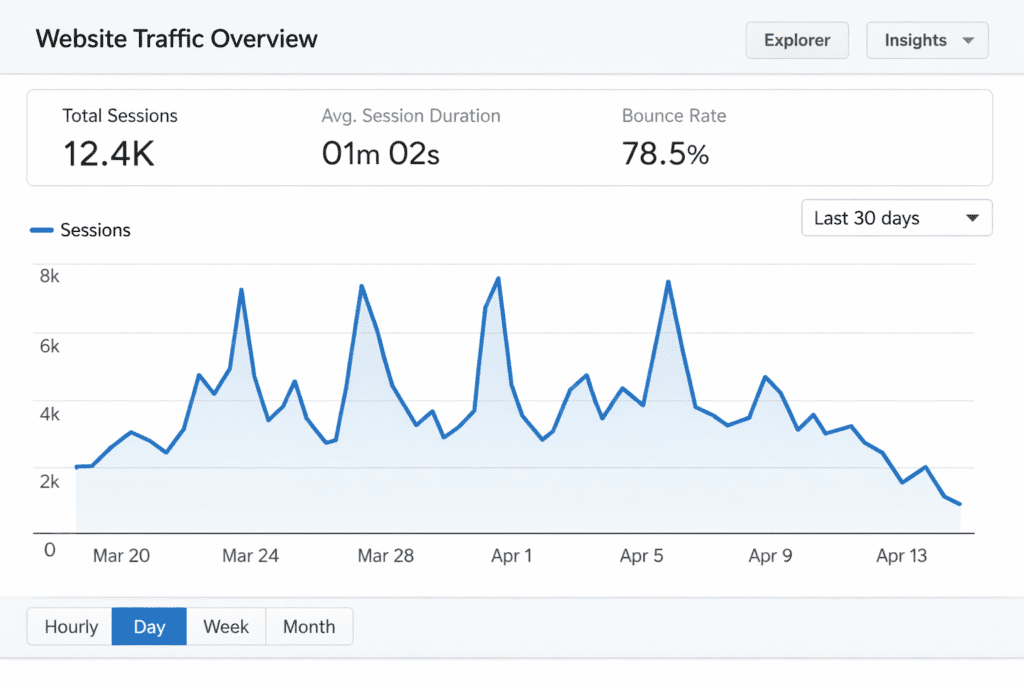
Trending Content analysis
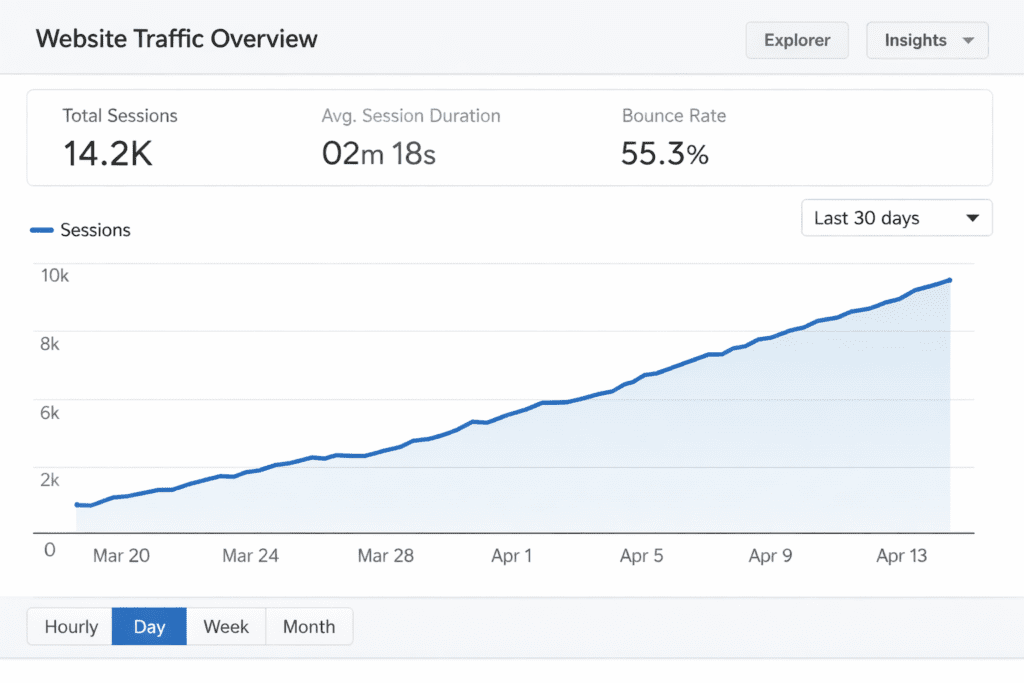
Evergreen Content Analysis
What Is Trending Content? (And When It Actually Helps)
The simple definition: Trending content covers topics that have a sudden spike in search interest — usually tied to current events, news, product launches, algorithm updates, viral moments, or seasonal peaks.
It’s timely by nature. It’s written to capture attention right now, not necessarily a year from now.
Real-world examples of trending content:
- “Google’s March 2025 core update — what changed and what to do”
- “How to use GPT-4o for content writing (just released)”
- “Budget 2026 highlights for salaried employees in India”
- “Why everyone is suddenly using Notion in 2026”
- “Best content writing tools after Jasper’s pricing change”
Why trending content still has genuine value:
Done correctly, trending content captures traffic during a peak window that evergreen content simply cannot access. A well-timed article on a trending topic can generate more traffic in two weeks than an evergreen article generates in three months — just frontloaded rather than spread across years.
It also signals to Google that your site is active, current, and engaged with your niche. A mix of fresh, timely content alongside your evergreen library tells search engines your site is a living resource, not a static archive.
The real benefits:
- Rapid traffic spikes during the trend window — sometimes within 24–48 hours of publishing
- Topical relevance signals to Google — shows the site is active and current
- Social sharing potential — trending content is far more likely to be shared on LinkedIn, Twitter, and WhatsApp groups
- Backlink opportunities — journalists and other writers link to timely takes more readily than timeless ones
The honest drawbacks:
- Short shelf life — most trending content is largely irrelevant within weeks or months
- Unpredictable ROI — you may invest significant time in a piece that peaks for 10 days then gets no traffic
- Creates an unsustainable workload if it becomes your primary strategy
- Low long-term AdSense value because traffic doesn’t recur
- Content calendars become reactive instead of strategic
Search Intent Strategy in Content Marketing: Rank What Users Actually Want
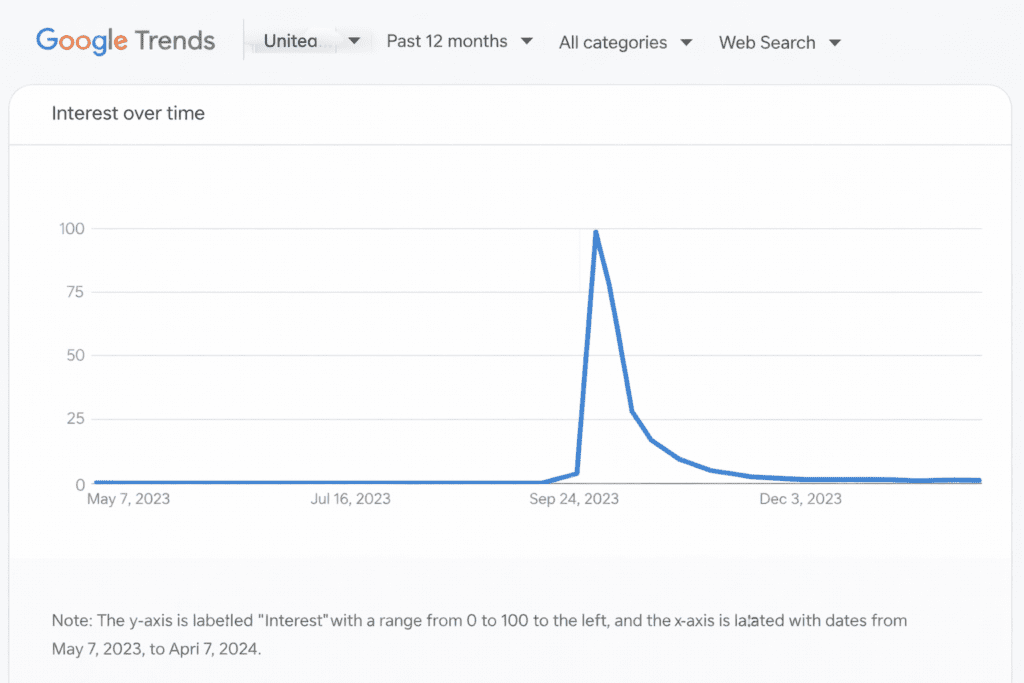
Trending Content analysis
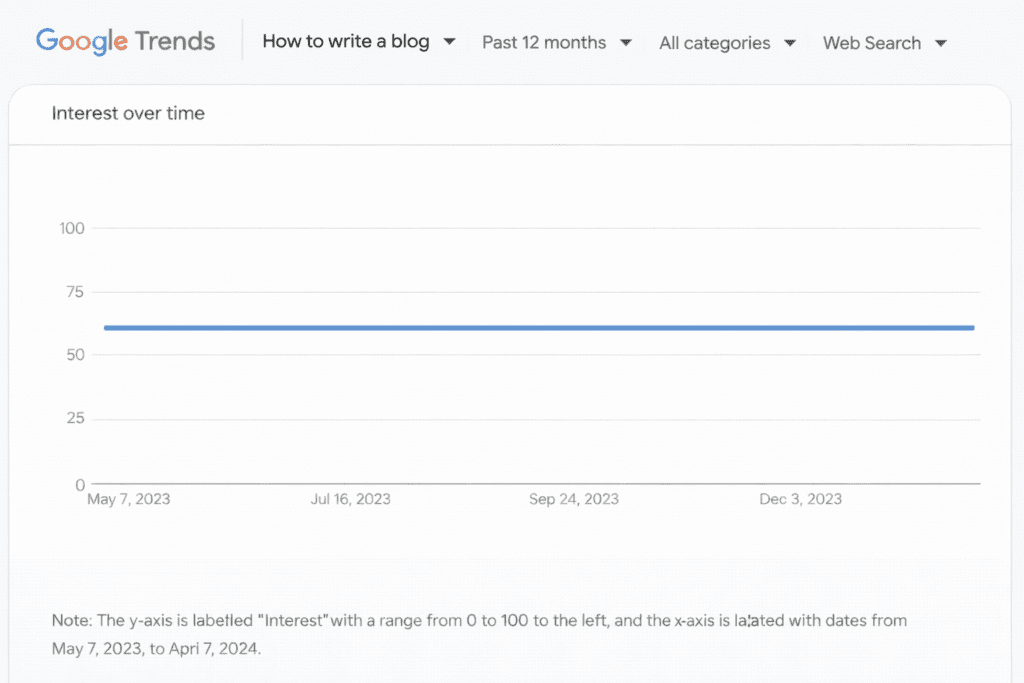
Evergreen Content Analysis
Evergreen vs Trending Content: Side-by-Side Comparison
| Factor | Evergreen Content | Trending Content |
|---|---|---|
| Traffic pattern | Slow build, consistent long-term | Fast spike, rapid decline |
| SEO value | High — compounds over months/years | Low long-term, high short-term |
| Ranking timeline | 3–6 months to rank meaningfully | Can rank within days if timed right |
| Content lifespan | Months to years | Days to weeks |
| Effort required | High upfront — research + depth | High upfront — speed + timing |
| Sustainability | High — builds passive traffic | Low — requires constant new topics |
| AdSense potential | High — steady, predictable revenue | Low — spiky, unpredictable revenue |
| Backlink potential | Moderate — builds over time | High short-term — timely pieces attract links |
| Best for | New sites building authority | Established sites capitalising on spikes |
| Social sharing | Low-moderate | High during trend window |
The key insight from this table: There is no objectively “better” strategy — there’s only the right tool for the right purpose. Evergreen content builds the foundation. Trending content accelerates visibility at strategic moments.
Which Strategy Is Actually Better for SEO?
The honest answer is neither — and both.
Here’s how to think about it clearly:
If you want sustainable, compound organic growth: Evergreen content is your primary tool. It’s the content that will be driving traffic to your site in 2027 from articles you wrote in 2025. It’s the foundation of every high-traffic, high-authority blog I’ve seen built over two or more years.
If you want to accelerate early growth and brand visibility: Trending content is a multiplier. When a new tool launches, an algorithm changes, or a topic goes viral in your niche — a well-timed, well-researched take can get your site in front of new audiences faster than any evergreen article.
The trap most bloggers fall into: Treating these as a binary choice. Chasing only trends creates a treadmill. Publishing only evergreen means slow, solitary early-stage growth with no external signals of relevance.
In my experience, the SEO results that feel both fast and sustainable come from a deliberate combination — with evergreen content holding the majority share.
The 70/30 Content Strategy: The Practical Balance That Works
This is the framework I now use for every content calendar I build — and the one I recommend to any blogger or content marketer who asks:
70% Evergreen Content + 30% Trending Content
Why 70% evergreen? Your long-term traffic engine needs to be the dominant force in your content output. Seventy percent evergreen means your blog is constantly building compound ranking equity — every month, every article adds to a growing foundation rather than spiking and disappearing.
Why 30% trending? A quarter of your content budget on trending topics keeps your site fresh, signals activity to Google, captures short-term spikes, attracts social shares and backlinks, and occasionally surfaces an article that becomes a long-term reference piece (a “trending topic that matures into evergreen”).
How this plays out practically:
For a blogger publishing 4 articles per month:
- 3 evergreen articles (how-to guides, tutorials, comparison pieces, beginner resources)
- 1 trending article (industry update, news response, timely tip)
For a blogger publishing 8 articles per month:
- 5–6 evergreen articles
- 2–3 trending articles
The exact ratio can flex — if a significant trend is worth three articles (an algorithm update, a major tool launch), adjust that month’s balance and compensate the following month.
Content Writing Tips for Beginners: How to Start Writing Like A Pro
Real Content Plan Example (Monthly Mix)
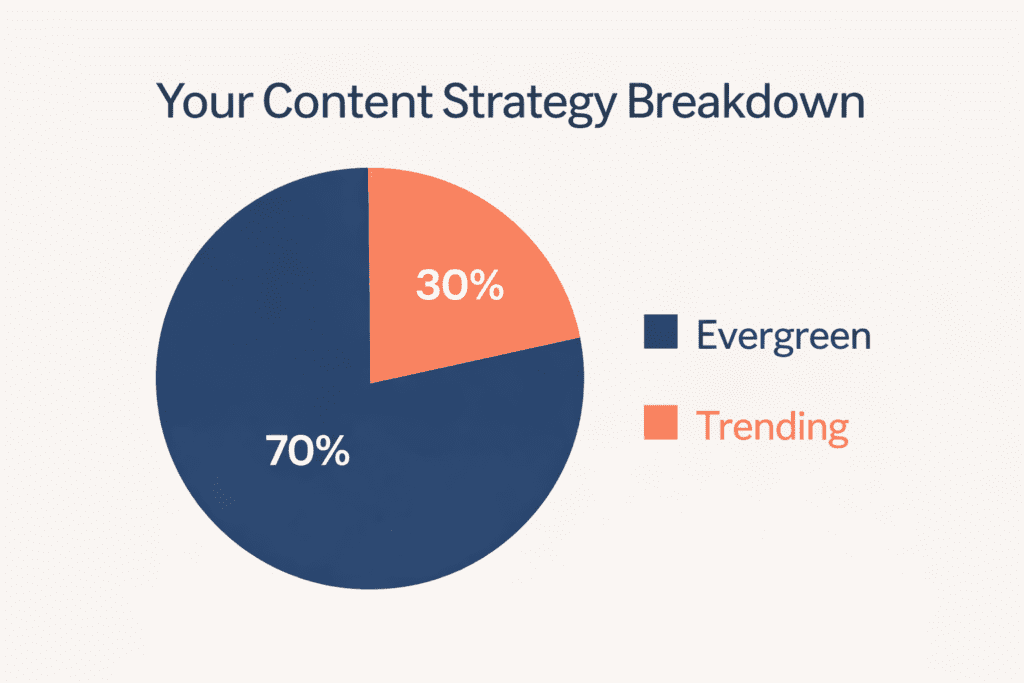
Here’s what a practical 70/30 content month looks like for a content writing and SEO blog:
| Week | Article Type | Example Topic |
|---|---|---|
| Week 1 | Evergreen | “Content Writing Tips for Beginners: How to Start Writing Like a Pro” |
| Week 1 | Evergreen | “How to Create an SEO Content Strategy for Your Website” |
| Week 2 | Evergreen | “What Is Generative SEO and How Content Marketers Can Use It” |
| Week 2 | Trending | “How to Use Claude 3.7 for Blog Writing (Just Released)” |
| Week 3 | Evergreen | “Evergreen vs Trending Content: What Works Better for SEO” |
| Week 3 | Evergreen | “Step-by-Step Guide to Writing an SEO-Optimised Blog Post” |
| Week 4 | Evergreen | “Time Management for Writers: How to Be Consistently Productive” |
| Week 4 | Trending | “Google’s April 2026 Algorithm Update: What Changed for Bloggers” |
Notice the pattern:
- Most articles build the evergreen library — permanent traffic assets
- One trending article per fortnight captures timely interest
- Even the trending articles are written with some structural depth — so they don’t disappear entirely when the peak fades
Mistakes Bloggers Make While Chasing Trends
Publishing too slowly on trending topics. Trending content is a sprint. If you take four days to research and write about a trend that peaked on Monday, you’ve missed the window. For trending content: publish fast, update later if needed.
Treating every trend as worth covering. Not every trending topic is relevant to your audience or your niche. A finance blog doesn’t need a take on a viral writing app. Trending content should still connect to your core subject matter — or you confuse both Google and your readers about what your site is actually about.
Abandoning evergreen content during traffic spikes. The biggest mistake I see. A trending article performs well, the blogger gets excited, and for the next month they chase three more trends — ignoring their evergreen calendar entirely. The spike fades. The foundation stalled. Momentum lost.
Not updating trending content that aged well. Occasionally a trending piece becomes a long-term reference — an explanation of a now-standard tool, a breakdown of an algorithm change that shaped SEO for the next two years. Review your trending articles annually. Update the ones with sustained traffic. They may have evergreen potential you haven’t tapped.
Using trending topics to pad content volume without adding original insight. “Here’s what everyone else already said about this trend, repackaged.” This content ranks briefly and adds nothing to your site’s authority. If your trending take doesn’t include original perspective — your analysis, your tested experience, your specific recommendations — it’s noise.
Time Management for Writers: How to Make Your Writing Journey Productive
How I Balance Evergreen and Trending Content
My personal approach, simplified:
Every Sunday evening, I review my content calendar for the coming week. My evergreen articles are already planned 4–6 weeks ahead in Notion — researched keywords, outlines ready.
When a relevant trend appears, I ask three questions before deciding to cover it:
- Is this genuinely relevant to my audience?
- Can I add something the first five articles covering this trend haven’t said?
- Can I publish within 48 hours while maintaining quality?
If the answer to all three is yes — I adjust the week’s calendar, move one evergreen article back by a week, and publish the trending piece.
If the answer to any of them is no — I skip it and stay on the evergreen plan.
This keeps me from reactive publishing while still capturing the moments worth capturing.
Content Writing Tips for Beginners: How to Start Writing Like A Pro
Traffic Growth Strategy Using Both Content Types
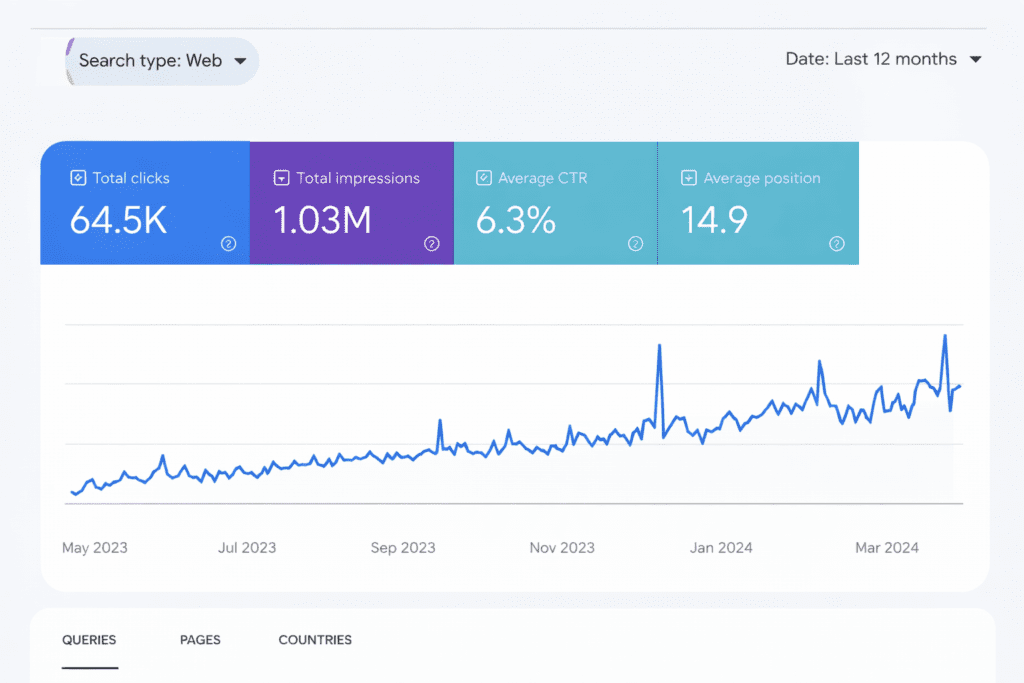
Here’s how the two content types work together to drive compounding growth over 12 months:
Months 1–3 (Foundation Phase): Focus 80% on evergreen content. New sites need topical authority before trending content pays off. Build your pillar articles, establish your content clusters, and let the evergreen library start indexing and gaining early rankings.
Months 4–6 (Momentum Phase): Shift to the 70/30 mix. Your evergreen articles are starting to rank for long-tail keywords. Trending articles now have a more established site behind them — which means they rank faster and attract better backlinks.
Months 7–12 (Compound Phase): Your evergreen articles are ranking consistently. Trending content creates regular traffic spikes that introduce new readers who then discover your evergreen library. Your total organic traffic is a combination of the stable evergreen base plus recurring trend-driven peaks.
After 12 months: The compounding effect kicks in fully. New evergreen articles rank faster because of the domain authority built by older ones. Trending articles get more social shares because your brand has an established audience. Both strategies reinforce each other.
Content Strategy for New Bloggers (Start Here)
If you’re just starting out, here’s the honest sequence to follow:
First 3 months — 100% evergreen. Don’t chase trends yet. You don’t have the domain authority to rank for them competitively, and the traffic spikes won’t stick to a site that hasn’t established itself. Use this period to publish 8–12 deeply researched evergreen articles on your 2–3 core topics.
Month 4 onwards — introduce trending content at 20–30%. Once your evergreen foundation is indexed and starting to rank for long-tail keywords, begin adding one trending piece every 2–3 weeks. Your site now has enough context and authority for trending articles to benefit from the foundation beneath them.
Never go below 60% evergreen, even as an established blogger. The moment your content calendar tips toward more trending than evergreen, you’re building on sand. Consistent organic growth needs a consistent evergreen base — always.
How to Create an SEO Content Strategy for Your Website (Step-by-Step Guide)
Frequently Asked Questions
Q1. What is evergreen content in SEO, exactly?
Evergreen content is content that stays relevant and continues attracting search traffic long after its publication date — because it addresses topics that don’t expire or go out of date. Examples include how-to guides, beginner tutorials, definition articles, and comprehensive comparison pieces.
Unlike news or trend-based content, evergreen articles keep ranking and driving traffic for months or years with minimal updates.
Q2. Does trending content actually help with SEO rankings?
Yes — in the short term and in specific ways. Well-timed trending content can rank quickly for high-traffic keywords during a topic’s peak search window. It also attracts backlinks and social shares more readily than evergreen content, which can indirectly boost the authority of your entire site.
However, trending content rarely sustains ranking long-term. Its SEO value is real but time-limited.
Q3. Which type of content ranks faster on Google?
Trending content typically ranks faster — sometimes within 24–72 hours — because there’s less competition and Google prioritises fresh content for timely queries. Evergreen content takes longer, usually 3–6 months, because it faces established competition. However, evergreen content’s rankings are more stable and durable once achieved.
Q4. How should a beginner blogger balance evergreen and trending content?
Start with 100% evergreen content for your first 3 months. Build your topical foundation before chasing trends — new sites don’t have enough authority for trending content to rank competitively. From month 4 onwards, adopt a 70% evergreen / 30% trending mix. Maintain at least 60% evergreen at all times to protect your long-term traffic base.
Q5. Can trending content become evergreen?
Yes — and this is an underrated opportunity. Some trending topics mature into enduring reference points. An article explaining a major Google algorithm update, for example, may remain relevant and searched for years after the initial trend peak. Review your trending articles every 6 months.
Update and expand the ones with sustained traffic — they may have quietly become evergreen assets worth investing in.
Q6. How do I find trending topics relevant to my niche?
Use Google Trends (filter by category and region — India-specific trends are especially useful for Indian bloggers), Twitter/X trending topics filtered by niche, Reddit’s relevant subreddits for early trend signals, and Google’s “In the news” results for your core keywords.
The best trending topics are ones your audience genuinely cares about — not just whatever is broadly viral.
Final Thoughts
The debate between evergreen and trending content isn’t really a debate. It’s a false choice.
Evergreen content is your foundation — the library of permanent assets that compounds in value every single month and gives your blog the stable traffic base that makes everything else possible.
Trending content is your accelerator — the strategic moments where you capture fast-moving attention, attract backlinks, and introduce your brand to new audiences who may never have found you through a search.
Neither works as well alone as they do together.
If you’re just starting: build your evergreen foundation first. Don’t let the dopamine hit of a trending traffic spike pull you off course before the foundation is solid.
If you’re established and stuck: check your content calendar. If it’s more reactive than planned, more trending than evergreen, more volume than depth — that’s your answer.
The 70/30 split isn’t a rigid rule. It’s a framework that keeps your content strategy honest. Adjust it for your niche, your publishing pace, and your goals — but never let the evergreen share fall below the majority.
Build the foundation. Add the fuel. Let both compound.
Read our next article :Content Marketing Strategy That Ranks on Google (Complete Guide)
References:
- Google Search Central — Creating Helpful Content: https://developers.google.com/search/docs/fundamentals/creating-helpful-content
- Google Trends: https://trends.google.com
- Ahrefs Blog — Evergreen Content Guide: https://ahrefs.com/blog/evergreen-content/
- HubSpot — Content Strategy Resources: https://blog.hubspot.com/marketing/content-strategy
Author Bio
Dr. Rekha Khandelwal is a content strategist, academic writer, and SEO-focused consultant specializing in content planning, topical authority, and ethical digital growth. Through AspirixWriters, she helps creators and businesses build Google-friendly, AdSense-safe content strategies that scale sustainably.
Writing Services
Contact us for writing services
Classmate Pulse Spiral Notebook ✏️ Need a Spiral Notebook for Everyday Writing? A spiral notebook…

Latest Scholarships & Fellowships 2026–27: Open Opportunities for Upcoming call
Latest Scholarships & Research Fellowships 2026–27 Last Verified: 30 September 2026 Students, researchers, PhD scholars…
Writing & Research Resources: Useful Books, Tools & Essentials for Writers and Researchers
Whether you are an author, content writer, law student, academic researcher, PhD scholar, teacher, or…

International Treaties as a Source of International Law | LL.B. Notes
International Treaties as a Source of International Law Introduction International treaties are one of the…

The Ultimate Guide to Organizing LLB Notes for Exam Success
LLB Notes for Exam Success Studying law is not simply about reading hundreds of pages….
What Is the Best AI Tool for Legal Research in 2026? A Practical Guide for Lawyers, Law Students and Researchers
What Is the Best AI Tool for Legal Research in 2026? Last updated: September 2026…
Classmate Pulse Spiral Notebook ✏️ Need a Spiral Notebook for Everyday Writing? A spiral notebook…
Latest Scholarships & Fellowships 2026–27: Open Opportunities for Upcoming call
Latest Scholarships & Research Fellowships 2026–27 Last Verified: 30 September 2026 Students, researchers, PhD scholars…
Writing & Research Resources: Useful Books, Tools & Essentials for Writers and Researchers
Whether you are an author, content writer, law student, academic researcher, PhD scholar, teacher, or…
International Treaties as a Source of International Law | LL.B. Notes
International Treaties as a Source of International Law Introduction International treaties are one of the…
The Ultimate Guide to Organizing LLB Notes for Exam Success
LLB Notes for Exam Success Studying law is not simply about reading hundreds of pages….
What Is the Best AI Tool for Legal Research in 2026? A Practical Guide for Lawyers, Law Students and Researchers
What Is the Best AI Tool for Legal Research in 2026? Last updated: September 2026…