Last Updated: May 11, 2026
Motor Insurance & Third Party Law India -MVA-08
← Previous: Traffic Rules & Fines (MVA-07) Part of Motor Vehicles Act 1988 India: Complete Guide
→ MACT Claims in India: Step-by-Step Process, Compensation & Rules (2026 Guide) (MVA-09)
Is third party insurance mandatory in India?
Yes. Section 146 of the Motor Vehicles Act, 1988 makes third party insurance compulsory for every motor vehicle on Indian roads. Driving without it is a criminal offence under Section 196 — fine of Rs. 2,000 and/or 3 months imprisonment.
What does third party cover?
Death or bodily injury to any third party; property damage up to Rs. 7.5 lakh. Unlimited liability for death/serious injury after 2019 Amendment (Section 147).
Does NOT cover your own vehicle or self-injury. Hit-and-run?
The Motor Vehicle Accident Fund (Section 164B, 2019 Amendment) pays Rs. 2 lakh for death and Rs. 50,000 for grievous injury in hit-and-run cases — even if no insurer is identified.
Download the free MACT Claim Filing Checklist PDF 2026 and stay prepared with the right legal information when it matters most.
Free MACT Claim Filing Checklist PDF 2026
A Story Every Vehicle Owner Must Hear
Renu’s son was hit by a car near their colony in Pune. The driver fled. Renu rushed her son to the hospital. The surgery cost Rs. 3.5 lakh. She had no idea how to recover the money. She did not know which court to approach, whether insurance applied, or what her rights were.
Three months later, a neighbour told her about the Motor Vehicle Accident Fund — a provision inserted by the Motor Vehicles (Amendment) Act, 2019 — that guarantees cashless golden-hour treatment and compensation even for hit-and-run victims, without needing to identify the driver or their insurer.
Renu got Rs. 50,000 in compensation for grievous injury from the Fund. She did not need a lawyer for the initial claim. She did not need to prove who the driver was. The law had provisions she never knew existed.
This is why understanding motor insurance law in India is not just useful for lawyers and law students. It is essential for every vehicle owner and every citizen who uses Indian roads. This complete guide covers Chapter XI of the Motor Vehicles Act, 1988 — the insurance chapter — in plain language, with every key section, the claim process, the insurer’s legal duties, and the critical changes brought by the 2019 Amendment.
What Is Third Party Insurance Under the Motor Vehicles Act?
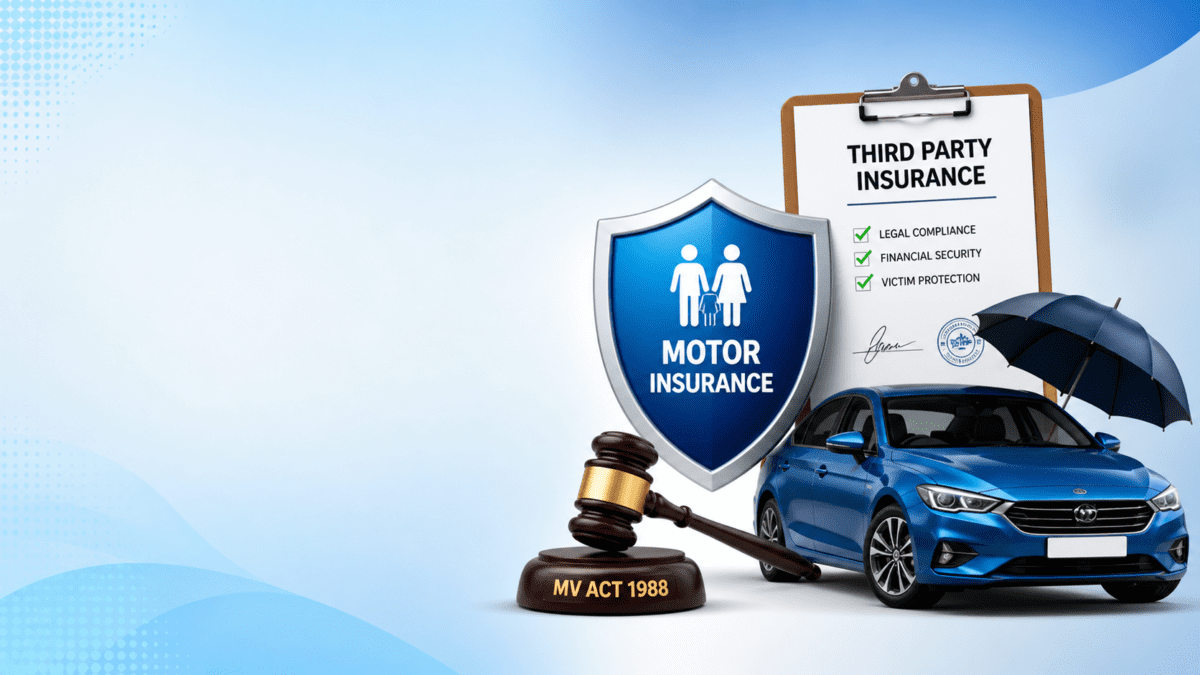
| Third party insurance is a mandatory insurance policy that protects third parties — other people and their property — against harm caused by your vehicle. The Motor Vehicles Act, 1988 uses the term ‘insurance against third party risk’ under Chapter XI. The policyholder (vehicle owner/driver) is the first party, the insurance company is the second party, and anyone else injured or killed by the vehicle is the third party. Third party insurance does not cover the vehicle owner’s own losses. |
Think of it this way: if you accidentally hit a pedestrian, your third party insurance pays for their medical bills and compensation — you do not have to pay out of pocket. But if your own car is damaged in the same accident, third party insurance pays nothing for your vehicle. That requires a comprehensive policy.
The term ‘third party’ in insurance law comes from basic contract law — every contract has a first party (the person buying the policy) and a second party (the insurer). Anyone outside that contract who suffers because of the insured vehicle is the third party. The Motor Vehicles Act mandates that every vehicle owner maintain coverage for this third party’s potential losses.
Section 146 — Is Third Party Insurance Mandatory in India?
Yes. Section 146 of the Motor Vehicles Act, 1988 makes it absolutely compulsory: no person shall use, or cause or allow any other person to use, a motor vehicle in a public place unless there is in force in relation to that vehicle a policy of insurance covering third party risk as required by the Act. There are no exceptions for private vehicles, government vehicles, or any other category.
Section 146 is one of the most powerful mandatory provisions in Indian motor law. The key phrase is ‘use or cause or allow’ — this means liability falls on the vehicle owner even if they were not driving. If you lend your car to a friend and they drive without insurance, you are equally liable.
| Who Section 146 Applies To | Their Obligation | Penalty for Non-Compliance |
| Vehicle owner (private car) | Must maintain valid third party insurance at all times | Rs. 2,000 fine + up to 3 months jail (Sec 196) |
| Owner who lends vehicle | Equally liable if the vehicle is used without insurance | Same penalty — ’cause or allow’ wording covers this |
| Government vehicles | Sec 146 applies — no immunity for government-owned vehicles | Same penalty — no exception in law |
| New vehicle (just purchased) | Must have insurance before driving on any public road | Even the first drive to the RTO requires coverage |
| Commercial vehicle (bus, truck) | Must have third party insurance at minimum + permit conditions | Vehicle can be seized in addition to fine |
Section 147 — What Does Third Party Insurance Cover?
Section 147 of the Motor Vehicles Act, 1988 specifies the minimum coverage a valid motor insurance policy must provide: (1) death or bodily injury to any person (including passengers) caused by or arising out of the use of the vehicle; (2) damage to third party property up to Rs. 7.5 lakh. The 2019 Amendment removed the earlier cap on liability for death or permanent disability — there is now no upper limit on a third party’s death/serious injury claim.
What Third Party Insurance Covers — and What It Does Not
| Category | Covered? | Details |
| Death of a third party (pedestrian, occupant of another vehicle) | Yes — No upper limit | 2019 Amendment removed the liability cap. Court awards full compensation. |
| Bodily injury to a third party | Yes — No upper limit | Hospitalization, surgery, rehabilitation, lost income — all covered. |
| Permanent disability of a third party | Yes — No upper limit | Structured formula under Section 163A applies. |
| Third party property damage | Yes — up to Rs. 7.5 lakh | For damage to another’s vehicle, building, or property. |
| Passengers in a public vehicle (bus, taxi) | Yes — covered as third parties | The vehicle operator’s insurer covers them. |
| Your own vehicle (own damage) | Not covered | Requires a comprehensive/OD policy. Third party does NOT cover this. |
| Your own injuries (driver’s self-injury) | Partial | PA (Personal Accident) cover bundled with most policies but separate from third party. |
| Criminal damage (intentional acts) | Not covered | Insurance does not cover deliberate harm. |
| Driving under influence | Disputed | Insurer can contest liability but must still pay victim first — Section 149 ‘pay and recover’ rule. |
Download the free MACT Claim Filing Checklist PDF 2026 and stay prepared with the right legal information when it matters most.
Free MACT Claim Filing Checklist PDF 2026
Section 149 — The Insurer’s Duty to Satisfy Court Awards
What is the duty of an insurer under Section 149 of the Motor Vehicles Act?
Section 149 of the Motor Vehicles Act, 1988 creates a direct obligation on the insurance company: where a court or MACT has passed an award of compensation against a vehicle owner in a third party claim, the insurer must satisfy that award — even if the insurer has grounds to dispute the claim with the policyholder. The insurer pays the victim first; it can then recover the amount from the vehicle owner separately. This is the statutory ‘pay and recover’ principle that protects accident victims from being caught in owner-insurer disputes.
Section 149 is the victim’s most important protection in the insurance chapter. Before this provision existed, insurance companies could refuse to pay a victim if they had any dispute with the policy holder — even a technical one like an expired licence or a minor policy condition breach. Section 149 changed that completely.
Today, the sequence is: (1) The court or MACT passes an award against the vehicle owner; (2) The insurer must pay the victim directly; (3) If the insurer believes the vehicle owner violated the policy (e.g., the driver was drunk or unlicensed), the insurer can file a separate recovery action against the owner; (4) The victim is never left waiting while the owner and insurer fight each other.
Supreme Court — Pay and Recover Rule: In Pepsu Road Transport Corporation v. National Insurance Co. Ltd. (2013) 10 SCC 217, the Supreme Court confirmed that even where the insurer has a valid defence against the vehicle owner (e.g., negligent hiring of an unlicensed driver), the insurer must first pay the compensation to the victim and then recover from the owner. Victims cannot be denied compensation due to policyholder-insurer disputes.
Motor Vehicle Accident Fund — Section 164B (2019 Addition)
What is the Motor Vehicle Accident Fund under Section 164B?
Section 164B of the Motor Vehicles Act, 1988 (inserted by the 2019 Amendment) established the Motor Vehicle Accident Fund — a Central Government-administered fund that provides financial relief to road accident victims who cannot recover compensation from an insurer. It covers: (1) cashless treatment during the golden hour after any accident; (2) Rs. 2 lakh compensation for death in a hit-and-run; (3) Rs. 50,000 for grievous injury in a hit-and-run; (4) any other compensation prescribed by the Central Government. Source: Section 164B, MV(Amendment) Act 2019.
The Motor Vehicle Accident Fund fills the most critical gap in the pre-2019 framework: victims of hit-and-run accidents and uninsured vehicles had virtually no practical remedy. The earlier ‘Solatium Fund’ (which Section 164B replaces) provided token amounts — Rs. 25,000 for death. The 2019 Amendment raised the hit-and-run death compensation to Rs. 2 lakh — an 8x increase.
Golden Hour Scheme — Section 164C
Section 164C (also inserted by the 2019 Amendment) mandates cashless treatment for road accident victims during the ‘golden hour’ — the first 60 minutes after a traumatic injury. Any hospital is required to provide treatment without demanding documents, advance payment, or identification. The cost is reimbursed to the hospital from the Motor Vehicle Accident Fund. This provision saves lives by removing the financial barrier to immediate medical intervention.
No-Fault Liability — Section 140 (Interim Relief Without Proving Fault)
What is no-fault liability under Section 140 of the Motor Vehicles Act?
Section 140 provides that in any claim arising from the use of a motor vehicle, the owner is liable to pay interim compensation to the victim regardless of whether the owner was at fault. The amounts are: Rs. 50,000 for death and Rs. 25,000 for permanent disablement. No proof of negligence, rash driving, or fault is required to receive this interim relief. It is payable in addition to any other compensation awarded later.
Section 140 is the law’s acknowledgment that accident victims need immediate financial relief — they cannot wait months or years for a full MACT trial to conclude before receiving any money. The interim payment under Section 140 can be obtained quickly, without the burden of proof that a regular compensation claim requires.
How to File a Third Party Insurance Claim After an Accident — Step by Step
Filing a motor insurance claim after an accident involves both the police process and the legal/insurance process. Here is the complete step-by-step guide:
| 1 | Report to Police — File an FIR As soon as possible after the accident, file a First Information Report (FIR) at the nearest police station. The FIR is the foundation document for all insurance and MACT claims. Get a copy of the FIR — you will need it for every subsequent step. For hit-and-run cases, the FIR triggers the Motor Vehicle Accident Fund process. |
| 2 | Seek Immediate Medical Attention Under the golden hour scheme (Section 164C), hospitals must provide cashless treatment immediately — do not delay seeking care due to financial concerns. Keep all medical bills, discharge summaries, doctor’s certificates, and treatment records. These form the basis of the compensation amount. |
| 3 | Notify the Insurance Company Inform the vehicle owner’s insurance company about the accident as soon as possible — ideally within 24–48 hours. Most policies require prompt notification. For third party claims, you are notifying the other party’s insurer (the tortfeasor’s insurer). Provide: FIR number, accident details, your identity and injury details. |
| 4 | Gather Supporting Documents Collect: FIR copy, medical records and bills, income proof (salary slips, ITR, or employer certificate), identity proof (Aadhaar, PAN), photographs of accident scene, witness details if available, and vehicle documents of the offending vehicle (RC, insurance) if you can obtain them. |
| 5 | File Claim Before MACT (if insurer disputes) If the insurer does not settle fairly or disputes the claim, file an application (Form 1) before the Motor Accident Claims Tribunal (MACT) in your district under Section 166 of the Motor Vehicles Act. The MACT is specifically designed for fast, accessible adjudication of motor accident claims. File within 6 months of the accident for best results. |
| 6 | MACT Award — Insurer Must Pay The MACT passes a monetary award directing the insurer to pay compensation. Under Section 149, the insurer cannot refuse to pay the victim. The award accrues 9% annual interest if not paid within 15 days. Appeals against MACT awards lie to the High Court under Section 173. |
| Section 166 Time Limit: Applications to the MACT should be filed within 6 months of the accident. Courts have discretionary power to condone delay in genuine cases, but do not wait — file as soon as the facts are clear. Download the free MACT Claim Filing Checklist PDF 2026 and stay prepared with the right legal information when it matters most. Free MACT Claim Filing Checklist PDF 2026 |
Third Party Insurance vs Comprehensive Insurance — What Is the Difference?
| Feature | Third Party Insurance | Comprehensive Insurance |
| Mandatory under law? | Yes — Section 146, MVA 1988 | No — optional but strongly recommended |
| Who is covered? | Third parties: other people, their vehicles, their property | Third parties + your own vehicle + personal accident cover |
| Own vehicle damage covered? | No | Yes |
| Theft of vehicle? | No | Yes |
| Fire, natural disaster, flood? | No | Yes |
| Death of third party? | Yes — unlimited | Yes — unlimited |
| Third party property damage? | Yes — up to Rs. 7.5 lakh | Yes — up to Rs. 7.5 lakh (legal minimum) |
| Personal accident cover (driver)? | Included as a mandatory add-on (since IRDAI circular) | Included — Rs. 15 lakh cover |
| Premium | Lower — typically Rs. 500–3,000/year for two-wheelers | Higher — based on IDV, age, vehicle |
| Best for? | Legal compliance; older vehicles | New vehicles; daily drivers who cannot afford own-damage loss |
Practical Advice: Third party insurance gives you legal compliance. Comprehensive insurance gives you financial protection. For any vehicle worth more than Rs. 2 lakh, a comprehensive policy is almost always worth the premium. Driving an uninsured vehicle — even for one day — exposes you to criminal liability (Rs. 2,000 + jail) and full personal financial liability for any accident you cause.
Download the free MACT Claim Filing Checklist PDF 2026 and stay prepared with the right legal information when it matters most.
Free MACT Claim Filing Checklist PDF 2026
Latest Updates 2026 — Motor Insurance Law
Latest Update 2026: Sections 50–57 (insurance transfer on vehicle sale) and Section 93 (aggregator licensing including insurance requirements for app-based cabs) — operative from 1 April 2022 per Gazette S.O. 859(E), Ministry of Road Transport and Highways, 25 February 2022. Motor Vehicle Accident Fund: operational; golden hour cashless treatment mandated nationwide.
Vahan portal integrates insurance validity checks in real time — expired insurance triggers automatic e-Challan at toll booths. No major amendment to Chapter XI (Sections 145–164) in 2025–26. Supreme Court in Bajaj Allianz General Insurance v. Rambha Devi (2024 INSC 840): LMV licence holders driving sub-7,500 kg transport vehicles — insurers cannot deny third party claims on this licence-class ground. Source: Gazette S.O. 859(E); 2024 INSC 840; MoRTH.
6 Common Mistakes Vehicle Owners Make About Motor Insurance
- Mistake 1 — ‘Renewing insurance is optional for old vehicles.’ Wrong. Section 146 applies regardless of the vehicle’s age. A 20-year-old car that drives even once on a public road needs valid insurance. Insurance lapse is detected automatically by the Vahan database at toll booths and checkposts.
- Mistake 2 — ‘The other driver was at fault — their insurance pays everything automatically.’ Not automatic. You or the victim must file a claim — either directly with the insurer or before the MACT. Insurance companies do not proactively identify victims and pay them. You must initiate the claim process.
- Mistake 3 — ‘Third party insurance means the insurer will cover my car damage too.’ It does not. Third party insurance exclusively covers losses to others. For your own vehicle damage, you need a separate ‘own damage’ (OD) or comprehensive policy.
- Mistake 4 — ‘If the driver was drunk, the insurer will not pay the victim.’ The insurer must still pay the victim first under Section 149. The insurer can then recover from the vehicle owner. The victim is protected regardless of the driver’s intoxication. (See: Pepsu Road Transport Corp v. National Insurance Co., (2013) 10 SCC 217.)
- Mistake 5 — ‘I do not need to declare the sale of my vehicle — the insurance just transfers.’ Wrong. When you sell a vehicle, you must inform the RTO under Section 50 within 14 days. The insurance policy can be transferred with the vehicle, but this requires a formal endorsement from the insurer. If you sell without completing the transfer, you remain liable as the registered owner for any accident the new owner causes.
- Mistake 6 — ‘Hit-and-run cases cannot get compensation — the driver is unknown.’ The Motor Vehicle Accident Fund under Section 164B covers hit-and-run victims specifically: Rs. 2 lakh for death and Rs. 50,000 for grievous injury. File the claim through the MACT or the designated scheme under the Motor Vehicle Accident Fund rules.
Summary — Motor Insurance Law India
| Quick Revision: 1. Section 146: Third party insurance is compulsory for every vehicle on every public road. No exceptions. 2. Section 147: Covers death/injury of third parties (unlimited) and property damage up to Rs. 7.5 lakh. Does NOT cover own vehicle damage. 3. Section 149: Insurer must pay victim first — even if insurer disputes the claim with the owner (pay and recover principle). 4. Section 140: Interim no-fault relief — Rs. 50,000 for death and Rs. 25,000 for disability — without proving negligence. 5. Section 164B (2019): Motor Vehicle Accident Fund — Rs. 2 lakh for hit-and-run death; Rs. 50,000 for hit-and-run injury; cashless golden hour treatment. 6. Section 196 penalty: Driving without insurance — Rs. 2,000 + up to 3 months jail. 7. Claim process: FIR → Medical care → Insurer notification → Documents → MACT if disputed → Award under Section 149. 8. Comprehensive vs Third Party: Third party = legal minimum. Comprehensive = financial protection. For new/valuable vehicles, always go comprehensive. |
Motor Vehicles Act 1988 India: Complete Guide
FAQ — Motor Insurance Third Party Law India
Q: Third party insurance kya hota hai? (What is third party insurance?)
A: Third party insurance is a mandatory policy that covers other people’s losses when your vehicle causes an accident. It pays for the death, injury, or property damage suffered by anyone other than you (the vehicle owner). Your own vehicle damage is not covered. Governed by Section 146–147, Motor Vehicles Act, 1988.
Q: Kya third party insurance compulsory hai India mein? (Is third party insurance compulsory?)
A: Yes. Section 146 of the Motor Vehicles Act, 1988 makes third party insurance mandatory for every motor vehicle on any public road in India. Driving without it is a criminal offence under Section 196 — Rs. 2,000 fine and up to 3 months imprisonment. There are no exceptions, regardless of vehicle type or age.
Q: Accident ke baad claim kaise karein? (How to claim after an accident?)
A: Step 1: File FIR at nearest police station. Step 2: Get medical treatment — cashless under golden hour scheme. Step 3: Notify the insurer within 24–48 hours. Step 4: Gather FIR, medical bills, income proof. Step 5: File MACT application if insurer disputes the claim under Section 166 within 6 months.
Q: Insurer kab payment karta hai? (When does the insurer pay?)
A: After the MACT passes a compensation award, the insurer must pay within 15 days under Section 149. If not paid in 15 days, the award accrues 9% annual interest. The insurer cannot withhold payment from the victim even if they have a dispute with the vehicle owner — they pay the victim first and recover from the owner later.
Q: Hit-and-run mein compensation milta hai? (Is compensation available in hit-and-run?)
A: Yes. The Motor Vehicle Accident Fund (Section 164B, 2019 Amendment) provides Rs. 2 lakh for death and Rs. 50,000 for grievous injury in hit-and-run cases — even if the driver is never identified. Cashless treatment during the first hour (golden hour) is also available. File a claim through the MACT or local Motor Vehicle Accident Fund authority.
Q: What is the penalty for driving without insurance in India?
A: Under Section 196 of the Motor Vehicles Act, 1988 as amended by the 2019 Amendment: first offence — Rs. 2,000 fine and/or up to 3 months imprisonment. Second or repeat offence — Rs. 4,000 and/or up to 3 months jail. The Vahan database detects uninsured vehicles automatically at toll booths and e-challan is generated.
Q: Drunk driver ki insurance company payment se inkar kar sakti hai? (Can insurer deny payment if driver was drunk?)
A: No — the insurer cannot deny payment to the victim. Under Section 149 (pay and recover principle), the insurer must pay the court-awarded compensation to the victim first. The insurer can then file a separate recovery action against the vehicle owner for allowing a drunk person to drive. Victim protection is paramount.
Q: Third party vs comprehensive — which is better?
A: Third party insurance is the legal minimum under Section 146 and covers only other people’s losses. Comprehensive insurance adds own-damage cover, theft, fire, natural disasters, and personal accident cover. For vehicles worth more than Rs. 2 lakh or daily drivers, comprehensive insurance provides essential financial protection that third party alone does not.
Continue Reading — Motor Vehicles Act Series on AspirixWriters.com
| Disclaimer: This article is for educational purposes only and does not constitute legal or insurance advice. All provisions are based on the Motor Vehicles Act, 1988 (Chapter XI) as amended by the 2019 Amendment as on April 2026. For specific insurance claims or legal disputes, consult a qualified advocate. |
References:
- Motor Vehicles Act, 1988 (Chapter XI, Sections 145–164) as amended by the Motor Vehicles (Amendment) Act, 2019 (Act No. 32 of 2019). indiacode.nic.in.
- MoRTH;
- PIB.
About Author
Dr. Rekha Khandelwal is a Ph.D. in Law, legal researcher, and founder of AspirixWriters.com. She specializes in simplifying Indian laws and academic concepts into clear, practical knowledge for students, aspirants, and the general public.
Dr. Rekha Khandelwal | Academic Writer, Legal Technical Writer, AI Expert & Author | AspirixWriters
Facing Domestic Violence in India? Here’s How to Get Protection and Claim Compensation
Facing Domestic Violence in India? Legal Specialist, Consultant & Researcher, AspirixWriters If you are in…
How to Check If a Property Has a Clear Title Before Buying in India
How to Check If a Property Has a Clear Title Before Buying in India Legal…
Got Cheated While Shopping Online? Here’s Exactly What You Can Do (Simple Guide)
— Legal Specialist, Consultant & Researcher, AspirixWriters | Reviewed & Approved Got Cheated While Shopping…
How to File for Mutual Divorce in India: Process, Documents, Timeline & Remarriage Rules
How to File for Mutual Divorce in India By Dr. Rekha Khandelwal — Legal Specialist,…
What to Do If Your Fundamental Rights Are Violated in India: A Complete Guide to Article 32 & Article 226
What to Do If Your Fundamental Rights Are Violated in India If a government official…
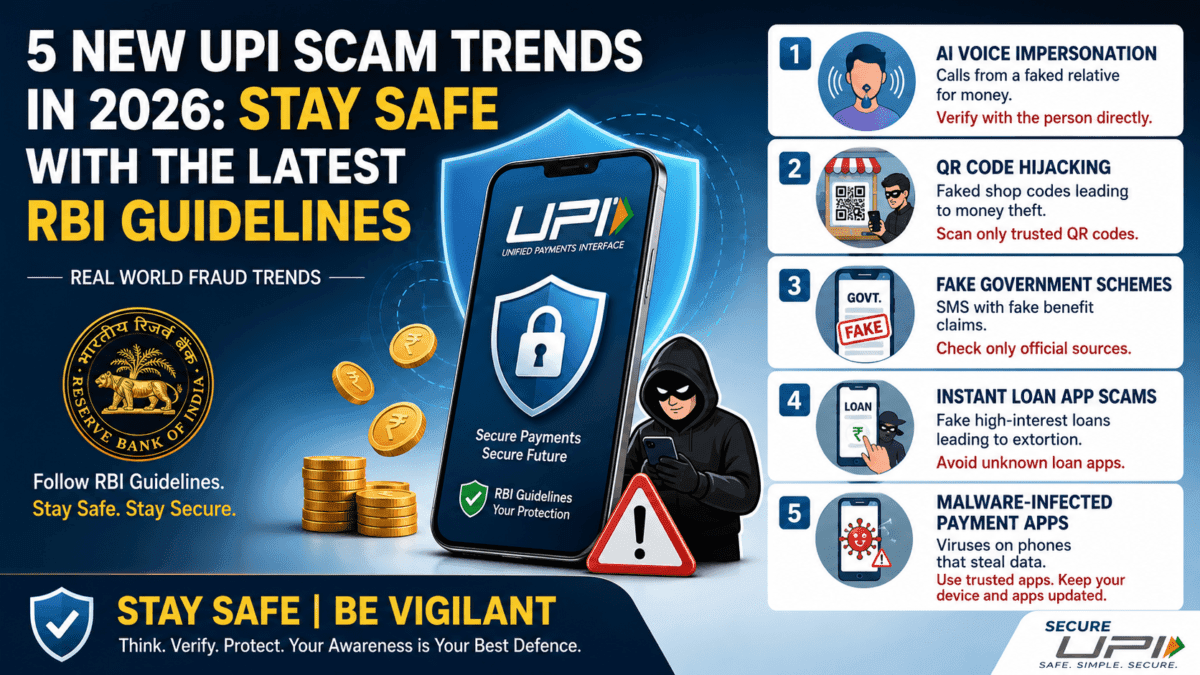
5 New UPI Scam Trends in 2026: Stay Safe with the Latest RBI Guidelines
Your phone buzzes at 11 PM. An unknown number. You pick up — and hear…