
How to Build a Content Marketing Strategy That Ranks on Google
Many websites publish content regularly, follow SEO checklists, and even use the right tools—yet still fail to rank on Google. The issue is rarely effort or intent. In most cases, it is the absence of a clear, structured strategy.
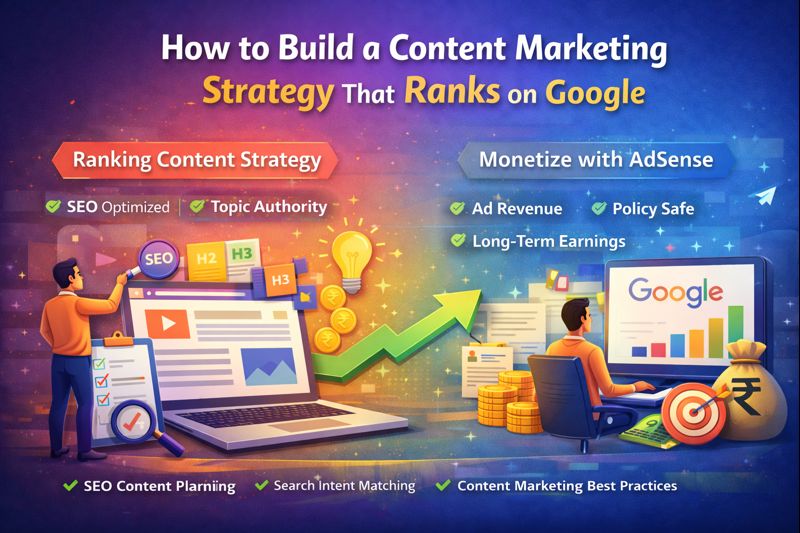
If you want sustainable traffic, visibility, and monetization, you must understand how to build a content marketing strategy that ranks on Google. Ranking content is not about publishing more articles or chasing trends. It is about aligning content with search intent, structuring it for clarity, and building long-term trust with both users and search engines.
This guide explains the process step by step, using practical principles that work in today’s competitive search environment—without shortcuts or exaggerated claims.
What Is a Content Marketing Strategy That Ranks on Google?
A content marketing strategy that ranks on Google is a structured approach to planning, creating, optimizing, and organizing content based on user intent, keyword research, and Google’s quality guidelines.
It prioritizes helpful, original, and experience-driven content, focusing on long-term value rather than volume, trends, or aggressive promotion.
Why a Ranking-Focused Content Strategy Matters Today
Google’s algorithms have evolved significantly. Today, they reward content that demonstrates usefulness, relevance, and trust rather than technical optimization alone.
A ranking-focused content strategy matters because Google now prioritizes:
- Content written for users, not search engines
- Clear topical authority within a niche
- Demonstrated experience and expertise
- Logical structure and intent matching
- Consistent quality across the website
Without a clear strategy:
- Content may get indexed but not ranked
- Traffic remains inconsistent or stagnant
- Monetization through AdSense, leads, or affiliates becomes difficult
That is why learning how to build a content marketing strategy that ranks on Google is essential for bloggers, creators, and businesses alike.
How to Build a Content Marketing Strategy That Ranks on Google
Below is a practical, proven framework you can apply to any blog or website.
1. Start with Search Intent, Not Keywords
Before choosing keywords, understand why users are searching.
Search intent generally falls into four categories:
- Informational – learning or understanding a topic
- Commercial – comparing options or solutions
- Transactional – ready to take action
- Navigational – looking for a specific brand or page
Each page should focus on one primary intent. When intent is unclear or mixed, rankings suffer—even if keywords are present.
2. Perform Strategic Keyword Research
Keyword research remains important, but it must support intent.
Use tools such as:
- Google Search Console
- Google Trends
- SEMrush or Ahrefs
Focus on keywords that have:
- Low to medium competition
- Clear intent
- Long-tail or question-based phrasing
This step is critical in how to build a content marketing strategy that ranks on Google, because the right keywords attract the right audience.
3. Build Topic Clusters Instead of Isolated Posts
Random articles rarely build authority.
A stronger approach includes:
- One pillar page covering a core topic
- 6–10 supporting articles addressing subtopics
- Strong internal linking between related pages
This structure helps search engines understand your expertise and improves crawlability. Topic clusters are a key part of any effective Google ranking content strategy.
4. Create Helpful, Well-Structured Content
Ranking content must be easy to read and easy to understand.
Each article should include:
- Clear headings (H2 and H3)
- Short, focused paragraphs
- Practical explanations or examples
- FAQs that address common questions
- Relevant internal links
Well-structured content improves readability, engagement, and ranking signals.
5. Optimize On-Page SEO Naturally
On-page SEO supports clarity—it should never overpower content.
Best practices include:
- Using the primary keyword in the title, introduction, and conclusion
- Adding related terms naturally in subheadings
- Writing a clear meta description
- Using descriptive image alt text
Avoid keyword stuffing. Clear language and usefulness matter far more.
Real-World Use Cases
Use Case 1: New Blog
A new blog using SEO content planning and topic clusters can start ranking within a few months, even without backlinks.
Use Case 2: Service-Based Website
Businesses applying a Google ranking content strategy attract qualified leads by answering real user questions.
Use Case 3: AdSense Blog
Blogs focused on helpful guides and FAQs achieve better indexing, longer dwell time, and stronger ad performance.
Benefits of a Google-Ranking Content Strategy
- Higher organic visibility
- Consistent and stable traffic
- Better crawlability and indexing
- Stronger E-E-A-T signals
- Easier monetization through AdSense and affiliates
- Long-term sustainability
These outcomes show why how to build a content marketing strategy that ranks on Google is a core digital skill.
Challenges & Limitations
A realistic strategy also acknowledges challenges:
- Rankings take time
- Planning and consistency are required
- Content needs regular updates
- Poor intent matching limits success
- Thin or generic content does not rank
Success comes from patience and continuous improvement.
Best Practices & Tips
- Focus on one clear intent per page
- Use FAQs to improve clarity and relevance
- Update and refresh old content regularly
- Link related articles internally
- Show real experience and insight
- Avoid clickbait or misleading titles
These content marketing best practices align with Google’s Helpful Content System.
FAQs
1. How to build a content marketing strategy that ranks on Google for beginners?
Start by understanding search intent, choosing low-competition keywords, creating helpful content, and organizing posts into topic clusters. Consistency and clarity matter more than volume.
2. How long does it take for a content strategy to rank on Google?
Most websites see results within 3–6 months, depending on competition, quality, and consistency. Google rewards long-term value, not quick tactics.
3. Is keyword research still important in content marketing?
Yes, but intent matters more than exact keywords. Modern SEO focuses on answering questions completely rather than repeating terms.
4. How often should content be published?
Quality matters more than frequency. One well-researched article per week often outperforms daily low-quality posts.
5. Does content length affect ranking?
Only when it improves clarity and completeness. Google prefers content that fully answers user queries, not a fixed word count.
6. Can content marketing work without backlinks?
Yes. Strong internal linking, topical authority, and helpful content can rank well, especially in low-competition niches.
Conclusion
Understanding how to build a content marketing strategy that ranks on Google is about purpose, structure, and trust—not manipulation. When content is created to genuinely help users, Google naturally rewards it with visibility and growth.
A clear strategy transforms content from random posts into a powerful, ranking-driven asset that supports traffic, authority, and monetization over time. This guide shows how to build a content marketing strategy that ranks on Google by focusing on intent, structure, and long-term value.
Author Bio
Dr. Rekha Khandelwal is a content strategist, academic writer, and AI-enabled SEO expert with experience in content marketing, research-driven writing, and ethical digital growth. Through AspirixWriters, she helps creators and businesses build Google-friendly, AdSense-safe content strategies that deliver long-term value.
References
- Google Search Central – Content & SEO Guidelines
https://developers.google.com/search - Stanford University – Web Content Quality Research
https://www.stanford.edu - Microsoft Learn – Search & Content Experience
https://learn.microsoft.com
Must Read
Low-Competition Keyword Research for Content Marketing (Step-by-Step)
Internal Linking Strategy for Content Marketing: Boost SEO Rankings
Evergreen vs Trending Content Strategy: What Works Better for SEO?
Search Intent Strategy in Content Marketing: Rank What Users Want
Content Repurposing Strategy for SEO: Boost Traffic Without Writing More
Topic Cluster Strategy: How to Build Topical Authority with Content Marketing
Voice Search & Conversational Content Strategy for SEO (2026 Guide)
How Content Marketing Helps You Monetize Blogs with AdSense (2026)
What Is Generative SEO and How Content Marketers Can Use It in 2026
How to Optimize Content for AI Search & Zero-Click Results Smartly
How Content Marketing Helps You Monetize Blogs with AdSense (2026)
Content Marketing Success Using Google Analytics & Search Console
- Academic Writing
- Editing & Proofreading
- SME Writing Services
- SEO Blogwriting Services
- Creative & Ghostwriting
How to Optimize Content for AI Search & Zero-Click Results Smartly
Introduction Search results are no longer limited to blue links. Today, users often find answers…

How Content Marketing Helps You Monetize Blogs with AdSense (2026)
Introduction Many bloggers struggle with a common problem: their blog gets content published, but income…
Content Marketing Success Using Google Analytics & Search Console
Introduction Creating content is only half the work. Without measurement, even high-quality content becomes guesswork….
Low-Competition Keyword Research for Content Marketing (Step-by-Step)
low-competition keyword research for content marketing – One of the biggest mistakes content creators make…
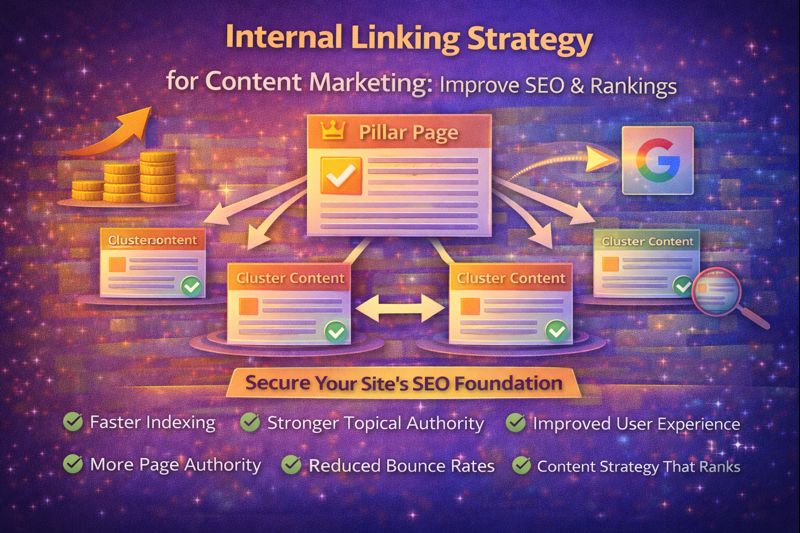
Internal Linking Strategy for Content Marketing: Boost SEO Rankings
Introduction Many websites focus heavily on publishing new content but overlook one of the most…
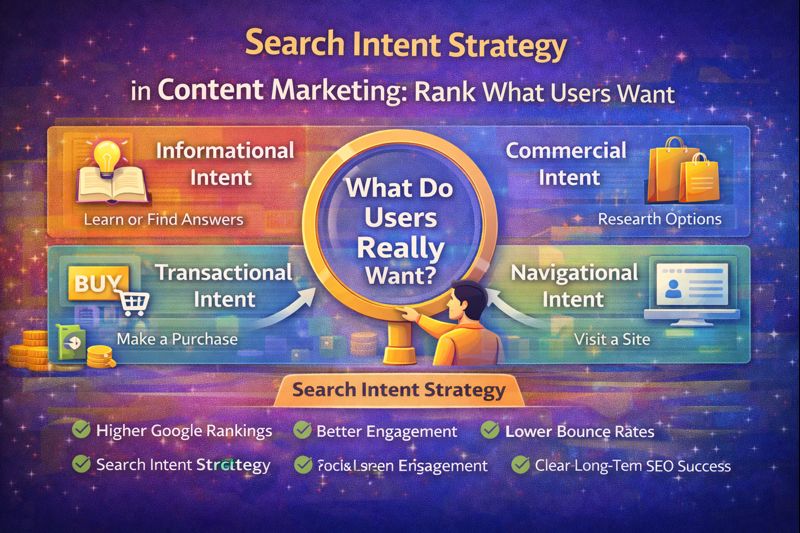
Search Intent Strategy in Content Marketing: Rank What Users Want
Introduction One of the biggest reasons content fails to rank is not poor writing or…
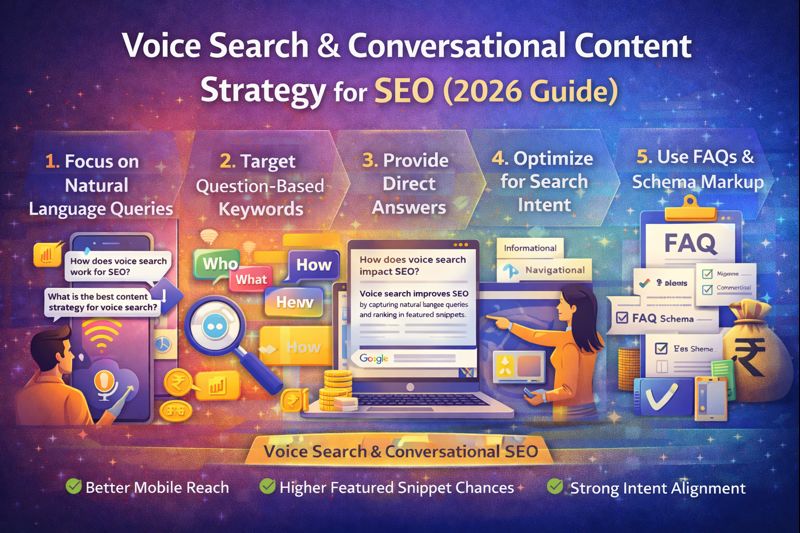
Voice Search & Conversational Content Strategy for SEO (2026 Guide)
Voice Search & Conversational Content Strategy – Search behavior has changed dramatically. People no longer…
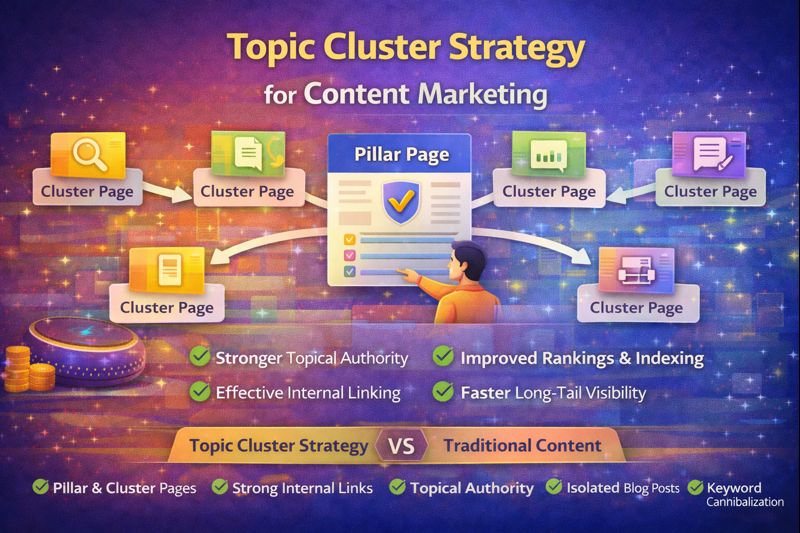
Topic Cluster Strategy: How to Build Topical Authority with Content Marketing
Introduction Many websites publish high-quality content regularly, yet struggle to rank consistently on Google. The…
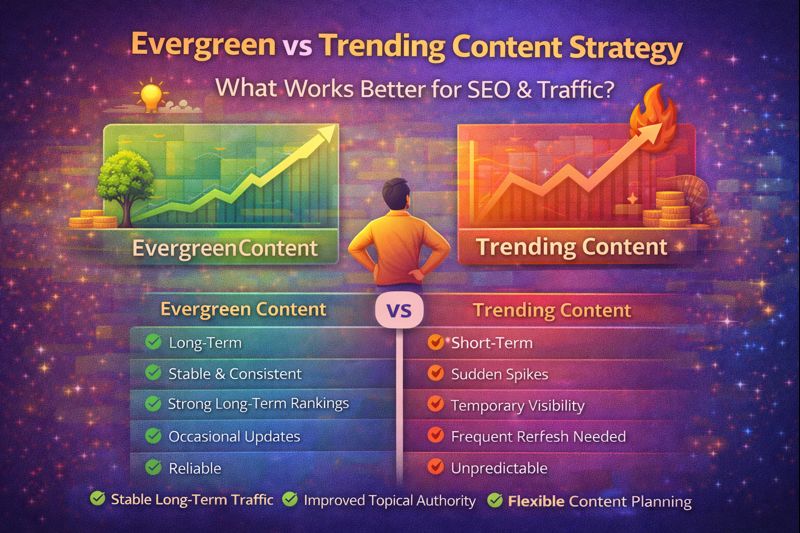
Evergreen vs Trending Content Strategy: What Works Better for SEO?
Introduction Content creators often face a common dilemma:Should you focus on evergreen content that lasts…
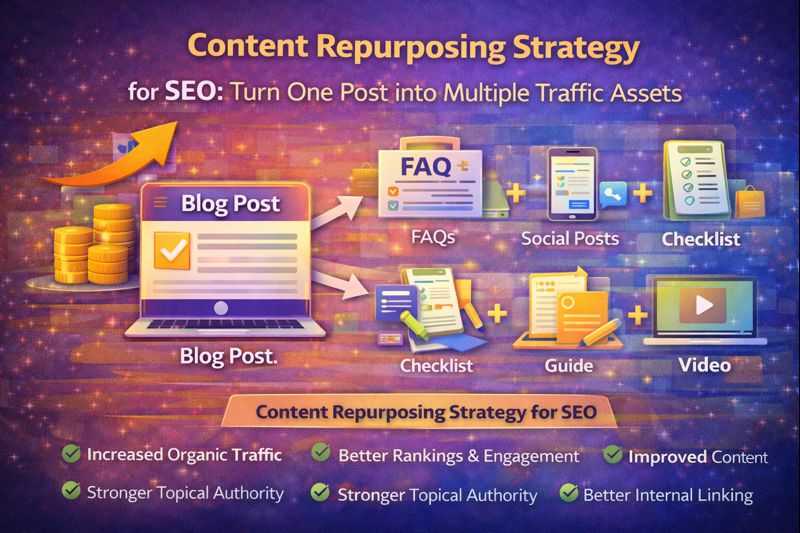
Content Repurposing Strategy for SEO: Boost Traffic Without Writing More
Introduction Creating high-quality content takes time, effort, and research. Yet many websites publish a post…
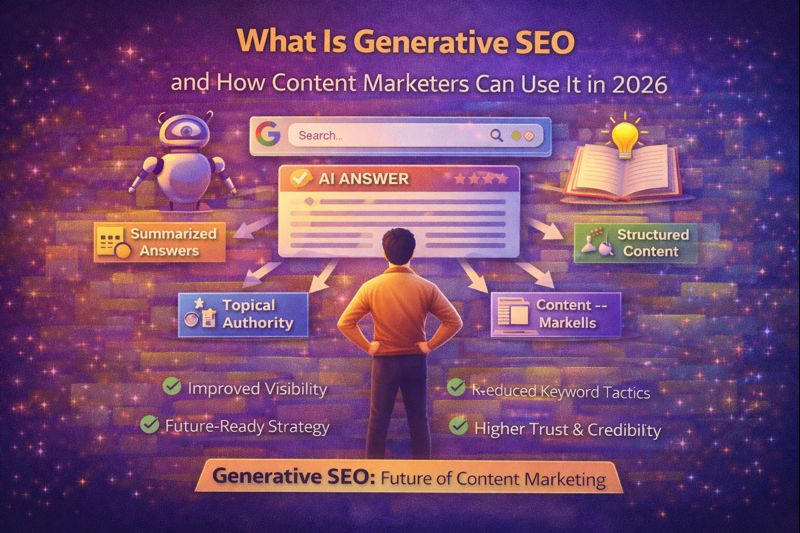
What Is Generative SEO and How Content Marketers Can Use It in 2026
Introduction What Is Generative SEO – Search engines are changing faster than ever. Traditional SEO…
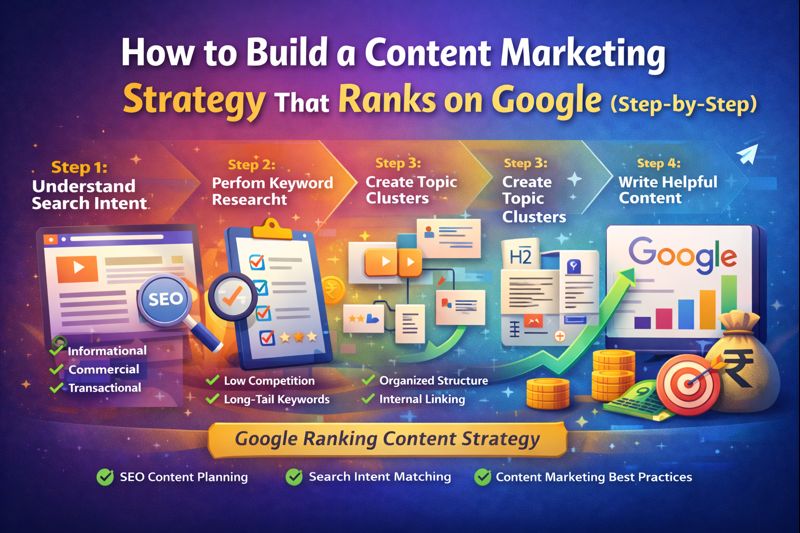
Content Marketing Strategy That Ranks on Google (Complete Guide)
How to Build a Content Marketing Strategy That Ranks on Google Many websites publish content…