

Cluster Post 3 | Module 1: Understanding the Structure of Research Papers and Theses
From Concept to Submission Series | 2026
← Back to Pillar Post: The Complete Guide to Research Paper Structure
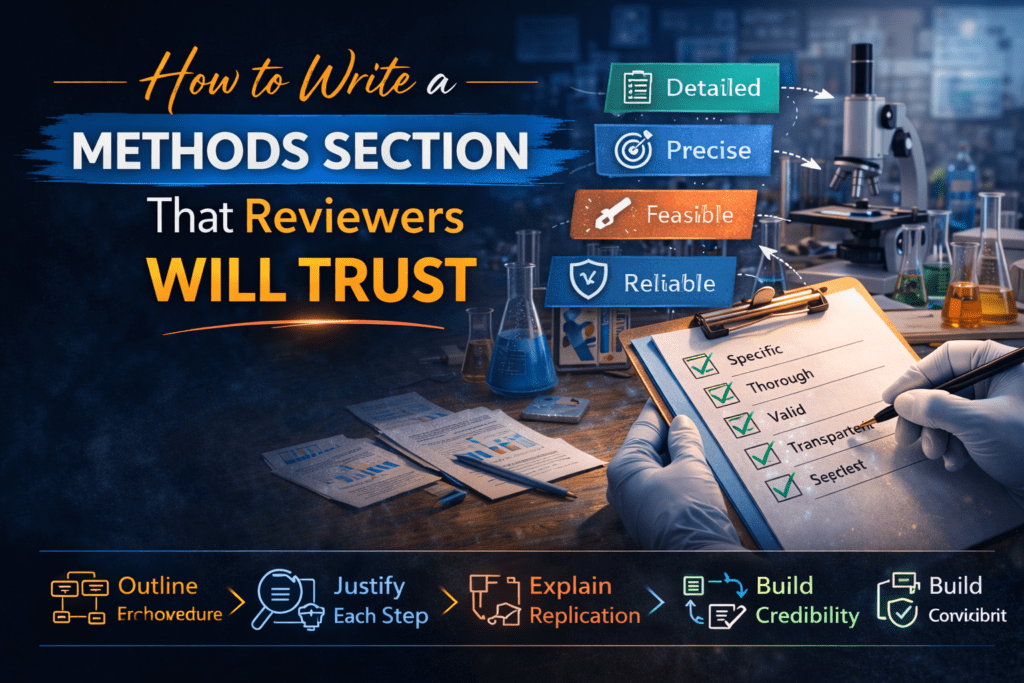
How to Write a Methods Section That Reviewers Will Trust
Your pillar post gave you the five components of a methods section and the replication test. This post goes deeper: why description alone is never enough, how to justify every significant choice you make, what qualitative methods sections get wrong most often, and how to write about ethics and positionality — the part most researchers skip.
The Real Standard: Not Replication, But Trust
You have probably heard the replication test — write your methods so thoroughly that another researcher could repeat your study exactly. It is a useful benchmark, but it is not quite the right frame.
The deeper standard is trust. Your methods section has one primary reader: a sceptical expert who is asking whether your study design actually supports the claims you are making. Replication is a proxy for this. If your description is precise enough for someone to replicate your study, it is precise enough for someone to evaluate it.
This changes how you approach the section. You are not writing a procedure log for a lab notebook. You are writing a defence of your research decisions to the most critical reader you will ever have. Every choice you made — your design, your sample, your instruments, your analysis approach — needs to be not just described but justified.
The Five Components, and What Each One Demands
1. Research design
State your overall design in the first paragraph. Do not make readers infer it from context. Name it explicitly — experimental, quasi-experimental, correlational, survey-based, phenomenological, grounded theory, case study, mixed methods.
Then immediately explain why this design fits your research question. This is the justification most researchers leave out.
Weak: “A qualitative design was used for this study.” Strong: “A phenomenological design was used because the research question concerns how first-year students experience the transition to college life — an question about lived meaning that closed-ended survey instruments cannot adequately capture.”
One sentence of justification is usually enough. But that sentence transforms a design statement into a design argument, which is what reviewers are looking for.
2. Sample
Three questions must be answered: who were the participants, how many were there, and how were they selected. Leaving out any of these is one of the most common reasons methods sections attract reviewer queries.
For quantitative research, report the total N and relevant demographic breakdown, the sampling method (random, stratified, convenience, purposive), and your inclusion and exclusion criteria. If your participation rate matters — and it usually does — report it.
Weak: “Participants were university students.” Strong: “Participants were 450 first-year undergraduate students (267 female, 183 male; mean age 18.3, SD 0.8) enrolled across three government colleges in Jaipur, selected through stratified random sampling by discipline (40% Arts, 30% Science, 30% Commerce). The participation rate was 91.3%; 42 approached students declined or were unavailable.”
For qualitative research, sample size matters less than sampling strategy and rationale. Explain why you chose purposive, snowball, or theoretical sampling — what qualities or perspectives you were trying to capture, and how your sampling approach gave you access to them. Also address saturation: how did you know when you had enough data?
3. Instruments and materials
Name every instrument you used. For each one, state where it came from, whether it has been validated, and what its reliability was in your sample. Reliability is almost always omitted by first-time writers and almost always queried by reviewers.
Weak: “I used a questionnaire about peer support.” Strong: “Peer support was measured using the Peer Network Strength Inventory (PNSI; Johnson, 2021), a 20-item scale on 5-point Likert responses validated with 600 US college students (α = .91). In the current sample, Cronbach’s alpha was .87. Three items were adapted for Indian cultural context using back-translation procedures (Brislin, 1980).”
For qualitative instruments such as interview guides: state the number of main questions, the topics they covered, how the guide was developed, and whether it was piloted. A guide that was tested with two or three participants before the main study is more credible than one that was not — and saying so costs you nothing.
4. Procedures
Describe what happened, in order. Think of it as a recipe: a researcher following your procedure step by step should arrive at the same point you did. Include ethics approval (state the committee name, approval number, and date), the recruitment process, the consent process, the data collection sequence, where and when data collection took place, and how you handled dropouts or non-responders.
Researchers routinely underwrite this section because the procedures feel obvious to them. They are not obvious to a reviewer who did not do the study. Specificity here is never wasted.
5. Data analysis
Name your analysis method precisely. “I analysed the data” tells reviewers nothing. “I conducted hierarchical multiple regression analyses using SPSS v28, entering control variables in Block 1 and peer support variables in Block 2” tells them exactly what to evaluate.
For quantitative analysis: name your tests, state the software and version, and report your significance threshold (set in advance, not after seeing the data). For qualitative analysis: describe your coding process — initial codes to categories to themes — and state what trustworthiness measures you used. Member checking, triangulation, peer debriefing, and negative case analysis are the most commonly used; explain which you used and how.
Justifying Choices, Not Just Describing Them
The difference between a mediocre methods section and a strong one is almost entirely about justification. Description tells the reader what you did. Justification tells them why that was the right thing to do.
You do not need to justify everything. You do not need to explain why you used a questionnaire rather than telepathy. But every choice that a reasonable reviewer might question needs a rationale. The table below shows the choices that most often attract review queries and the level of justification required.
| Choice that needs justification | What the justification should address |
| Qualitative over quantitative (or vice versa) | What the research question requires — depth of meaning vs. measurement of frequency |
| Sample size (especially in qualitative research) | How you determined adequacy — saturation, purposive logic, or power calculation |
| Convenience or non-random sampling | Why random sampling was not feasible, and what this means for generalisability |
| Adapting a validated instrument | What was changed, why, and how you checked the adaptation preserved validity |
| Single-site or single-institution study | What the site offers that justifies the limitation, and what cannot be generalised |
| Cross-sectional rather than longitudinal design | Why a snapshot was sufficient for your research question, or what this limits |
A sentence or two per justification is usually enough. The goal is not to write an essay defending each decision — it is to show reviewers that you made conscious, reasoned choices rather than defaulting to whatever was most convenient.
Writing About Ethics and Positionality — The Part Most People Skip
Ethics and positionality belong in the methods section. Most researchers mention ethics approval in a single sentence and say nothing about positionality at all. Both omissions are increasingly noticed by reviewers, especially in qualitative and mixed methods research.
Ethics
State the name of the ethics committee that reviewed your study, the approval number, and the date of approval. Then describe your consent process — not just that you obtained consent, but how. Did participants receive written information in advance? Were they told they could withdraw at any time without consequence? Was consent documented in writing or verbally?
For research involving vulnerable populations — children, prisoners, people with cognitive impairments, students where the researcher is also their lecturer — briefly explain the additional protections you put in place. Reviewers and examiners pay close attention to this when the population is one where power imbalances could affect voluntary participation.
Positionality
Positionality matters particularly in qualitative research. Your background, identity, and relationship to the research topic all influence what questions you ask, how participants respond to you, and how you interpret data. Acknowledging this is not a sign of weakness — it is a sign of methodological sophistication.
A positionality statement does not need to be long. Two or three sentences explaining your relationship to the research context, what biases or assumptions this might introduce, and what steps you took to account for them is usually sufficient.
“As a former government college student from Rajasthan, I approached this research with firsthand familiarity with the institutional context. This may have encouraged participant openness but also risked confirmation bias in analysis. I addressed this through peer debriefing with a colleague unfamiliar with government college contexts and through systematic negative case analysis during theme development.”
Journal Article vs. Thesis Chapter: The Key Difference
A journal article methods section is compressed — typically 400 to 800 words. A thesis methods chapter is expanded — typically 4,000 to 8,000 words. The same five components appear in both, but the thesis version includes things the journal article cannot accommodate.
In a thesis methods chapter, you are also expected to justify your philosophical stance. Are you working from a positivist, interpretivist, or critical realist position? What does this mean for how you understand knowledge and evidence? Supervisors and examiners expect this in a thesis because it demonstrates that you understand the foundations of your own methodology, not just its surface procedures.
You do not need to write a philosophy lecture. Two or three paragraphs explaining your paradigm, why it fits your research question, and what implications it has for how you collected and interpreted data is usually enough to satisfy this expectation.
For Law Students
Legal research methodology is genuinely different from social science methodology, and this difference shows up most clearly in what a methods section — or methods chapter — needs to contain.
Doctrinal methodology: what to describe
If your research is doctrinal, your methodology chapter should cover four things: what primary sources you analysed (which cases, statutes, constitutional provisions, and why you selected those rather than others), what secondary sources informed your analysis, what analytical framework you applied to the primary sources, and what your selection criteria were for the cases you included.
The selection criteria are particularly important and often missing. If you are analysing fifteen Supreme Court judgments, reviewers will ask how you chose those fifteen. Did you include all cases that cite Puttaswamy? All cases decided after a particular date? All cases involving a particular type of surveillance? Name the criteria explicitly and apply them consistently.
“Primary sources comprise fifteen Supreme Court judgments decided between 2017 and 2025 that directly address Article 21 privacy rights in digital or surveillance contexts. Cases were identified through a systematic search of SCC Online using the terms ‘Article 21,’ ‘privacy,’ and ‘surveillance,’ filtered to exclude cases where privacy was mentioned only in passing (fewer than two substantive paragraphs). High Court decisions are cited where they engage with Puttaswamy’s proportionality test but are not systematically analysed.”
Comparative methodology: an additional requirement
If your research compares legal systems across jurisdictions, you need to explain your comparative methodology — not just that you are comparing, but how. Functional comparison (looking for legal institutions that serve equivalent purposes across different systems) and structural comparison (looking at formal legal rules) are both legitimate but produce different kinds of analysis. State which you are using and why it fits your research question.
Empirical legal research: both sets of requirements apply
If you are conducting surveys or interviews about law — asking litigants about access to justice, interviewing judges about sentencing, analysing case outcomes statistically — your methods section needs to satisfy both the empirical social science standards described above and the legal methodology standards described here. This means describing your data collection and analysis with social science precision, while also explaining your legal framework and source selection with the rigour expected in legal scholarship.
References
- Creswell, J. W., & Creswell, J. D. (2022). Research Design: Qualitative, Quantitative, and Mixed Methods Approaches (6th ed.). Sage Publications.Research Design (6th ed.) by John W. Creswell (ebook)
- Braun, V., & Clarke, V. (2006). Using thematic analysis in psychology. Qualitative Research in Psychology, 3(2), 77–101.
- Brislin, R. W. (1980). Translation and content analysis of oral and written materials. In H. Triandis & J. Berry (Eds.), Handbook of Cross-Cultural Psychology. Allyn and Bacon.
- ICMR National Ethical Guidelines for Biomedical and Health Research Involving Human Participants (2017). Indian Council of Medical Research.1527507675_ICMR_Ethical_Guidelines_2017.pdf
- Zweigert, K., & Kötz, H. (1998). Introduction to Comparative Law (3rd ed.). Oxford University Press.
- SCC Online — Supreme Court Cases database.
- Manupatra — Indian legal research database.
Next: Cluster Post 4 — Results Section: Presenting Findings Without Interpretation
← Back to Pillar Post: The Complete Guide to Research Paper Structure

The Complete Guide to Research Paper Structure: IMRAD Format, Thesis Organization & Academic Writing (2026)
From Concept to Submission: A Complete Guide to Research Paper and Thesis Writing Module 1:…
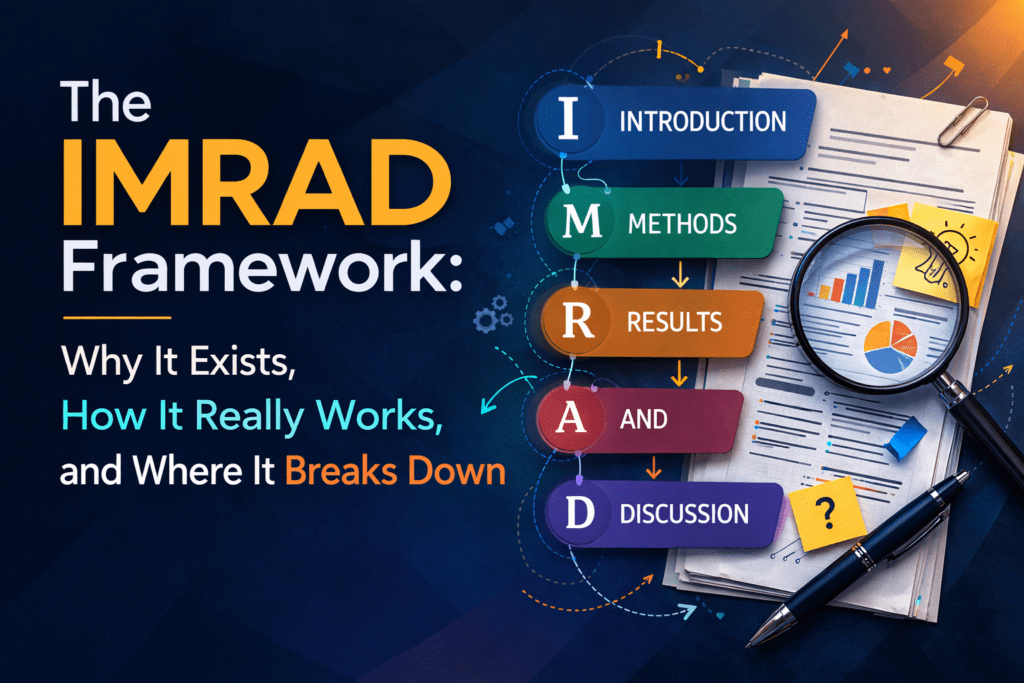
The IMRAD Framework: Why It Exists, How It Really Works, and Where It Breaks Down
Cluster Post 1 | Module 1: Understanding the Structure of Research Papers and Theses From…

How to Write a Research Introduction That Reviewers Cannot Ignore
Cluster Post 2 | Module 1: Understanding the Structure of Research Papers and Theses From…

How to Write a Methods Section That Reviewers Will Trust
Cluster Post 3 | Module 1: Understanding the Structure of Research Papers and Theses From…
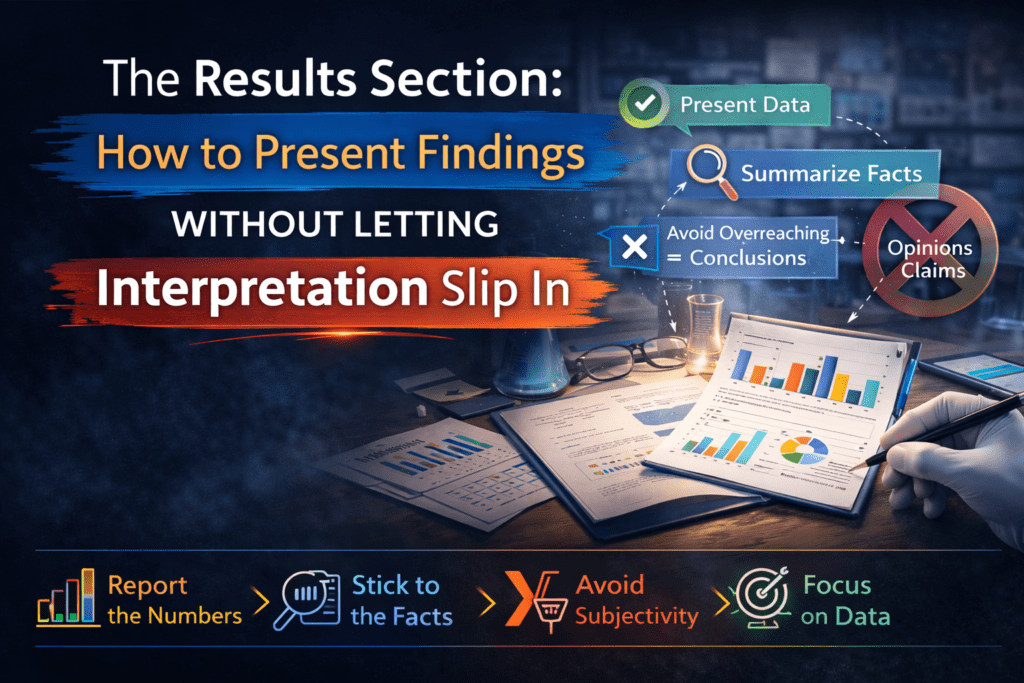
The Results Section: How to Present Findings Without Letting Interpretation Slip In
Cluster Post 4 | Module 1: Understanding the Structure of Research Papers and Theses From…

The Discussion Section: How to Turn Findings Into Knowledge
Cluster Post 5 | Module 1: Understanding the Structure of Research Papers and Theses From…
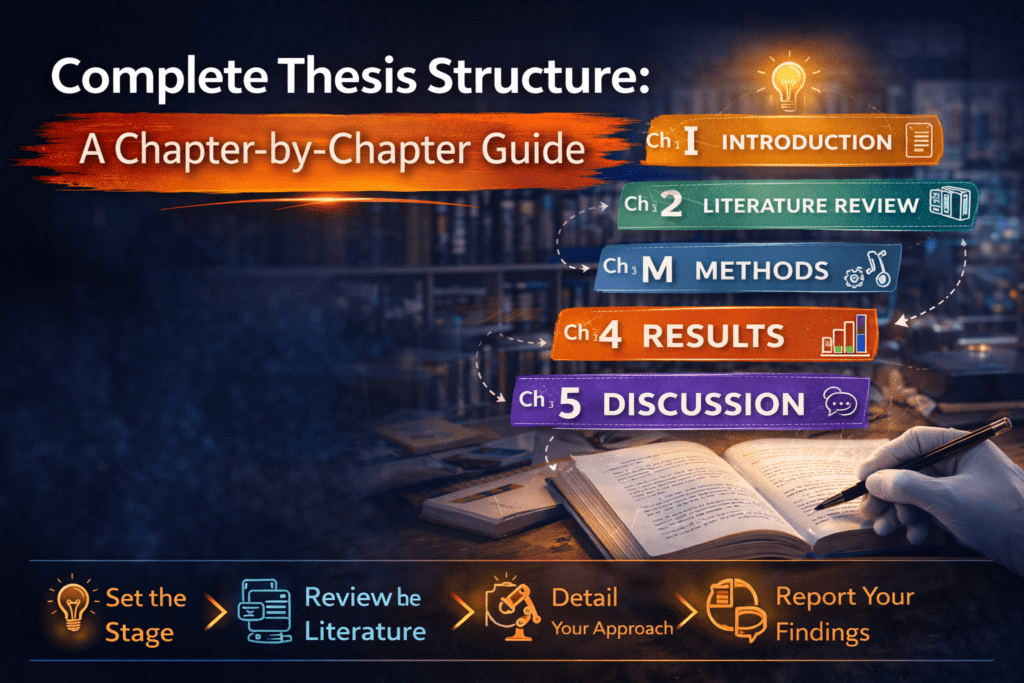
Complete Thesis Structure: A Chapter-by-Chapter Guide
Cluster Post 6 | Module 1: Understanding the Structure of Research Papers and Theses From…

10 Structural Mistakes That Get Research Papers Rejected — And How to Fix Every One
Cluster Post 7 | Module 1: Understanding the Structure of Research Papers and Theses From…

The Academic Writing Process: Complete Guide from First Draft to Submission (2026)
From Concept to Submission: A Complete Guide to Research Paper and Thesis Writing Module 2,…

How to Start Writing — and Keep Going
Cluster Post 1 | Module 2: The Academic Writing Process From Concept to Submission Series …

How to Write Clear Engaging Academic Prose
Cluster Post 2 | Module 2: The Academic Writing Process From Concept to Submission Series …
The Revision Process: How to Turn a Draft Into a Submission
Cluster Post 3 | Module 2: The Academic Writing Process From Concept to Submission Series …