
low-competition keyword research for content marketing – One of the biggest mistakes content creators make is targeting keywords that are already dominated by high-authority websites. The result? Well-written content that never reaches page one.
This is why understanding low-competition keyword research for content marketing is critical. Instead of competing with large brands, smart content strategies focus on keywords that are easier to rank for, highly relevant, and aligned with real user intent.
In this guide, you’ll learn a practical, tool-based approach to finding low-competition keywords using SEMrush, Ahrefs, and Google tools—without guesswork or hype.

What Is Low-Competition Keyword Research for Content Marketing?
Low-competition keyword research for content marketing is the process of identifying search terms with manageable competition and clear intent that allow new or growing websites to rank faster.
It focuses on relevance, intent, and opportunity rather than high search volume alone.
(40–60 words, featured-snippet ready)
Why Low-Competition Keywords Matter Today
Search competition has increased across almost every niche. High-volume keywords are often controlled by established domains with strong backlink profiles.
Low-competition keywords matter because they:
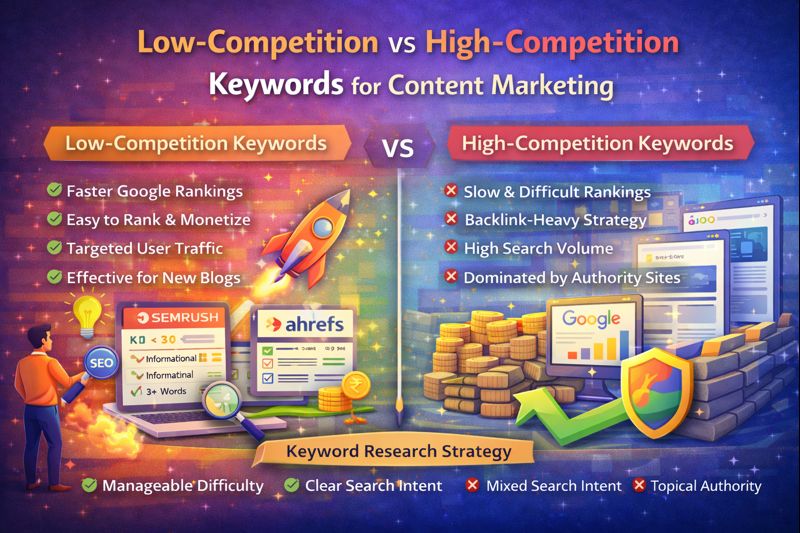
- Rank faster with fewer backlinks
- Attract more targeted users
- Improve early visibility for new blogs
- Support AdSense and affiliate monetization
- Build topical authority gradually
This is why low-competition keyword research for content marketing is one of the most reliable SEO strategies today.
How Low-Competition Keyword Research for Content Marketing Works
Follow these step-by-step methods to find keywords that actually rank.
1. Start with Topic-Based Keyword Research
Begin with a broad topic related to your niche, such as:
- Content marketing
- SEO writing
- Blog monetization
Then break it into subtopics:
- Content marketing strategy
- SEO for beginners
- Blog traffic growth
This creates a foundation for effective SEO keyword planning.
2. Use SEMrush to Identify Low-Competition Keywords
In SEMrush:
- Enter a seed keyword
- Go to Keyword Magic Tool
- Apply filters:
- Keyword Difficulty (KD): 0–30
- Intent: Informational or Commercial
- Word count: 3+ words
Look for keywords with:
- Clear intent
- Moderate volume
- Low KD
This is a core step in SEMrush keyword research.
3. Use Ahrefs for Keyword Difficulty Validation
In Ahrefs:
- Enter the keyword
- Check:
- Keyword Difficulty
- SERP overview
- Domain strength of ranking pages
If top results come from:
- Forums
- Small blogs
- Low-authority sites
You’ve found a good opportunity. This confirms effective Ahrefs keyword research.
4. Analyze Search Intent Carefully
Every keyword should match one clear intent:
- Informational (“how to…”, “what is…”)
- Commercial (“best tools”, “comparison”)
- Buyer intent (“affordable SEO services”)
Ranking is easier when content matches intent precisely. This is essential in keyword research for content marketing.
5. Check Google SERP Manually
Before finalizing a keyword:
- Search it on Google
- Review:
- Content depth
- Article quality
- Use of FAQs
- Authority of ranking sites
If results are weak or outdated, your content can outperform them.
Real-World Use Cases
Use Case 1: New Content Blog
A new blog targeting long-tail, low competition keywords can rank within weeks, even without backlinks.
Use Case 2: Service-Based Website
Businesses using buyer intent keywords attract users ready to convert, not just browse.
Use Case 3: AdSense Blog
Blogs focused on informational low-competition keywords gain stable traffic and better ad engagement.
Benefits of Low-Competition Keyword Research
- Faster Google rankings
- Better alignment with search intent
- Lower dependency on backlinks
- Higher conversion potential
- Sustainable content growth
- Strong foundation for topic clusters
These benefits make low-competition keyword research for content marketing a long-term SEO advantage.
Challenges & Limitations
A balanced approach also considers limitations:
- Low competition does not always mean high traffic
- Requires manual SERP analysis
- Needs consistent content publishing
- Poor content quality still fails
Keyword research works only when paired with helpful, well-structured content.
Best Practices & Tips
- Prioritize intent over volume
- Use long-tail keywords naturally
- Combine SEMrush, Ahrefs, and Google data
- Create content clusters, not single posts
- Update keyword lists regularly
- Avoid keyword stuffing
These content marketing best practices align with Google’s Helpful Content System.
FAQs
1. What is low-competition keyword research for content marketing?
It is the process of finding keywords with manageable competition and clear intent that allow content to rank faster, especially for new or growing websites.
2. How do I find low-competition keywords easily?
Use tools like SEMrush and Ahrefs, filter by low keyword difficulty, and manually review Google search results to assess competition quality.
3. Are low-competition keywords good for AdSense blogs?
Yes. They attract targeted traffic, improve engagement, and support consistent AdSense earnings without policy risks.
4. Is search volume important when choosing keywords?
Search volume matters, but intent and competition matter more. A low-volume keyword with strong intent often performs better than a high-volume competitive one.
5. How many keywords should one article target?
One primary keyword and a few closely related secondary keywords are ideal. Over-targeting weakens clarity and ranking potential.
6. Can low-competition keywords rank without backlinks?
Yes. High-quality content, internal linking, and topical authority can help rank low-competition keywords even without backlinks.
Why low-competition keyword research is important for content marketing?
Low-competition keyword research is important for content marketing because it allows websites to rank faster without competing with high-authority domains. It helps attract targeted traffic, improves visibility for new blogs, and builds topical authority gradually, which supports long-term SEO growth.
How low-competition keyword research for content marketing helps new websites rank?
Low-competition keyword research for content marketing helps new websites rank by targeting search terms with fewer strong competitors. When combined with helpful content and proper internal linking, these keywords allow new sites to appear on Google faster, even with limited backlinks.
Can low-competition keywords still bring quality traffic?
Yes, low-competition keywords often bring higher-quality traffic because they usually reflect specific user intent. Long-tail keywords tend to attract users who know what they are looking for, which improves engagement and conversion potential.
Conclusion
Mastering low-competition keyword research for content marketing allows creators and businesses to grow organically without fighting impossible competition. By focusing on intent, relevance, and realistic opportunities, content becomes easier to rank and more valuable to users.
When keyword research is combined with helpful content and consistent publishing, it creates a sustainable SEO strategy that delivers traffic, trust, and long-term results.
Author Bio
Dr. Rekha Khandelwal is a content strategist, academic writer, and AI-enabled SEO expert specializing in content marketing, SEO planning, and ethical digital growth. Through AspirixWriters, she helps creators and businesses build Google-friendly, AdSense-safe content strategies that rank and convert.
References
- Google Search Central – SEO & Keyword Guidelines
https://developers.google.com/search - Microsoft Learn – Search Experience Optimization
https://learn.microsoft.com - Stanford University – Information Retrieval Research
https://www.stanford.edu
Must Read
Content Marketing Strategy That Ranks On Google (Complete Guide)
How Content Marketing Helps You Monetize Blogs with AdSense (2026)
How to Build a Content Marketing Strategy That Ranks on Google (Step-by-Step)2026
- Academic Writing
- AI Ethics & Future
- AI in Academic Research
- AI in Business & Marketing
- AI in Content Creation
- AI in Design & Development
- AI in Education/Teaching
- AI in Research
- AI Tools & Review
- Indian Laws
- Motivation
- SEO & Digital Marketing
- Writing & Content Creation

Content Marketing Strategy That Ranks on Google (Complete Guide)
How to Build a Content Marketing Strategy That Ranks on Google Many websites publish content…

Content Marketing Success Using Google Analytics & Search Console
Introduction Creating content is only half the work. Without measurement, even high-quality content becomes guesswork….
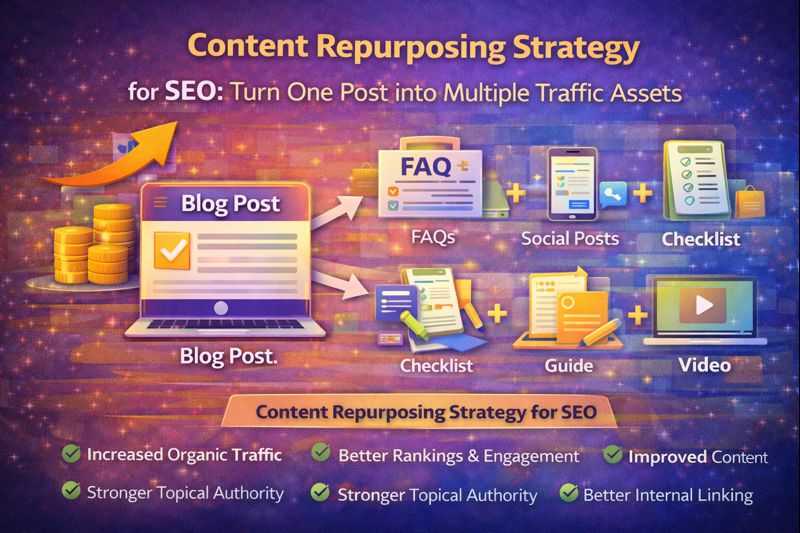
Content Repurposing Strategy for SEO: Boost Traffic Without Writing More
Introduction Creating high-quality content takes time, effort, and research. Yet many websites publish a post…
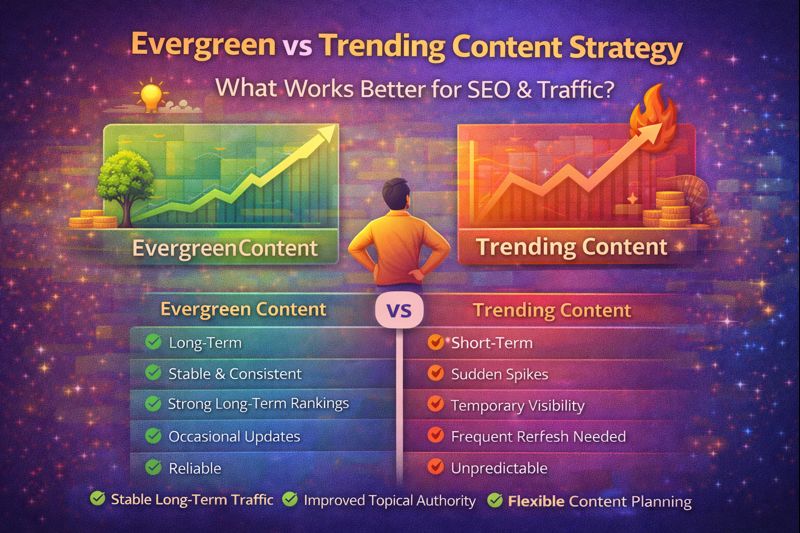
Evergreen vs Trending Content Strategy: What Works Better for SEO?
Introduction Content creators often face a common dilemma:Should you focus on evergreen content that lasts…

How Content Marketing Helps You Monetize Blogs with AdSense (2026)
Introduction Many bloggers struggle with a common problem: their blog gets content published, but income…
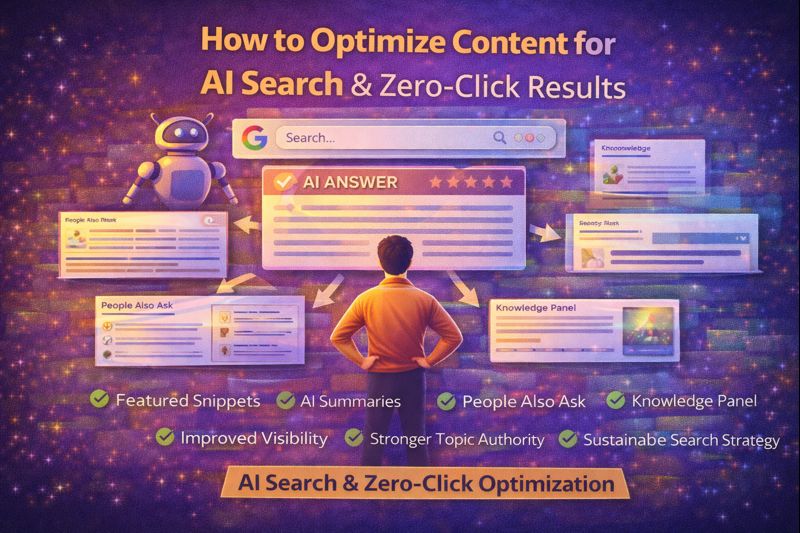
How to Optimize Content for AI Search & Zero-Click Results Smartly
Introduction Search results are no longer limited to blue links. Today, users often find answers…
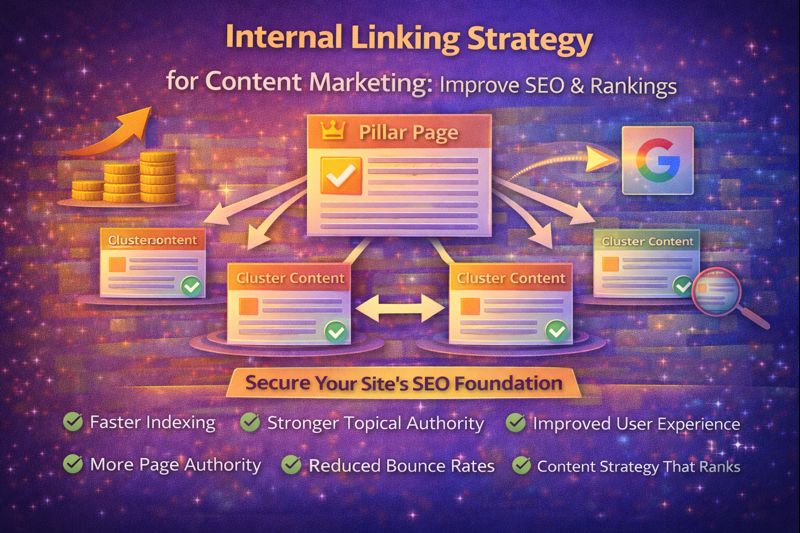
Internal Linking Strategy for Content Marketing: Boost SEO Rankings
Introduction Many websites focus heavily on publishing new content but overlook one of the most…

Low-Competition Keyword Research for Content Marketing (Step-by-Step)
low-competition keyword research for content marketing – One of the biggest mistakes content creators make…
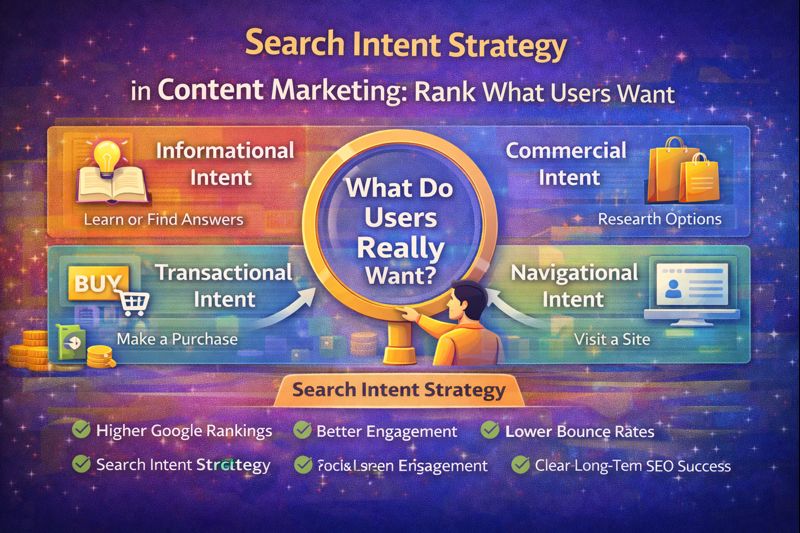
Search Intent Strategy in Content Marketing: Rank What Users Want
Introduction One of the biggest reasons content fails to rank is not poor writing or…
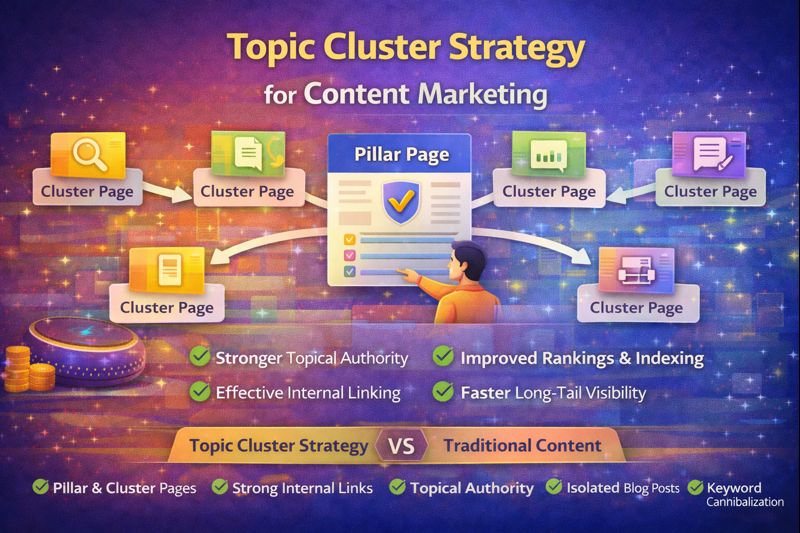
Topic Cluster Strategy: How to Build Topical Authority with Content Marketing
Introduction Many websites publish high-quality content regularly, yet struggle to rank consistently on Google. The…

Voice Search & Conversational Content Strategy for SEO (2026 Guide)
Voice Search & Conversational Content Strategy – Search behavior has changed dramatically. People no longer…

What Is Generative SEO and How Content Marketers Can Use It in 2026
Introduction What Is Generative SEO – Search engines are changing faster than ever. Traditional SEO…