Last Updated: May 11, 2026
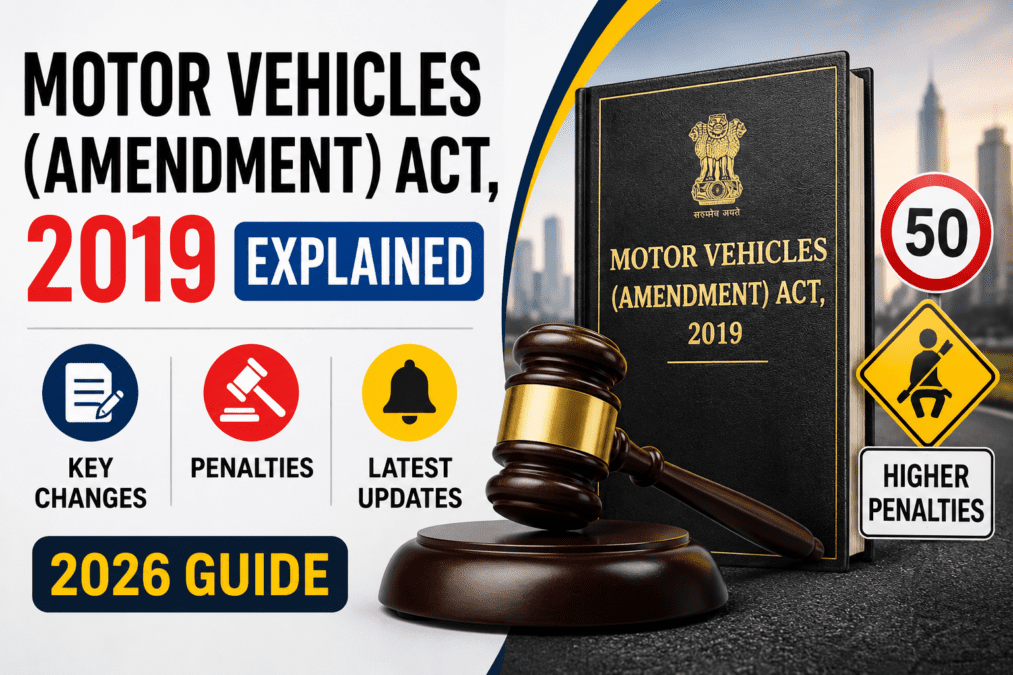
Motor Vehicles Amendment Act 2019 — Complete Guide (MVA-11) Part of Motor Vehicles Act 1988 India: Complete Guide
← Previous: Good Samaritan Law in India — Section 134A (2026)
MV Act 2019 Amendment at a Glance What changed?
The Motor Vehicles (Amendment) Act, 2019 (Act No. 32 of 2019) made the most sweeping changes to Indian road law in 30 years — raising fines 5–10x, introducing digital licences and e-Challans, creating the Motor Vehicle Accident Fund, adding Good Samaritan protection, enabling vehicle recall, and licensing aggregators (Ola/Uber).
Download the free MACT Claim Filing Checklist PDF 2026 and stay prepared with the right legal information when it matters most.
MACT_Claim_Checklist_2026_AspirixWriters
Why 2019? — The Crisis That Forced Parliament to Act
By 2018, India had a road accident crisis. Over 1.5 lakh people were dying on Indian roads every year — about 17 deaths every hour. Between 2005 and 2015, road fatalities had increased by 54% — even as the road network grew by 44%. Cities were choking on traffic violations that went unpunished because the fines were laughably low. A Rs. 100 fine for riding without a helmet was not a deterrent — it was barely an inconvenience.
Drunk driving carried a maximum fine of Rs. 2,000 and rarely resulted in actual jail time. Juvenile drivers — teenagers who took their parents’ car for a joyride — faced no meaningful consequence because the guardians were only fined Rs. 500. The Motor Vehicles Act, 1988 — despite being a comprehensive law — had penalty provisions so outdated that enforcement agencies had stopped taking them seriously.
Parliament’s answer was the Motor Vehicles (Amendment) Act, 2019 — Act No. 32 of 2019. It received Presidential assent on 9 August 2019. Most of its 63 clauses came into force on 1 September 2019. It was not just a fine-hike — it was a comprehensive modernisation of Indian road law for the digital age.
Before vs After — Complete Comparison Table (2019 Amendment)
| Area of Change | Before 2019 (MVA 1988) | After 2019 Amendment | Section |
| PENALTIES | |||
| Driving without licence | Rs. 500 | Rs. 5,000 + community service | Sec 181 |
| Driving without insurance | Rs. 1,000 + 3 months jail | Rs. 2,000 + 3 months jail | Sec 196 |
| No helmet (two-wheeler) | Rs. 100 | Rs. 1,000 + 3-month DQ | Sec 194D |
| No seat belt | Rs. 100 | Rs. 1,000 | Sec 194B |
| Drunk driving — 1st offence | Rs. 2,000 + 6 months jail | Rs. 10,000 + 6 months jail | Sec 185 |
| Drunk driving — repeat | Rs. 3,000 + 2 years jail | Rs. 15,000 + 2 years jail | Sec 185 |
| Over-speeding (LMV) | Rs. 400 | Rs. 1,000–5,000 | Sec 183 |
| Mobile phone while driving | Rs. 1,000 | Rs. 5,000 | Sec 184 |
| Juvenile driver — guardian fine | Rs. 500 | Rs. 25,000 + 3 years jail + RC cancelled | Sec 199A |
| Block emergency vehicle | No offence | Rs. 10,000 (new offence) | Sec 194E |
| Hit-and-run death compensation | Rs. 25,000 | Rs. 2,00,000 | Sec 161 |
| DRIVING LICENCE | |||
| DL competence test exemption | Existing DL holders could skip test | Exemption removed — all must pass test | Sec 9(3) |
| National Register of DL | No national database | NDRL with Unique DL Number (UDLN) — Aadhaar linked | Sec 28A |
| Digital driving licence | Physical card only | DigiLocker/mParivahan DL legally valid | Sec 28A |
| INSURANCE & COMPENSATION | |||
| Hit-and-run victim fund | Solatium Fund — Rs. 25,000 death | Motor Vehicle Accident Fund — Rs. 2 lakh death | Sec 164B |
| Golden hour treatment | No statutory cashless treatment | Cashless treatment in first hour mandatory | Sec 164C |
| Third party liability cap | Capped in some cases | Unlimited for death/serious injury | Sec 147 |
| NEW PROVISIONS ADDED | |||
| Good Samaritan protection | SC guidelines only (not statute) | Section 134A — statutory immunity from civil/criminal liability | Sec 134A |
| Vehicle recall | No recall provision | Central Govt can order mandatory recall; manufacturer liable | Sec 110A |
| Aggregator (Ola/Uber) licensing | No regulation | State licence mandatory; IT Act compliance required | Sec 93 |
| National Road Safety Board | No statutory body | NRSB established for advisory/policy role | Sec 215 |
| Annual penalty escalation | Parliament amendment needed | Central Govt can increase up to 10%/year by notification | Sec 210A |
Download free
The 10 Biggest Changes in the 2019 Amendment — Explained
Here are the ten most important changes from the 2019 Amendment, explained in simple language with practical impact:
- Penalty Hike — 5 to 10 Times Across the Board Sections: 177–210 (Chapter XIII) Before 2019: Most traffic fines had not been revised since 1988. A no-helmet fine of Rs. 100 had no deterrent effect — it was cheaper than a cup of coffee in a café. After 2019: Fines were raised 5–10x. The drunk driving fine went from Rs. 2,000 to Rs. 10,000. No helmet: Rs. 100 to Rs. 1,000 with 3-month DQ. No DL: Rs. 500 to Rs. 5,000. The goal: make violation genuinely costly.
| 2. Juvenile Driver Liability — Section 199A (Completely New) Before 2019: If a teenager drove a vehicle and caused an accident, the fine on guardians was Rs. 500. This was effectively ignored. After 2019: Rs. 25,000 fine + up to 3 years imprisonment for the guardian/registered owner. The vehicle’s RC is cancelled. The juvenile is tried as an adult under the Juvenile Justice Act. This is now one of the most feared provisions among parents. |
| 3.Good Samaritan Protection — Section 134A (Completely New) Sec 134A (new) Before 2019: Good Samaritan protection existed only through 2016 Supreme Court guidelines — not in statute. Police regularly ignored these guidelines. After 2019: Section 134A gives statutory immunity from civil and criminal liability to anyone who voluntarily helps a road accident victim in good faith. Police cannot detain helpers. Hospitals must treat without demanding payment. The guidelines became law. |
| 4. Motor Vehicle Accident Fund — Section 164B (Completely New) Sec 164B + 164C (new) Before 2019: Hit-and-run victims received only Rs. 25,000 from the Solatium Fund — a token amount that had not been revised in decades. After 2019: Rs. 2 lakh for death in hit-and-run, Rs. 50,000 for grievous injury. Cashless golden hour treatment for ALL accident victims (Section 164C). The Fund also covers victims of uninsured vehicles. |
| 5. National Register of Driving Licences — Section 28A (Completely New) Before 2019: Each State maintained its own DL database. A person could hold DLs from multiple States. There was no national deduplication system. After 2019: Section 28A established the National Register of Driving Licences (NDRL). Every DL gets a Unique Driving Licence Number (UDLN) linked to Aadhaar. Duplicate licences detected and blocked. Digital DL via DigiLocker is legally valid. |
| 6. Vehicle Recall — Section 110A (Completely New) Before 2019: If a car model had a serious safety defect, manufacturers had no legal obligation to recall it in India. Owners had no legal remedy. After 2019: The Central Government can now order the recall of any vehicle model with a safety or environmental defect. The manufacturer must refund the full purchase price or replace the vehicle. India aligned with global recall frameworks. |
| 7. Aggregator Licensing — Section 93 (Completely New) (new; operative April 2022) Before 2019: Ola, Uber, Rapido and similar platforms operated in a legal grey zone. No state licence requirement. No accountability under the MV Act. After 2019: Section 93 mandates that all aggregators obtain a licence from the State Government and comply with the Information Technology Act, 2000. Operative from 1 April 2022 per Gazette S.O. 859(E). Individual cab vehicles still need their own contract carriage permits. |
| 8. Annual Penalty Escalation — Section 210A (Completely New) Before 2019: Any change to traffic fine amounts required a new Act of Parliament — a slow, cumbersome process. After 2019: Section 210A gives the Central Government power to increase any penalty amount by up to 10% annually through a Gazette Notification — no Parliament amendment needed. As of April 2026, this power has not yet been exercised. |
| 9. Competence Test Exemption Removed — Section 9(3) (amended) Before 2019: Persons already holding a DL for one vehicle class could skip the driving competence test when applying for another class. This shortcut was widely abused. After 2019: The second proviso to Section 9(3) was removed. Every applicant — regardless of existing DL experience — must now pass the driving test for each new vehicle class. This was a direct road safety measure. |
| 10. Unlimited Third Party Liability — Section 147 (amended) Before 2019: Earlier, liability for third party death/disability was capped in certain categories of vehicles, limiting compensation victims could receive. After 2019: The 2019 Amendment removed the cap on liability for death or serious bodily injury under third party insurance. No upper limit applies. MACT courts can award full compensation based on the Sarla Verma formula without a ceiling. |
Download the free MACT Claim Filing Checklist PDF 2026
Digital Changes — How Technology Came Into the Law
What digital changes did the 2019 Amendment introduce to the Motor Vehicles Act?
| The 2019 Amendment introduced: (1) Digital Driving Licence via DigiLocker — legally valid nationwide (Section 28A); (2) Digital Registration Certificate via Vahan portal — legally valid (Section 39); (3) National Register of Driving Licences (NDRL) with Aadhaar-linked UDLNs; (4) e-Challan system — AI cameras generate digital challans without police presence; (5) FASTag integration — vehicle data cross-referenced at toll booths for insurance and PUC compliance. |
e-Challan System
Perhaps the most visible digital change of the 2019 era — though the e-Challan system itself is an administrative implementation rather than a statutory provision — is the nationwide AI-powered challan system. ANPR cameras, CCTV networks, and body-worn cameras on traffic police now generate challans automatically. The challan is cross-referenced with the Vahan database, sent by SMS to the registered vehicle owner, and payable at echallan.parivahan.gov.in within 60 days.
Sarathi + Vahan Integration
The 2019 Amendment’s direction to create the NDRL (Section 28A) and to validate digital documents gave legal backing to the already-existing Sarathi (driving licence) and Vahan (registration) portals. All licences are now issued with UDLNs. All RCs are issued digitally. DigiLocker documents are accepted at every RTO, checkpost, and court in India.
Parivahan Portal — Permits Online
Section 93 (aggregator licensing, operative April 2022) was part of a broader push to move the entire permit and licensing system online through the Parivahan portal (parivahan.gov.in). National Permits, contract carriage permits, and aggregator licences can all be applied for and tracked digitally.
When Did Each Provision Come Into Force?
Not all 63 clauses of the 2019 Amendment came into force at the same time. Understanding this phasing is important — especially for legal practitioners.
| Provisions | Effective Date | Gazette Reference |
| Most penalty provisions (Sec 177–210), Good Samaritan (Sec 134A), Accident Fund (Sec 164B), Juvenile (Sec 199A), DL changes (Sec 9, 28A) | 1 September 2019 | Act No. 32 of 2019 — notified 9 August 2019 |
| Sections 50–57 (insurance transfer on vehicle sale/transfer) | 1 April 2022 | Gazette S.O. 859(E), MoRTH, 25 Feb 2022, F. No. RT-11036/64/2019-MVL |
| Section 93 (aggregator licensing — Ola/Uber) | 1 April 2022 | Same Gazette S.O. 859(E), 25 Feb 2022 |
| Section 210A (annual penalty escalation) | 1 September 2019 | No escalation notification issued as of April 2026 |
| CMVR rule-level changes (ADTC, scrappage, RVSF, armoured vehicles) | 2021–2023 (phased) | GSR 394(E) June 2021; G.S.R. 2022; CMVR Gazettes 2022–23 |
| Key Gazette Reference: S.O. 859(E) issued by the Ministry of Road Transport and Highways on 25 February 2022 — this is the document that brought Sections 50–57 and Section 93 of the 2019 Amendment into force from 1 April 2022. File No. RT-11036/64/2019-MVL. Signed by Amit Varadan, Joint Secretary. |
How the 2019 Amendment Changed Life for Indian Road Users
For Daily Drivers
- Fines are now genuinely painful — Rs. 10,000 for drunk driving, Rs. 5,000 for using a phone. The deterrent effect is real.
- Digital documents are accepted — no more scrambling for physical RC or DL. DigiLocker and mParivahan are legally valid.
- e-Challan means the camera is always watching — violations are caught even without a police officer.
- Seat belts and helmets are now enforced more strictly — with DQ as additional punishment.
For Accident Victims
- Hit-and-run victims now receive Rs. 2 lakh (death) and Rs. 50,000 (injury) from the Motor Vehicle Accident Fund — up from Rs. 25,000.
- Golden hour cashless treatment means no hospital can turn away an accident victim for non-payment.
- Third party liability is unlimited — no cap on MACT compensation for death or serious injury.
- Good Samaritans are legally protected — more people are now willing to help at accident scenes.
For Vehicle Owners
- Vehicle sale without RTO transfer now carries serious legal risk under updated Sections 50–57 (operative April 2022).
- Parents must ensure children cannot access vehicle keys — Section 199A carries Rs. 25,000 + 3 years jail.
- If a vehicle model has a safety defect, the manufacturer can now be compelled to recall and replace it.
- Aggregators (Ola/Uber vehicles) must have both a vehicle-level permit and the platform must hold a state licence.
Download the free MACT Claim Filing Checklist PDF 2026
| Latest Update 2026: No new amendment to the Motor Vehicles Act in 2025–26. The 2019 Amendment remains the operative framework. Jan Vishwas (Amendment of Provisions) Act, 2023 (effective January 2025) decriminalised some minor MV Act offences by making them compoundable (Section 177A). Proposed 61-point MV Act amendment is reportedly under preparation for the 2026 Parliament session. CMVR January 2026 Amendment updated toll technology and safety device specifications (PIB PRID 2216507). EPR mandates for vehicle manufacturers operative from FY 2026–27 (MoEFCC). |
6 Common Mistakes About the 2019 Amendment
- Mistake 1 — ‘The 2019 Amendment replaced the 1988 Act.’ Wrong. The Motor Vehicles (Amendment) Act, 2019 amends the Motor Vehicles Act, 1988 — it does not replace it. The 1988 Act is still the principal statute. Courts and RTOs cite the 1988 Act as amended.
- Mistake 2 — ‘All 63 clauses came into force on 1 September 2019.’ Not all. Sections 50–57 and Section 93 came into force on 1 April 2022 per Gazette S.O. 859(E). These cover insurance transfer and aggregator licensing — among the most commercially important changes.
- Mistake 3 — ‘Fines have been increased every year since 2019 under Section 210A.’ No escalation notification has been issued under Section 210A as of April 2026. All fines remain at the 2019 Amendment amounts.
- Mistake 4 — ‘The vehicle recall provision (Section 110A) only applies to defects discovered after 2019.’ Section 110A applies to any vehicle sold in India — regardless of when it was manufactured — if the Central Government determines a defect exists that poses environmental or safety risks.
- Mistake 5 — ‘RTO test is now optional because of ADTC (Accredited Driver Training Centres).’ ADTC training gives you a Form 5B certificate that exempts you from the RTO practical test — but the DL is still issued by the licensing authority (RTO), not the ADTC. As clarified by MoRTH in June 2024, the power to issue DLs has not been transferred to ADTCs.
- Mistake 6 — ‘The Good Samaritan law only protects doctors and medical professionals.’ Section 134A protects anyone — student, truck driver, homemaker, engineer — who voluntarily helps an accident victim in good faith. Medical training is not required.
Summary — 2019 Amendment in 10 Quick Points
| 1. Act No. 32 of 2019: Received Presidential assent 9 August 2019. Most provisions effective 1 September 2019. Sec 50–57 and Sec 93: 1 April 2022. 2. Penalties: Raised 5–10x across all major offences. Drunk driving: Rs. 10,000. No helmet: Rs. 1,000. No DL: Rs. 5,000. 3. Section 199A (new): Juvenile driver — guardian Rs. 25,000 + 3 years jail + RC cancelled. 4. Section 134A (new): Good Samaritan — statutory immunity. No police harassment. No forced statement. 5. Section 164B (new): Motor Vehicle Accident Fund — Rs. 2 lakh hit-and-run death; Rs. 50,000 injury; golden hour cashless treatment. 6. Section 28A (new): NDRL — Unique DL Number (UDLN); Aadhaar-linked; digital DL legally valid. 7. Section 110A (new): Vehicle recall — manufacturer must refund or replace on government order. 8. Section 93 (new, April 2022): Aggregators (Ola/Uber) must hold state licence. 9. Section 210A (new): Central Govt can raise any penalty by 10%/year by notification — not yet used as of April 2026. 10. Jan Vishwas 2023 (effective Jan 2025): Minor MV Act offences decriminalised — compoundable fine only. |
FAQ — Motor Vehicles Amendment Act 2019
Q: MV Act 2019 mein kya major changes hue? (What are the major changes in MV Act 2019?)
A: The 2019 Amendment raised traffic fines 5–10 times, introduced the Good Samaritan law (Section 134A), created the Motor Vehicle Accident Fund (Section 164B), enabled vehicle recall (Section 110A), established the National Register of Driving Licences (Section 28A), made digital DL and RC valid, and regulated aggregators like Ola/Uber (Section 93). Most changes effective from 1 September 2019.
Q: 2019 amendment kab se effective hua? (When did the 2019 amendment come into effect?)
A: Most provisions of the Motor Vehicles (Amendment) Act, 2019 came into force on 1 September 2019. However, Sections 50–57 (insurance transfer on vehicle sale) and Section 93 (aggregator licensing for Ola/Uber) came into force from 1 April 2022 per Gazette S.O. 859(E) dated 25 February 2022, Ministry of Road Transport and Highways.
Q: Kya 2019 ke baad drunk driving fine badha? (Did drunk driving fine increase after 2019?)
A: Yes. Under Section 185, drunk driving fine for the first offence went from Rs. 2,000 to Rs. 10,000 plus up to 6 months imprisonment. For repeat offences within 3 years, the fine is Rs. 15,000 plus up to 2 years imprisonment. The blood alcohol limit (30 mg/100 ml) remains unchanged. Source: Section 185, MV(Amendment) Act 2019.
Q: What is Section 199A of the Motor Vehicles Act?
A: Section 199A was inserted by the 2019 Amendment. It makes the registered owner and guardian criminally liable when a person under 18 is found driving a vehicle: Rs. 25,000 fine + up to 3 years jail + RC cancellation. The juvenile is tried as an adult. Effective from 1 September 2019. There is no first-offence leniency — the penalty is fixed by law.
Q: Kya 2019 mein digital DL valid hua? (Did digital DL become valid in 2019?)
A: Yes. Section 28A (inserted by the 2019 Amendment) established the National Register of Driving Licences and gave legal validity to digital documents. Your DL stored on DigiLocker or the mParivahan app is legally equivalent to the physical card. Traffic police across India must accept it. This is backed by MoRTH notifications and is universally applicable.
Q: Motor Vehicle Accident Fund kya hota hai? (What is the Motor Vehicle Accident Fund?)
A: The Motor Vehicle Accident Fund was created by Section 164B (2019 Amendment) to provide compensation to road accident victims who have no insurer to claim from — especially hit-and-run cases. It pays Rs. 2 lakh for death and Rs. 50,000 for grievous injury in hit-and-run accidents. It also funds cashless golden hour treatment for all accident victims (Section 164C).
Q: Section 210A kya hai — kya fines badhe hain 2024–2026 mein?
A: Section 210A (inserted by 2019 Amendment) empowers the Central Government to increase any traffic penalty by up to 10% annually through a Gazette Notification — without requiring a Parliamentary amendment. As of April 2026, the Central Government has NOT issued any Section 210A notification. All fines remain at the 2019 Amendment amounts.
Continue Reading — Motor Vehicles Act Series
- Good Samaritan Law in India
- MACT Claims in India: Step-by-Step Process, Compensation & Rules (2026 Guide)
- Motor Insurance & Third Party Law in India : MV Act 1988 Complete Guide 2026
- Traffic Rules and Penalties in India 2026 — Complete Guide (Challan, Fines & Sections)
- Driving Licence Rules in India:Complete Guide Under Motor Vehicles Act, 1988
- Motor Vehicles Act 1988 India: Complete Guide
References:
- MV(Amendment) Act 2019 (Act No. 32 of 2019)
- Gazette S.O. 859(E) 25 Feb 2022
- MoRTH
- PIB
- indiacode.nic.in
- Jan Vishwas Act 2023;
- MoEFCC
Disclaimer: This article is for educational purposes only. It does not constitute legal advice. All provisions are based on the Motor Vehicles (Amendment) Act, 2019 (Act No. 32 of 2019) and Gazette Notification S.O. 859(E) dated 25 February 2022. Verify current provisions at indiacode.nic.in. For specific legal matters, consult a qualified advocate.
About Author
Dr. Rekha Khandelwal is a Ph.D. in Law, legal researcher, and founder of AspirixWriters.com. She specializes in simplifying Indian laws and academic concepts into clear, practical knowledge for students, aspirants, and the general public.
Facing Domestic Violence in India? Here’s How to Get Protection and Claim Compensation
Facing Domestic Violence in India? Legal Specialist, Consultant & Researcher, AspirixWriters If you are in…

How to Check If a Property Has a Clear Title Before Buying in India
How to Check If a Property Has a Clear Title Before Buying in India Legal…

Got Cheated While Shopping Online? Here’s Exactly What You Can Do (Simple Guide)
— Legal Specialist, Consultant & Researcher, AspirixWriters | Reviewed & Approved Got Cheated While Shopping…
How to File for Mutual Divorce in India: Process, Documents, Timeline & Remarriage Rules
How to File for Mutual Divorce in India By Dr. Rekha Khandelwal — Legal Specialist,…
What to Do If Your Fundamental Rights Are Violated in India: A Complete Guide to Article 32 & Article 226
What to Do If Your Fundamental Rights Are Violated in India If a government official…
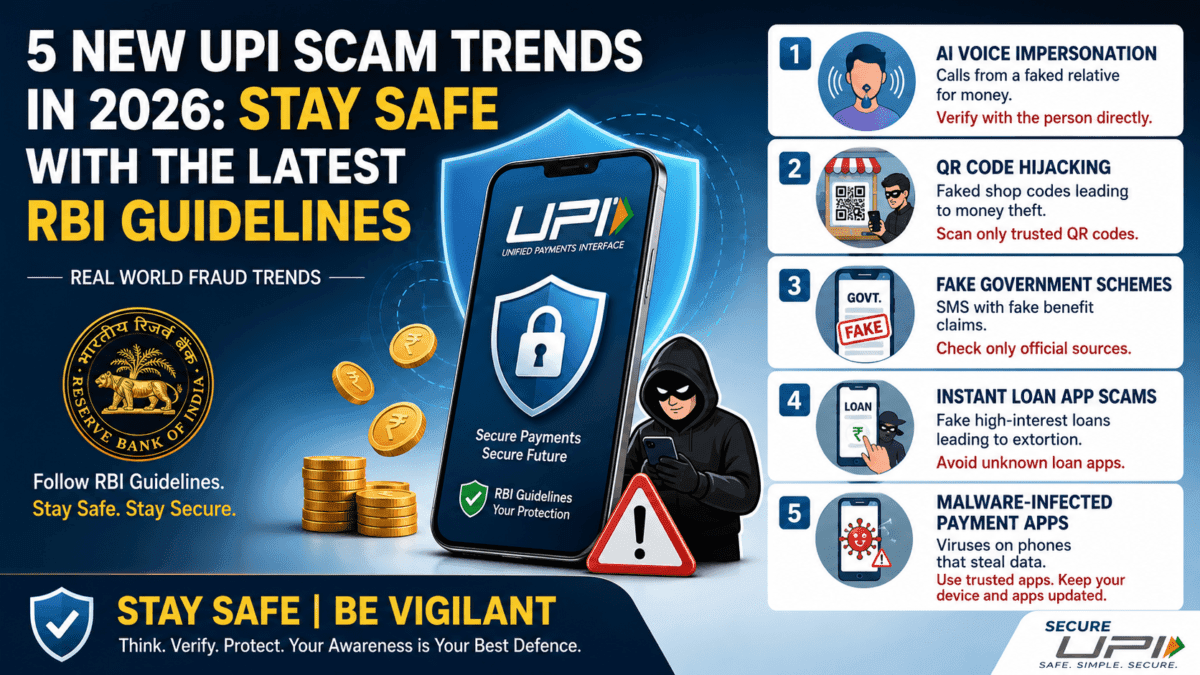
5 New UPI Scam Trends in 2026: Stay Safe with the Latest RBI Guidelines
Your phone buzzes at 11 PM. An unknown number. You pick up — and hear…