
Email marketing remains one of the most reliable digital channels—but only when emails feel relevant. Many marketers send hundreds of campaigns every year, yet struggle with low open rates, spam placement, and disengaged subscribers. AI in email marketing helps solve this problem by using real user behavior to personalize content, timing, and messaging automatically.
This guide explains how AI-powered email marketing works today, why it matters in 2026, and how businesses can use it responsibly for long-term results.
Understanding AI in Email Marketing
AI in email marketing uses machine learning algorithms to analyze subscriber data such as opens, clicks, purchases, and browsing behavior. Based on these insights, it automates personalization, optimizes send times, and improves content relevance—making emails more useful to readers and more effective for businesses.
Rather than replacing marketers, AI acts as a support system that reduces manual work and improves decision-making.
Why AI in Email Marketing Matters in 2026
Inbox competition continues to rise, and audiences expect emails that match their interests and timing preferences. Generic campaigns are increasingly ignored or marked as spam. In this environment, AI in email marketing helps brands stay relevant without increasing workload.
Key reasons for its growing importance:
- Consumers expect personalized communication
- Manual segmentation no longer scales
- Marketers manage data across multiple platforms
- Faster campaign execution is essential
As AI tools mature, they move beyond simple name personalization toward predictive engagement and dynamic content delivery.
How AI in Email Marketing Works (Step-by-Step)
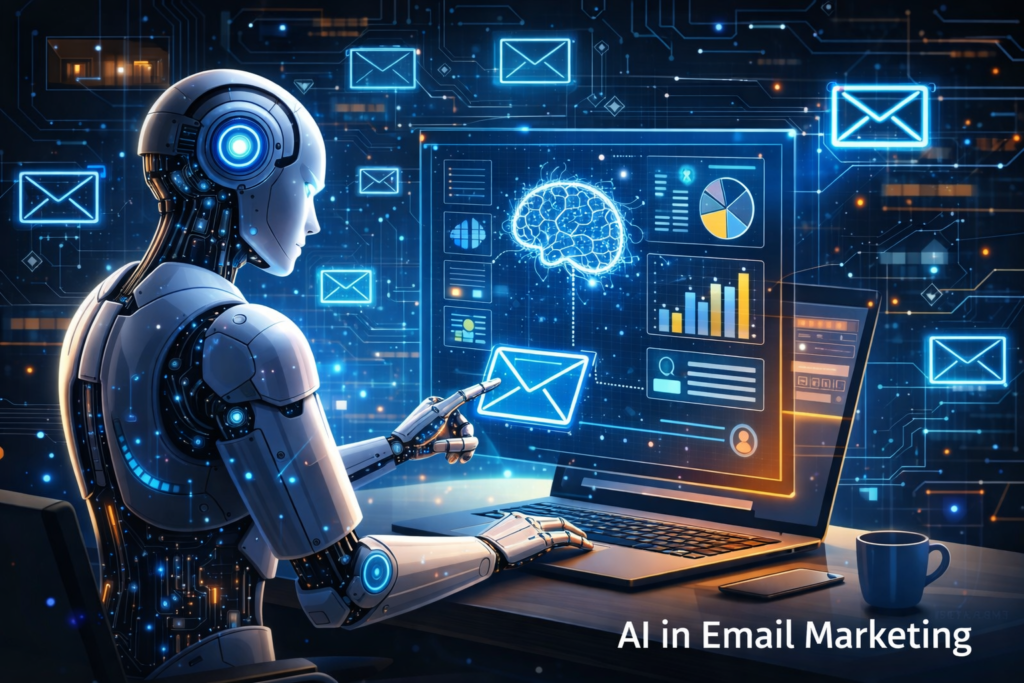
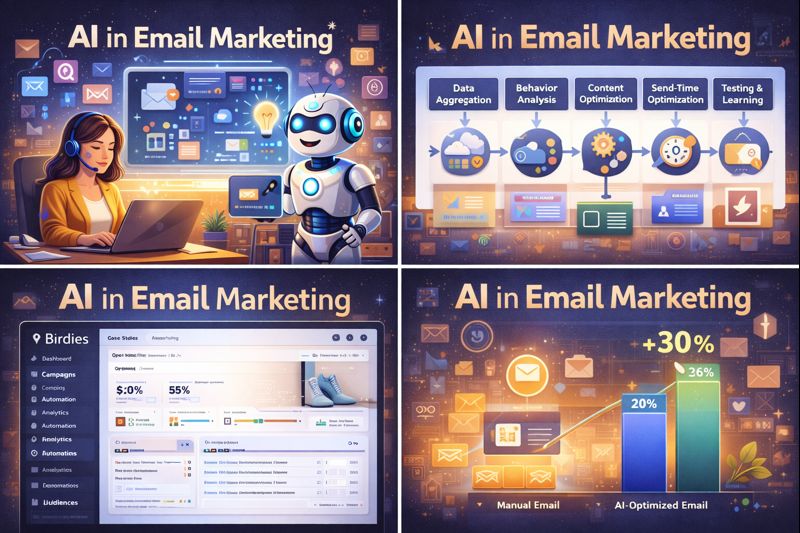
AI-driven email systems follow a continuous improvement cycle:
- Data Aggregation
Collects data from email platforms, CRM systems, websites, and purchases (e.g., Salesforce, HubSpot). - Behavior Analysis
Identifies patterns in opens, clicks, inactivity, and conversions. - Content Optimization
Suggests subject lines, email layouts, product recommendations, and CTAs. - Send-Time Optimization
Predicts when each subscriber is most likely to open emails. - Testing & Learning
Runs A/B tests and refines future campaigns based on performance data.
This structured loop allows AI in email marketing to adapt continuously rather than relying on fixed rules.
Real-World Examples of AI in Email Marketing
Several brands already use AI responsibly with measurable outcomes:
- Birdies used AI-based personalization to tailor messaging based on customer preferences, improving open rates and conversions.
- Salesforce Einstein analyzes customer history to recommend email content, optimize A/B tests, and support sales outreach.
- Omnisend helps e-commerce brands send personalized cart reminders and product recommendations.
- Mailchimp uses predictive analytics to suggest optimal send times for different audience segments.
These examples show how AI in email marketing supports both marketing and sales teams without removing human oversight.
Key Benefits of AI in Email Marketing
When implemented correctly, AI delivers practical advantages:
- Higher engagement through relevant subject lines and timing
- Better segmentation based on real behavior, not assumptions
- Time efficiency by automating repetitive tasks
- Improved insights through real-time performance analysis
- Consistent optimization across campaigns
These benefits make AI especially valuable for teams managing large or diverse email lists.
Challenges and Limitations to Be Aware Of
Despite its advantages, AI in email marketing has limitations:
- Data quality issues can reduce accuracy
- Privacy and compliance requirements (GDPR, consent) must be respected
- Over-automation risks can dilute brand voice
- Context gaps mean AI may miss emotional nuance
Human review and ethical standards are essential to avoid these risks and maintain trust.
Best Practices for Using AI in Email Marketing
To use AI effectively and safely:
- Start with clear goals (opens, clicks, conversions)
- Integrate AI with trusted platforms like Mailchimp or HubSpot
- Use AI-generated content as drafts, not final copy
- Maintain list hygiene and compliance checks
- Monitor performance and adjust strategy regularly
A balanced human-AI approach delivers the best long-term results.
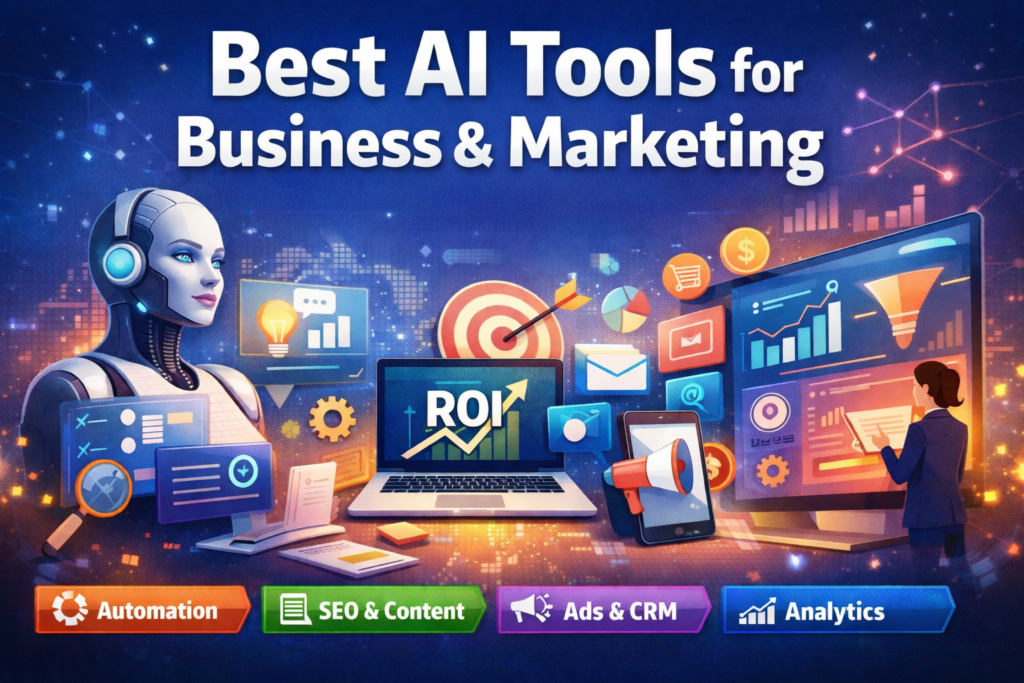
Best AI Tools For Business & Marketing
Frequently Asked Questions (FAQs)
1. What is AI in email marketing?
AI in email marketing means using Artificial Intelligence to create, personalize, and send emails more effectively. It helps businesses send the right message to the right person at the right time, improving engagement and results.
2. How does AI improve email marketing?
AI improves email marketing by analyzing user behavior, predicting preferences, and automating tasks. It helps write better subject lines, personalize content, and choose the best time to send emails.
3. Is AI email marketing suitable for small businesses?
Yes, AI email marketing is helpful for small businesses. It saves time, improves email performance, and helps businesses connect with customers more effectively without needing a large team.
4. Can AI write marketing emails automatically?
Yes, AI can generate email subject lines, email content, and responses. However, human review is important to ensure the message feels natural and aligns with the brand voice.
5. Does AI increase email open rates?
Yes, AI can increase open rates by optimizing subject lines, personalizing emails, and sending them at the best time when users are most likely to open them.
6. Is AI email marketing safe and ethical?
AI email marketing is safe when used responsibly. Businesses should respect privacy, avoid spam, and follow email marketing laws and ethical practices.
7. What are examples of AI in email marketing?
Examples include:
Personalized product recommendations
Automated email sequences
Smart subject line suggestions
Customer behavior analysis
These features improve user engagement.
8. Do I need technical skills to use AI in email marketing?
No, many AI email tools are easy to use and designed for beginners. They provide simple dashboards and automation features that do not require coding skills.
9. Can AI help reduce email marketing workload?
Yes, AI automates repetitive tasks like segmentation, scheduling, and content generation, saving time and effort.
10. Will AI replace human email marketers?
No, AI supports email marketers but does not replace them. Human creativity and strategy are still important for effective email marketing.
11. How does AI personalize emails?
AI analyzes customer data such as past purchases, browsing behavior, and preferences to send relevant and personalized emails.
Conclusion
AI in email marketing helps brands move from generic campaigns to meaningful communication. By combining automation with human oversight, businesses can improve engagement, efficiency, and trust. The most successful strategies treat AI as a decision-support tool—guided by ethics, data quality, and clear goals.
Start small, test carefully, and let AI enhance—not replace—your marketing expertise.
References
- Litmus – Email Marketing Trends
https://www.litmus.com/blog/trends-in-email-marketing - Salesforce – AI for Email Marketing
https://www.salesforce.com - Stanford University – Human-Centered AI
https://hai.stanford.edu - CleverTap – AI in Email Marketing
https://clevertap.com/blog/ai-in-email-marketing/
- Academic Writing
- AI Ethics & Future
- AI in Academic Research
- AI in Business & Marketing
- AI in Content Creation
- AI in Design & Development
- AI in Education/Teaching
- AI in Research
- AI Tools & Review
- Indian Laws
- Motivation
- SEO & Digital Marketing
- Writing & Content Creation
AI Chatbots Customer Support: 24/7 Help Guide
Ever lost sales because customer questions came at 2 AM? Many small businesses struggle to…
AI for Small Businesses: Practical Tools & Growth Guide
Running a small business today is both exciting and challenging. You may be managing customers,…
AI in Digital Marketing: Trends Shaping Smarter Marketing
Digital marketing has changed dramatically in recent years, and AI in digital marketing is one…
AI in Email Marketing: Smarter Emails for Better Engagement in 2026
Email marketing remains one of the most reliable digital channels—but only when emails feel relevant….
AI in Market Research: 2026 Trends, Tools & Practical Insights
AI in market research helps businesses analyze data faster, predict trends, and personalize strategies. Learn…
AI in Sales Automation: Practical Guide & Trends
AI in sales automation helps teams save time, prioritize leads, and forecast pipelines accurately. Learn…
Best AI Tools for Business & Marketing 2026
Best AI Tools for Business & Marketing 2026-What if you could run campaigns, write content,…