
Introduction
Content creators often face a common dilemma:
Should you focus on evergreen content that lasts for years, or publish trending content that brings quick traffic?
Both approaches can work—but only when used strategically. Understanding evergreen vs trending content strategy helps you decide what to publish, when to publish, and how to balance long-term growth with short-term visibility.
In this guide, we’ll explore the differences, benefits, limitations, and practical use cases of both content types so you can build a sustainable, SEO-friendly content marketing strategy.
What Is Evergreen vs Trending Content Strategy?
Evergreen vs trending content strategy is the practice of balancing timeless, always-relevant content with time-sensitive, trend-based content to maximize SEO performance and traffic growth.
Evergreen content delivers consistent long-term value, while trending content captures short-term spikes in interest.
Understanding Evergreen Content Strategy
Evergreen content remains relevant over time. It answers fundamental questions and solves ongoing problems.
Examples of Evergreen Content:
- How-to guides
- Tutorials and explanations
- Beginner guides
- FAQs and definitions
An evergreen content strategy focuses on building authority, stable rankings, and consistent organic traffic.
Understanding Trending Content Strategy
Trending content is tied to:
- Current events
- New updates
- Industry changes
- Seasonal interest
Examples of Trending Content:
- Algorithm updates
- Industry news
- New tools or features
- Annual trends
Trending content for SEO is designed to capture attention quickly but has a shorter lifespan.
Evergreen vs Trending Content Strategy: Key Differences
| Aspect | Evergreen Content | Trending Content |
|---|---|---|
| Lifespan | Long-term | Short-term |
| Traffic | Stable & consistent | Sudden spikes |
| SEO Value | Strong long-term rankings | Temporary visibility |
| Maintenance | Occasional updates | Frequent refresh needed |
| Monetization | Reliable | Unpredictable |
This comparison highlights why choosing between evergreen vs trending content strategy should be intentional, not random.
Which Content Type Is Better for SEO?
From an SEO perspective, evergreen content generally performs better because:
- It builds topical authority
- Attracts backlinks naturally
- Ranks consistently over time
- Supports internal linking
However, trending content can:
- Increase crawl frequency
- Attract new visitors
- Improve brand visibility
The best approach is not choosing one over the other, but using both strategically.
How to Balance Evergreen vs Trending Content Strategy
Here’s a practical framework you can follow.
1. Use Evergreen Content as Your Foundation
Evergreen posts should form:
- Pillar pages
- Topic cluster articles
- Core educational resources
They support long-term SEO and monetization.
2. Use Trending Content as Traffic Boosters
Trending posts work best when:
- Linked internally to evergreen content
- Used to introduce new readers to your site
- Published quickly while interest is high
This strengthens your overall blog content strategy.
3. Update Trending Content into Evergreen Assets
Many trending topics can later be:
- Expanded
- Generalized
- Updated into evergreen guides
This approach improves long-term SEO content value.
4. Plan Content Using a Ratio Model
A practical ratio:
- 70% evergreen content
- 30% trending content
This balance supports stability while allowing flexibility in your content planning strategy.
Real-World Use Cases
Use Case 1: New Blogs
New websites should prioritize evergreen content to build authority before experimenting with trends.
Use Case 2: Established Blogs
Established sites can use trending content to capture short-term traffic while evergreen content sustains rankings.
Use Case 3: AdSense Blogs
Evergreen content ensures steady earnings, while trending posts occasionally increase impressions and CTR.
Benefits of a Balanced Content Strategy
- Stable long-term traffic
- Improved topical authority
- Better internal linking opportunities
- Flexible editorial planning
- Sustainable monetization
These benefits show why evergreen vs trending content strategy is essential for long-term success.
Challenges & Limitations
A realistic approach also considers limitations:
- Evergreen content needs updates
- Trending content has a short shelf life
- Poor timing reduces trend impact
- Over-reliance on trends causes traffic drops
Planning and balance are key.
Best Practices & Tips
- Prioritize evergreen topics first
- Use trending content selectively
- Link trending posts to evergreen guides
- Update evergreen content periodically
- Avoid publishing trend content without value
- Track performance separately
These content marketing best practices align with Google’s Helpful Content System.
FAQs
1. What is evergreen vs trending content strategy?
It is a content approach that balances long-lasting evergreen content with time-sensitive trending content to maximize SEO and traffic performance.
2. Which is better for SEO: evergreen or trending content?
Evergreen content is better for long-term SEO, while trending content helps capture short-term traffic. A balanced strategy works best.
3. Can trending content help new blogs?
Yes, but new blogs should focus more on evergreen content first to build authority before relying on trends.
4. How often should evergreen content be updated?
Evergreen content should be reviewed every 6–12 months to maintain accuracy and rankings.
5. Is trending content risky for AdSense blogs?
Trending content is safe when informational and accurate, but relying only on trends can cause unstable traffic and earnings.
6. How do I plan evergreen vs trending content together?
Use evergreen content as your core strategy and add trending posts selectively to boost visibility and engagement.
Conclusion
Choosing between evergreen and trending content is not about preference—it’s about strategy. Understanding evergreen vs trending content strategy allows you to plan content that delivers both immediate visibility and long-term growth.
When evergreen content builds authority and trending content adds momentum, your blog becomes more resilient, discoverable, and sustainable—supporting SEO, trust, and monetization over time.
Author Bio
Dr. Rekha Khandelwal is a content strategist, academic writer, and SEO-focused consultant specializing in content planning, topical authority, and ethical digital growth. Through AspirixWriters, she helps creators and businesses build Google-friendly, AdSense-safe content strategies that scale sustainably.
References
- Google Search Central – Content & SEO Guidelines
https://developers.google.com/search - Stanford University – Digital Content Lifecycle Research
https://www.stanford.edu - Microsoft Learn – Content Strategy & Search
https://learn.microsoft.com
Content Marketing Strategy That Ranks on Google (Complete Guide)
Writing Services
Contact us for writing services
Motivational, Creative & Ghostwriting
- Academic Writing
- AI Ethics & Future
- AI in Academic Research
- AI in Business & Marketing
- AI in Content Creation
- AI in Design & Development
- AI in Education/Teaching
- AI in Research
- AI Tools & Review
- Indian Laws
- Motivation
- SEO & Digital Marketing
- Writing & Content Creation
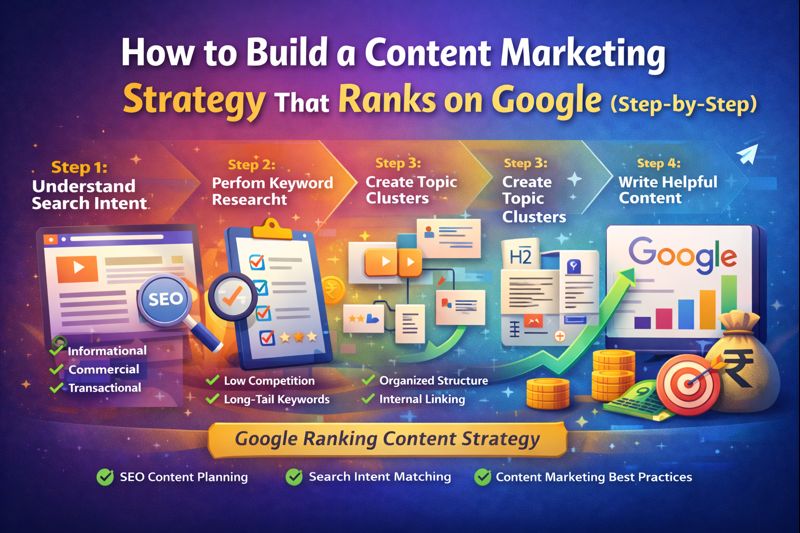
Content Marketing Strategy That Ranks on Google (Complete Guide)
How to Build a Content Marketing Strategy That Ranks on Google Many websites publish content…
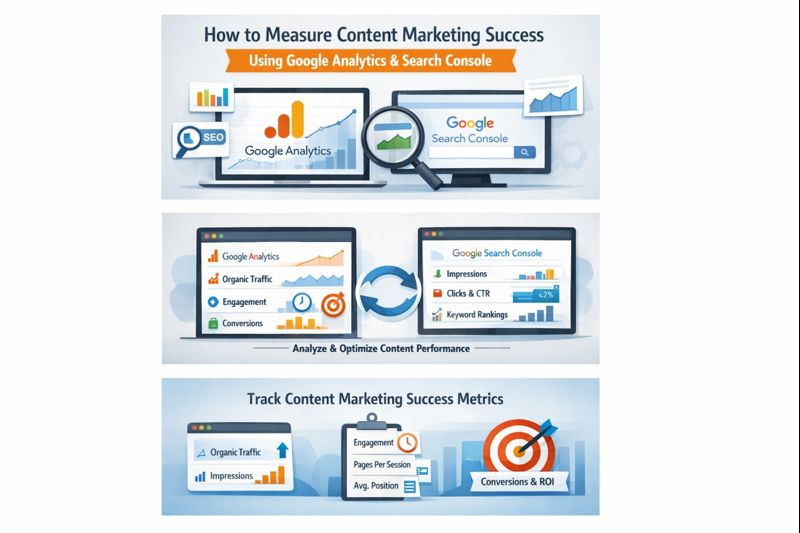
Content Marketing Success Using Google Analytics & Search Console
Introduction Creating content is only half the work. Without measurement, even high-quality content becomes guesswork….
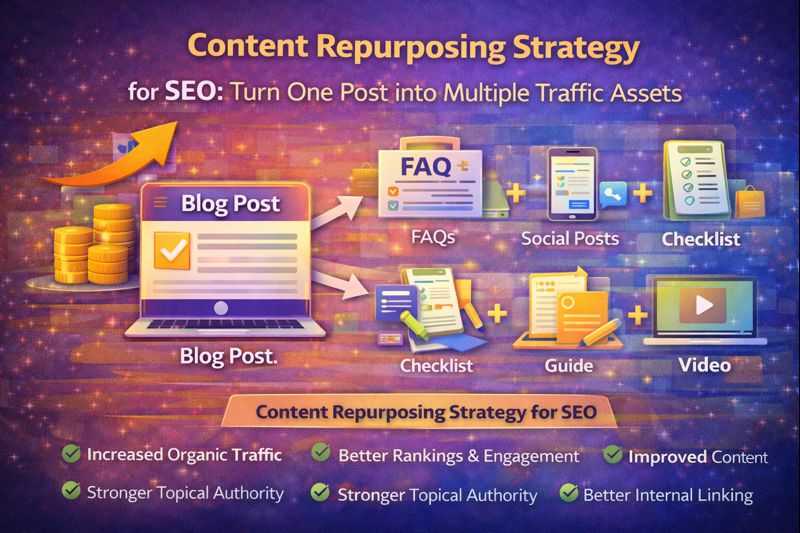
Content Repurposing Strategy for SEO: Boost Traffic Without Writing More
Introduction Creating high-quality content takes time, effort, and research. Yet many websites publish a post…
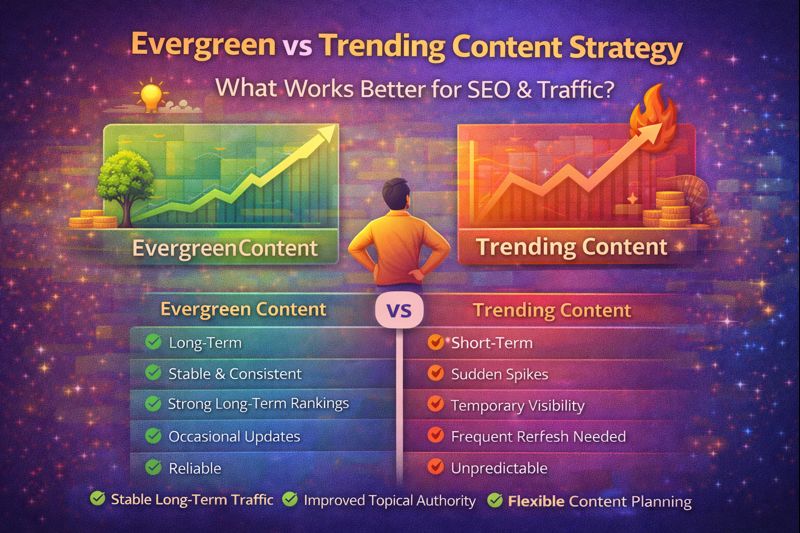
Evergreen vs Trending Content Strategy: What Works Better for SEO?
Introduction Content creators often face a common dilemma:Should you focus on evergreen content that lasts…

How Content Marketing Helps You Monetize Blogs with AdSense (2026)
Introduction Many bloggers struggle with a common problem: their blog gets content published, but income…
How to Optimize Content for AI Search & Zero-Click Results Smartly
Introduction Search results are no longer limited to blue links. Today, users often find answers…
Internal Linking Strategy for Content Marketing: Boost SEO Rankings
Introduction Many websites focus heavily on publishing new content but overlook one of the most…
Low-Competition Keyword Research for Content Marketing (Step-by-Step)
low-competition keyword research for content marketing – One of the biggest mistakes content creators make…
Search Intent Strategy in Content Marketing: Rank What Users Want
Introduction One of the biggest reasons content fails to rank is not poor writing or…
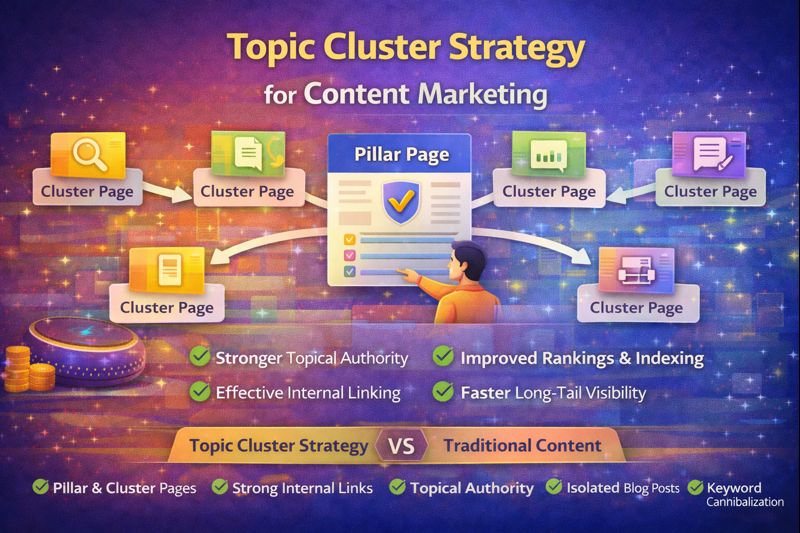
Topic Cluster Strategy: How to Build Topical Authority with Content Marketing
Introduction Many websites publish high-quality content regularly, yet struggle to rank consistently on Google. The…
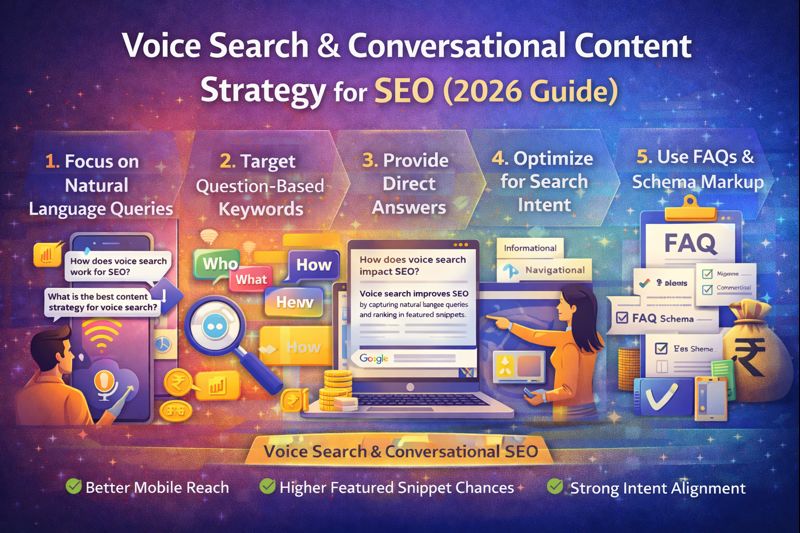
Voice Search & Conversational Content Strategy for SEO (2026 Guide)
Voice Search & Conversational Content Strategy – Search behavior has changed dramatically. People no longer…
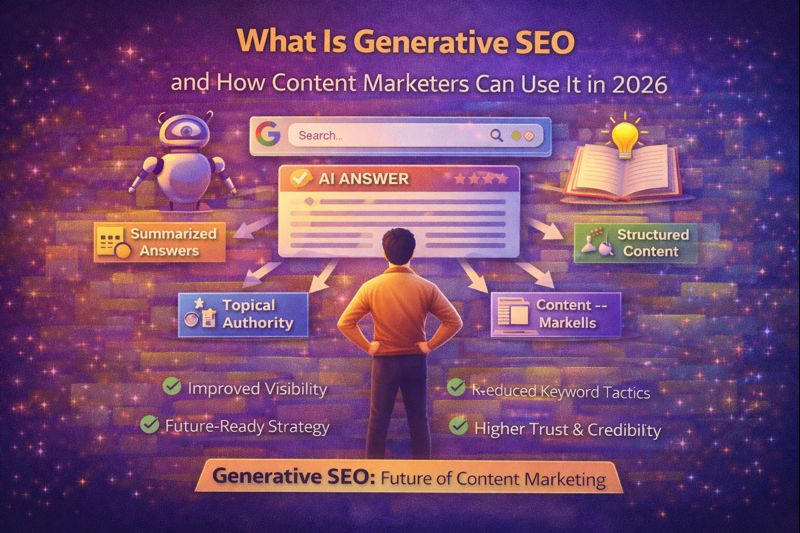
What Is Generative SEO and How Content Marketers Can Use It in 2026
Introduction What Is Generative SEO – Search engines are changing faster than ever. Traditional SEO…