
Introduction
Many websites publish high-quality content regularly, yet struggle to rank consistently on Google. The issue is not content quality—it’s content structure.
Google no longer evaluates pages in isolation. Instead, it looks at how well your content demonstrates depth, relevance, and authority around a topic. This is where understanding topic cluster strategy for content marketing becomes essential.
A topic cluster approach helps search engines clearly understand what your website is about, improves internal linking, and builds long-term topical authority. This guide explains how it works and how to implement it correctly—without complexity or shortcuts.
What Is Topic Cluster Strategy for Content Marketing?
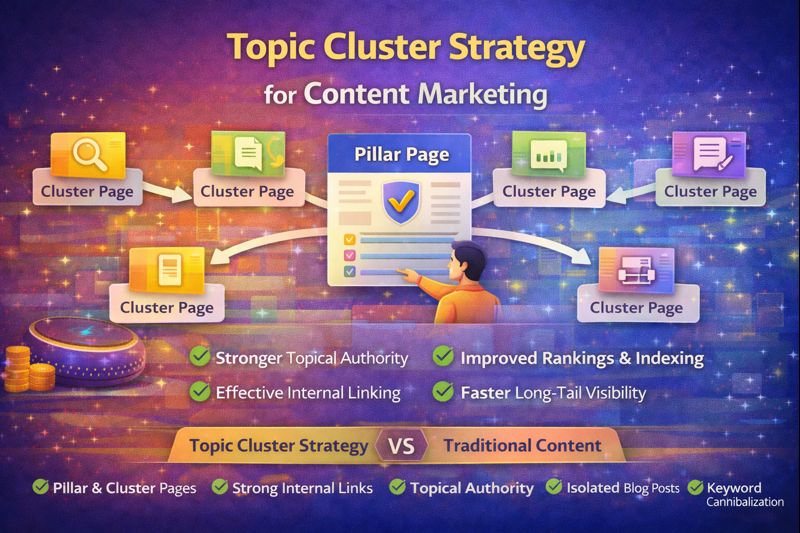
Topic cluster strategy for content marketing is a content organization model where a central pillar page covers a broad topic, supported by multiple related cluster pages that explore subtopics in depth.
All cluster pages link back to the pillar page, creating a strong internal linking structure that improves SEO and topical authority.
Why Topic Cluster Strategy Matters Today
Search engines now prioritize topic-level relevance, not just keyword matching. A single article—even if well written—is often not enough to rank competitively.
Topic clusters matter because they:
- Help Google understand topical depth
- Improve crawlability and indexing
- Strengthen internal linking signals
- Reduce keyword cannibalization
- Support long-term ranking stability
That’s why topic cluster strategy for content marketing has become a core SEO practice.
How Topic Cluster Strategy for Content Marketing Works
Below is a clear, step-by-step explanation.
1. Identify a Core Topic (Pillar Topic)
Choose a broad topic that:
- Represents a main service or expertise area
- Has consistent search demand
- Can support multiple subtopics
Examples:
- Content marketing strategy
- SEO content writing
- Blog monetization
This becomes your pillar page.
2. Create Supporting Cluster Topics
Break the pillar topic into focused subtopics, such as:
- Keyword research
- Content structure
- Internal linking
- Performance tracking
Each cluster article targets one specific intent and links back to the pillar page. This is the foundation of a strong content cluster strategy.
3. Build Strategic Internal Links
Internal linking is critical:
- Cluster pages link to the pillar page
- Pillar page links back to all clusters
- Related clusters link to each other where relevant
This structure strengthens SEO content structure and improves page authority flow.
4. Match Each Page to Clear Search Intent
Each cluster article should focus on:
- One primary keyword
- One dominant intent
Avoid overlapping topics. Clear intent alignment improves rankings and avoids internal competition.
5. Maintain and Expand the Cluster
Topic clusters are not static. Over time:
- Add new cluster pages
- Update existing ones
- Refresh the pillar page
This ongoing expansion reinforces topical authority SEO.
Real-World Use Cases
Use Case 1: Content Blogs
Blogs using pillar and cluster content rank faster and more consistently than blogs publishing isolated posts.
Use Case 2: Service Websites
Service-based businesses attract qualified leads by building authority around one core topic instead of multiple unrelated pages.
Use Case 3: AdSense Blogs
Clusters increase page views per session, which improves engagement and monetization potential.
Benefits of Topic Cluster Strategy
- Strong topical authority
- Improved Google rankings
- Better internal link distribution
- Faster indexing of new content
- Higher user engagement
- Long-term SEO stability
These outcomes explain why topic cluster strategy for content marketing is a foundational SEO technique.
Challenges & Limitations
A balanced view includes challenges:
- Requires planning before writing
- Takes time to see results
- Needs consistent internal linking
- Poor execution can cause overlap
- Thin cluster content weakens authority
However, when implemented correctly, the benefits outweigh the effort.
Best Practices & Tips
- Start with one strong pillar page
- Create clusters based on user questions
- Keep each page focused on one intent
- Use descriptive internal anchor text
- Update clusters regularly
- Avoid publishing unrelated content
These content marketing best practices align with Google’s Helpful Content System.
FAQs
1. What is topic cluster strategy for content marketing?
It is a content structure where one pillar page is supported by multiple related cluster pages, all internally linked to build topical authority and improve SEO rankings.
2. How does topic cluster strategy improve SEO?
It helps search engines understand topic relevance, improves internal linking, and strengthens authority signals, leading to better rankings and indexing.
3. How many cluster pages should one pillar have?
Ideally, 6–10 high-quality cluster pages. Quality and relevance matter more than quantity.
4. Is topic cluster strategy suitable for new websites?
Yes. New websites benefit greatly because clusters help build authority faster without relying heavily on backlinks.
5. Can topic clusters help with AdSense monetization?
Yes. Clusters increase session depth and engagement, which supports better AdSense performance.
6. How often should topic clusters be updated?
Clusters should be reviewed every 3–6 months to add new content, refresh existing pages, and maintain relevance.
Conclusion
Building authority in today’s search environment requires more than isolated content. Understanding topic cluster strategy for content marketing allows you to organize content in a way that search engines and users both understand.
When implemented with clear intent, strong internal linking, and consistent updates, topic clusters become a long-term SEO asset—supporting rankings, traffic, and monetization sustainably.
Author Bio
Dr. Rekha Khandelwal is a content strategist, academic writer, and SEO-focused content consultant specializing in content structure, topical authority, and ethical digital growth. Through AspirixWriters, she helps creators and businesses build Google-friendly, AdSense-safe content systems that rank and scale.
References
- Google Search Central – SEO & Site Structure
https://developers.google.com/search - Stanford University – Information Architecture Research
https://www.stanford.edu - Microsoft Learn – SEO & Content Structure
https://learn.microsoft.com
Must Read – Content Marketing Strategy That Ranks on Google (Complete Guide)
- Academic Writing
- Editing & Proofreading
- SME Writing Services
- SEO Blogwriting Services
- Creative & Ghostwriting
- Academic Writing
- AI Ethics & Future
- AI in Academic Research
- AI in Business & Marketing
- AI in Content Creation
- AI in Design & Development
- AI in Education/Teaching
- AI in Research
- AI Tools & Review
- Indian Laws
- Motivation
- SEO & Digital Marketing
- Writing & Content Creation
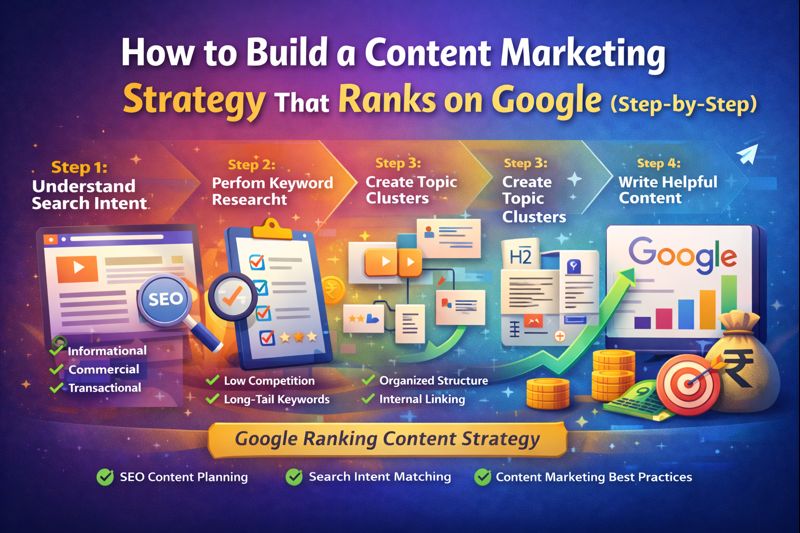
Content Marketing Strategy That Ranks on Google (Complete Guide)
How to Build a Content Marketing Strategy That Ranks on Google Many websites publish content…
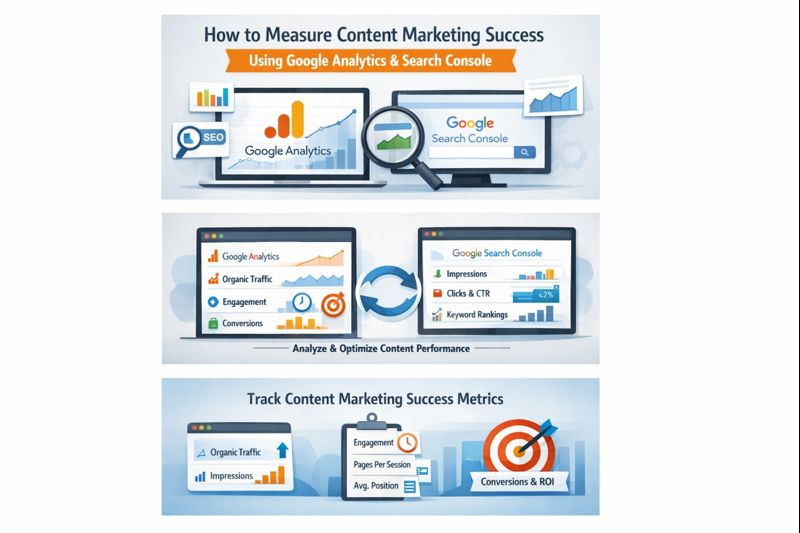
Content Marketing Success Using Google Analytics & Search Console
Introduction Creating content is only half the work. Without measurement, even high-quality content becomes guesswork….
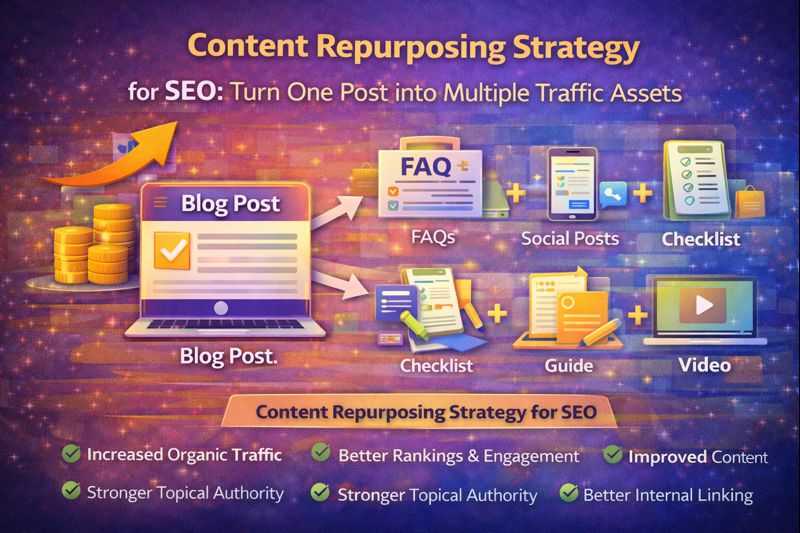
Content Repurposing Strategy for SEO: Boost Traffic Without Writing More
Introduction Creating high-quality content takes time, effort, and research. Yet many websites publish a post…
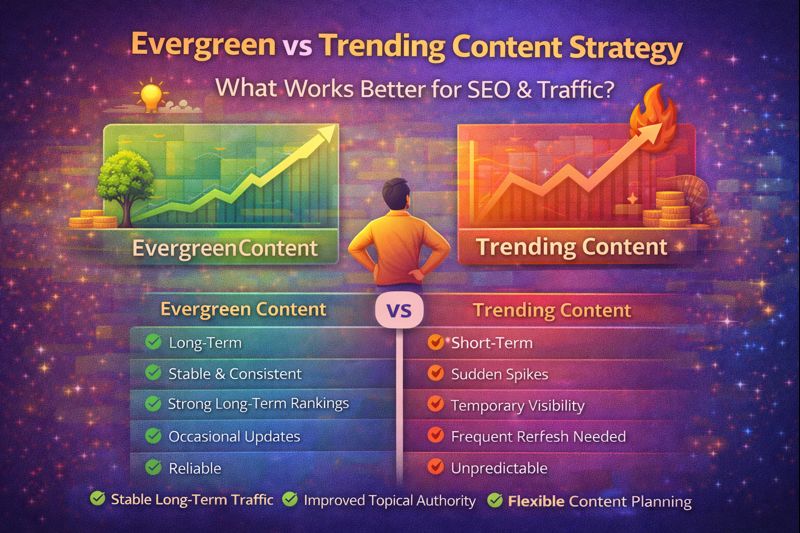
Evergreen vs Trending Content Strategy: What Works Better for SEO?
Introduction Content creators often face a common dilemma:Should you focus on evergreen content that lasts…

How Content Marketing Helps You Monetize Blogs with AdSense (2026)
Introduction Many bloggers struggle with a common problem: their blog gets content published, but income…
How to Optimize Content for AI Search & Zero-Click Results Smartly
Introduction Search results are no longer limited to blue links. Today, users often find answers…
Internal Linking Strategy for Content Marketing: Boost SEO Rankings
Introduction Many websites focus heavily on publishing new content but overlook one of the most…
Low-Competition Keyword Research for Content Marketing (Step-by-Step)
low-competition keyword research for content marketing – One of the biggest mistakes content creators make…
Search Intent Strategy in Content Marketing: Rank What Users Want
Introduction One of the biggest reasons content fails to rank is not poor writing or…
Topic Cluster Strategy: How to Build Topical Authority with Content Marketing
Introduction Many websites publish high-quality content regularly, yet struggle to rank consistently on Google. The…

Voice Search & Conversational Content Strategy for SEO (2026 Guide)
Voice Search & Conversational Content Strategy – Search behavior has changed dramatically. People no longer…

What Is Generative SEO and How Content Marketers Can Use It in 2026
Introduction What Is Generative SEO – Search engines are changing faster than ever. Traditional SEO…