
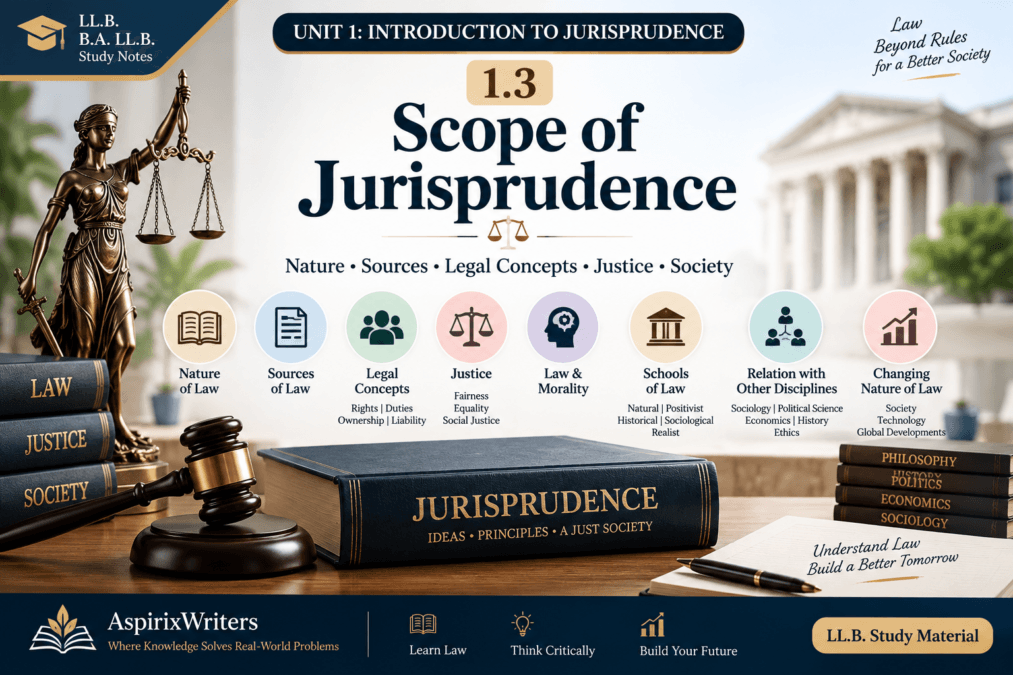
Scope of Jurisprudence
Meaning of Scope
The scope of Jurisprudence refers to the areas, concepts, principles and questions about law that are studied under Jurisprudence.
Jurisprudence is not limited to the study of legal rules. It examines the nature, purpose, sources, concepts, values and functioning of law.
Different jurists and schools of jurisprudence have given different views regarding its scope.
Major Areas Covered by Jurisprudence
1. Nature and Meaning of Law
Jurisprudence examines:
- What is law?
- What makes a rule a legal rule?
- What is the relationship between law and society?
2. Sources of Law
It studies the principal sources from which law develops, such as:
- Legislation
- Judicial precedents
- Custom
3. Legal Concepts
Jurisprudence analyses fundamental legal concepts, including:
- Rights and duties
- Ownership and possession
- Liability
- Personality
- Legal obligation
4. Justice
It examines the meaning and different theories of justice, including questions of fairness, equality and social justice.
5. Law and Morality
Jurisprudence considers the relationship and distinction between law, morality and ethics.
6. Schools and Theories of Law
It studies major approaches to understanding law, such as:
- Natural Law School
- Analytical/Positivist School
- Historical School
- Sociological School
- Realist School
7. Administration of Justice
Jurisprudence examines how justice is administered and the role of legal institutions in maintaining social order.
8. Relationship with Other Disciplines
Jurisprudence has an interdisciplinary character. It connects law with subjects such as:
- Political Science
- Sociology
- Economics
- History
- Ethics and Philosophy
The linkage between jurisprudence and other sciences is expressly included in LL.B. jurisprudence curricula.
9. Critical Study of Law
Modern jurisprudence does not merely describe existing law. It also critically examines whether legal rules are reasonable, just, effective and socially relevant.
10. Changing Nature of Law
Jurisprudence also considers how law develops in response to changes in society, technology, economics and social values.
Scope of Jurisprudence: Quick Revision Table
| Area | What it studies |
|---|---|
| Nature of Law | Meaning and characteristics of law |
| Sources of Law | Legislation, precedent and custom |
| Legal Concepts | Rights, duties, liability, ownership, possession |
| Justice | Fairness, equality and justice |
| Law & Morality | Relationship and distinction |
| Schools of Law | Different theories and approaches |
| Administration of Justice | Institutions and process of justice |
| Other Disciplines | Sociology, politics, economics, history, ethics |
| Critical Analysis | Evaluation of legal rules |
| Legal Development | Changes in law and society |
Exam Point
Scope of Jurisprudence = Law + Legal Concepts + Justice + Legal Theories + Sources + Society + Morality + Interdisciplinary Study.
Conclusion
The scope of Jurisprudence is wide and interdisciplinary. It covers not only the meaning and nature of law but also its sources, concepts, theories, relationship with morality and society, administration of justice and continuing development. This broad approach helps law students understand why law exists, how it works and how it should respond to social needs.
Important Exam Questions
Short Answer Questions
- What is meant by the scope of Jurisprudence?
- Mention any four areas covered by Jurisprudence.
- Explain the relationship of Jurisprudence with other disciplines.
- What is the role of justice in Jurisprudence?
Long Answer Question
“Explain the scope of Jurisprudence and discuss its relationship with other disciplines.”
One-Line Revision
Jurisprudence has a broad scope covering the nature, sources, concepts, theories, values and social functioning of law.
FAQs
1. What is the scope of Jurisprudence?
The scope of Jurisprudence includes the study of law, its nature, sources, legal concepts, justice, legal theories, morality and relationship with society and other disciplines.
2. Is Jurisprudence limited to the study of legal rules?
No. It also examines the theoretical, philosophical, social and critical aspects of law.
3. What legal concepts are studied in Jurisprudence?
Important concepts include rights, duties, liability, ownership, possession, personality and legal obligation.
4. Why is Jurisprudence called interdisciplinary?
Because it studies law in connection with subjects such as sociology, political science, economics, history, ethics and philosophy.
5. Why is the scope of Jurisprudence important for LL.B. students?
It helps students understand the fundamental ideas behind legal rules and develop analytical and critical approaches to law.
Authoritative Syllabus References
- Vidyasagar University – Revised 3-Year LL.B. Syllabus (effective 2025–26): Jurisprudence / Legal Method/ Legal Theory includes the study of the meaning, nature, scope and utility of jurisprudence.
- Guru Gobind Singh Indraprastha University (GGSIPU) – LL.B. Jurisprudence-I: Unit I includes the nature and scope of Jurisprudence, need for its study, and its linkage with other sciences.
About the Author: Dr. Rekha Khandelwal is a Ph.D. in Law and experienced legal educator, researcher, and academic writer specializing in law, legal research, and AI governance. [Read Full Author Profile →]
Explore more –
- AspirixWriters
- ✔ Law Study Material
- ✔ Practical Legal Guides
- ✔ Legal writing
- ✔ Artificial Intelligence
- ✔ Best Tools & Resources
- ✔ Career Opportunities
- ✔ Best Books
- ✔ Professional Writing Services
Don’t Miss New Law Opportunities!
Join our WhatsApp community for verified updates on Law Jobs, Internships, Competitions, Scholarships, LLB Notes & more.