
Cluster Post 1 | Module 5: Organising Chapters, Maintaining Academic Tone, and Preparing Submission-Ready Documents
From Concept to Submission Series | February 2026
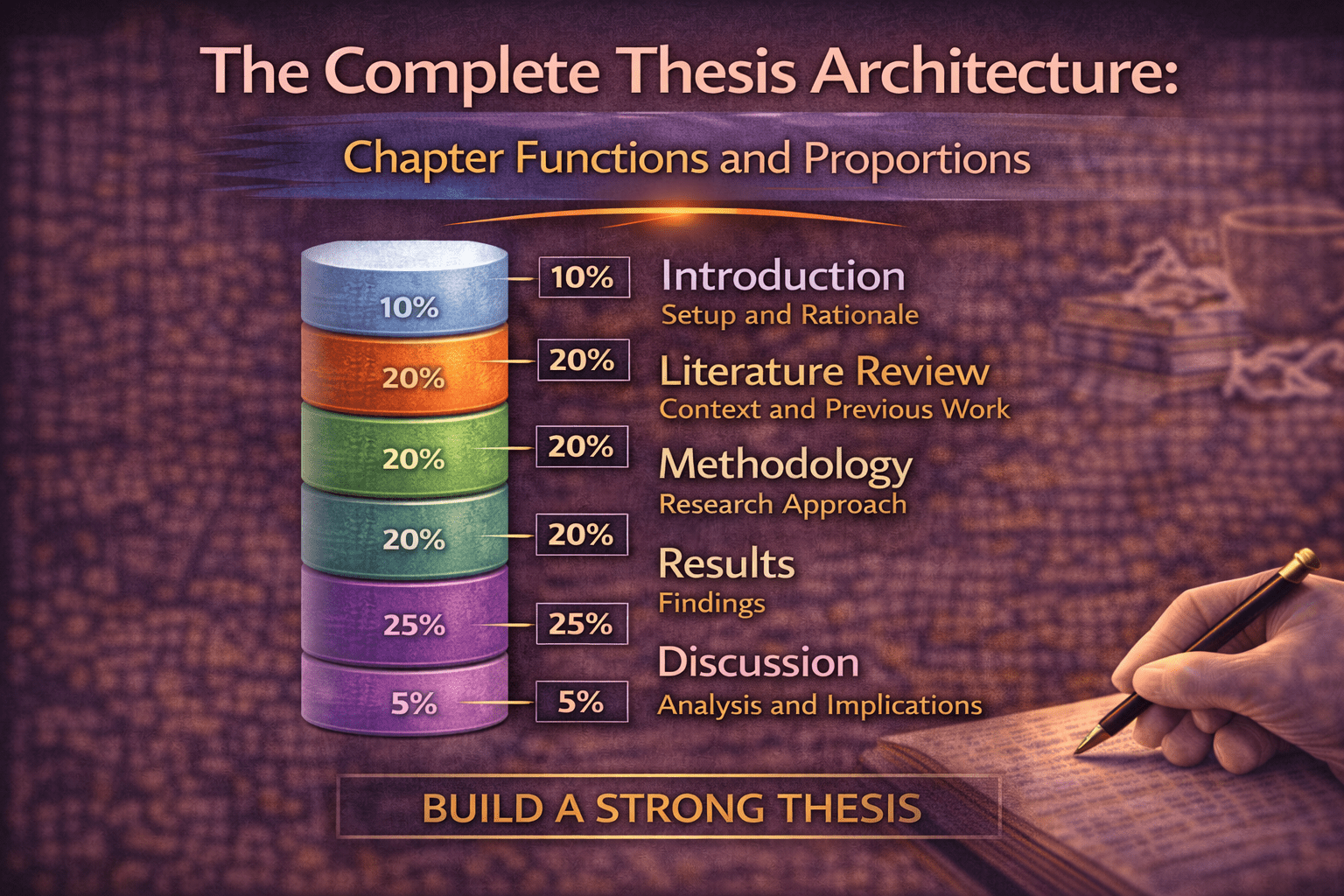
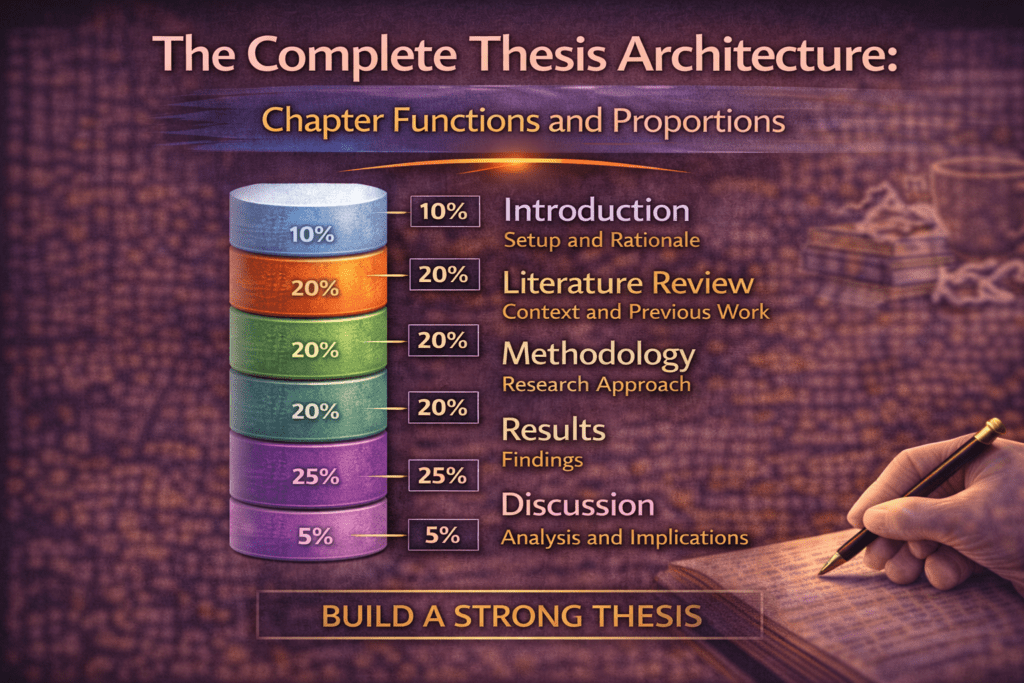
The Complete Thesis Architecture: Chapter Functions and Proportions
The module overview lists what each chapter contains. This post goes deeper: what each chapter must accomplish rather than merely include, how chapters connect to each other through explicit linking passages, the word count proportions that signal structural balance, and how to diagnose and fix the most common structural imbalances that delay examination.
Architecture, Not Just Contents
A thesis is not a collection of chapters — it is an argument built across chapters, where each part does specific work that the other parts depend on. The module’s chapter-by-chapter description tells you what to put in each chapter. This post explains what each chapter must achieve, which is a different and more important question.
The architectural metaphor is useful: a building’s rooms can each be individually well-built, but if they do not connect logically — if you have to walk through the bedroom to reach the kitchen — the building fails as a functional space. A thesis with well-written chapters that do not connect, that do not build the argument progressively, that contradict each other, or that leave the reader to make connections the author should have made: this is a thesis that fails its architectural purpose regardless of the quality of its parts.
The most common structural failure examiners identify is not that chapters are bad individually — it is that they feel like separate essays that happen to share a topic. The literature review does not build toward the research question. The methodology does not connect to the conceptual framework established in the literature review. The discussion does not circle back to the research questions stated in the introduction. Structural coherence is what transforms a collection of chapters into a thesis.
What Each Chapter Must Accomplish
Introduction: create the problem and commit to solving it
The introduction’s job is not to introduce the topic — it is to create the problem the thesis will solve. By the end of the introduction, the reader must understand: what is at stake, what is currently unknown or contested, why that gap matters, and what this thesis will do about it. The research questions or objectives are the commitment — the promise of what the thesis will deliver.
The most common introduction failure is describing the topic instead of creating the problem. A description of AI surveillance in India occupies pages without answering the question that motivates any reader: why does this research need to exist? The problem — courts have no doctrinal framework for evaluating AI surveillance, so constitutional protection of privacy in this context is inconsistent and unpredictable — is what creates the reason to read further.
Describes topic (weak): ‘AI surveillance technologies have become widespread in India in recent years. These technologies include facial recognition, CCTV networks, and predictive policing algorithms. The Supreme Court recognised privacy as a fundamental right in the 2017 Puttaswamy decision. This thesis examines these developments.’ Creates problem (strong): ‘The Supreme Court’s recognition of privacy as a fundamental right in Puttaswamy (2017) established a constitutional foundation that courts have not yet translated into workable doctrine for AI surveillance contexts. As facial recognition, predictive policing, and ambient data collection expand across Indian public spaces, courts are adjudicating privacy claims without a principled framework — producing inconsistent outcomes and leaving both citizens and state actors without reliable guidance. This thesis proposes a doctrinal framework that would bring judicial review of AI surveillance within the principled structure Puttaswamy established but did not complete.’
Literature review: build the case for your research
The literature review does not summarise what others have written — it builds the case that your research is needed. Its job is to show, through systematic engagement with existing scholarship, that the gap your research addresses is real, significant, and not already filled by work you have overlooked.
By the end of the literature review, one thing must be clear: the research questions stated in the introduction are genuinely unanswered by existing work, and your study is the appropriate next step. If the literature review ends without making this case — if it summarises existing work without identifying gaps, or identifies gaps without connecting them to your research questions — it has not accomplished its job.
Methodology: justify every decision
The methodology chapter does not describe what you did — it defends every methodological decision as the right choice for answering your specific research questions. Research design, paradigm, sampling strategy, instrument, analysis approach: each should be explained, justified, and connected back to the research questions established in the introduction.
The test for a strong methodology chapter: can the reader see, for each methodological decision, both what was chosen and why it was chosen rather than the obvious alternative? If the chapter says ‘semi-structured interviews were conducted’ without explaining why interviews rather than surveys, or why semi-structured rather than fully structured, the justification is missing.
Results: present findings without interpretation
The results chapter presents what the data showed — factually, completely, and without interpretation. Its job is to give the reader confidence that you have presented the evidence fully and accurately, so that the interpretations offered in the discussion are grounded in the results actually presented.
Results that are incomplete — where the discussion discusses findings not presented in the results section — signal either poor organisation or post-hoc analysis. Every claim made in the discussion must trace back to evidence in the results. This connection must be tight.
Discussion: fulfil the promise made in the introduction
The discussion’s job is to fulfil the promise made in the introduction. The introduction committed to answering specific research questions. The discussion must answer them — directly, clearly, and with reference to the evidence presented in the results. If a research question was stated in the introduction but not answered in the discussion, the thesis has an unfulfilled commitment that examiners will identify.
The discussion should also connect findings to the literature reviewed in Chapter 2, show how findings confirm, challenge, or extend existing scholarship, acknowledge limitations honestly, and specify what future research is needed. All of this should build toward the conclusion.
Conclusion: resolve the tension created by the introduction
The conclusion resolves what the introduction set up. The problem identified in the introduction should be addressed — not necessarily solved, but addressed — by what the thesis found. The conclusion should answer the question: given everything this thesis established, what does the reader now know that they did not know before?
Word Count Proportions: The Structural Balance Test
Chapter proportions are a diagnostic tool. Significant deviation from expected proportions usually signals a structural problem — not a stylistic choice.
| Chapter | Typical proportion of total thesis |
| Introduction | 8–12% |
| Literature review | 20–25% |
| Methodology | 15–20% |
| Results / Findings | 20–25% |
| Discussion | 20–25% |
| Conclusion | 5–8% |
A literature review at 40% of the thesis signals that it is functioning as a summary of existing work rather than as a targeted argument for your research. A methodology at 5% signals that methodological decisions have not been adequately justified. A discussion at 10% signals that the intellectual work of interpretation is incomplete.
The proportions are not absolute rules — a primarily theoretical thesis may have a longer literature review, a doctrinal thesis may have no results chapter — but deviation from these ranges should be intentional and defensible, not the result of writing more where you are comfortable and less where you are not.
Chapter Transitions: The Architecture’s Connective Tissue
The module does not cover chapter transitions. They are the single most effective structural intervention available to thesis writers, and most theses do not use them.
A chapter transition is a short passage — typically a paragraph at the end of one chapter and a paragraph at the beginning of the next — that explicitly states what the current chapter established and how it leads to what the next chapter will do. It is the connective tissue of the thesis architecture.
End-of-chapter transition (end of Literature Review): ‘The preceding review has established that while privacy as a fundamental right is well-grounded in post-Puttaswamy jurisprudence, the existing doctrinal framework does not address the specific challenges posed by AI-powered surveillance: ambient data collection, automated inference, and the elimination of meaningful consent in public spaces. No existing framework provides courts with principled criteria for evaluating these systems under Article 21. Chapter 3 sets out the research design adopted to address this gap, explaining the doctrinal methodology used to develop such a framework from existing constitutional principles.’ Beginning-of-chapter transition (beginning of Methodology): ‘As the literature review established, the absence of a principled doctrinal framework for AI surveillance under Article 21 is the central problem this thesis addresses. This chapter explains the methodological approach used to develop that framework: a doctrinal analysis of constitutional privacy jurisprudence, comparative analysis of AI surveillance frameworks in comparable jurisdictions, and normative synthesis of principles adequate to the specific challenges of automated surveillance.’
These two paragraphs take about ten minutes to write and do more for the structural coherence of a thesis than almost any other intervention. They force the writer to articulate the logical connection between chapters explicitly — and if that connection cannot be articulated clearly, it often reveals a genuine structural problem that needs to be fixed.
Diagnosing Structural Imbalances: Four Common Patterns
- The orphaned literature review: The literature review summarises existing scholarship comprehensively but does not end by identifying the specific gap that your research addresses. Result: the methodology chapter appears to arrive from nowhere, without a logical connection to what the literature established.
- The unanchored discussion: The discussion introduces ideas, frameworks, and literature that were not mentioned in the literature review. Result: the thesis appears to have two literature reviews — one in Chapter 2 and one scattered through Chapter 5 — and the overall argument is incoherent.
- The mismatched introduction-conclusion: The introduction commits to answering specific research questions, but the conclusion addresses different questions or makes claims the research did not establish. Result: the thesis does not keep its own promise.
- The oversized methodology: The methodology chapter describes procedures in exhaustive detail but fails to justify why those procedures were chosen. Result: a chapter that reads as a diary of what was done rather than a defense of why it was done.
For Law Students
Legal theses — both doctrinal and empirical — follow the same architectural principles described above, but the chapter structure is adapted to legal research conventions.
The doctrinal thesis architecture
A doctrinal LLM or PhD thesis at an Indian university typically follows this structure: an introductory chapter establishing the legal problem and research questions; a chapter on the historical and conceptual background of the legal area; one or two analytical chapters examining case law, legislation, or comparative law; a chapter on reform proposals or normative analysis; and a conclusion. This is structurally equivalent to the IMRAD model but adapted for legal reasoning.
The most common structural failure in doctrinal theses is the analytical chapter that catalogues cases without building an argument. A chapter that summarises twenty cases about privacy and surveillance in chronological order has described the law, not analysed it. An analytical chapter should argue a doctrinal claim — for example, that post-Puttaswamy decisions have applied privacy doctrine inconsistently when surveillance is justified by security interests — and use cases as evidence for that claim, not as the subject of the chapter.
Chapter proportions in Indian law theses
NLU-based LLM dissertations are typically 40,000–60,000 words; PhD theses 80,000–100,000 words. Traditional university PhD theses in law vary widely, with some institutions accepting 60,000 words and others expecting 100,000. Check your institution’s specific requirements.
In law theses, the literature review proportions may differ from the general pattern: doctrinal theses often have a relatively shorter methodology section (10% or less) and a longer analysis section (30–40%), because the analytical chapters are where the primary intellectual contribution is located. This is a disciplinary convention, not a structural failing.
References
- Booth, W. C., Colomb, G. G., Williams, J. M., Bizup, J., & FitzGerald, W. T. (2024). The Craft of Research (5th ed.). University of Chicago Press.
- Murray, R. (2011). How to Write a Thesis (3rd ed.). Open University Press.
- Eco, U. (2015). How to Write a Thesis. MIT Press.
- Turabian, K. L. (2018). A Manual for Writers of Research Papers, Theses, and Dissertations (9th ed.). University of Chicago Press.
- Oliver, P. (2014). Writing Your Thesis (4th ed.). Sage.
Next: Cluster Post 2 — Writing the Abstract and Introduction That Get Your Thesis Read

The Complete Guide to Research Paper Structure: IMRAD Format, Thesis Organization & Academic Writing (2026)
From Concept to Submission: A Complete Guide to Research Paper and Thesis Writing Module 1:…
The IMRAD Framework: Why It Exists, How It Really Works, and Where It Breaks Down
Cluster Post 1 | Module 1: Understanding the Structure of Research Papers and Theses From…

How to Write a Research Introduction That Reviewers Cannot Ignore
Cluster Post 2 | Module 1: Understanding the Structure of Research Papers and Theses From…

How to Write a Methods Section That Reviewers Will Trust
Cluster Post 3 | Module 1: Understanding the Structure of Research Papers and Theses From…

The Results Section: How to Present Findings Without Letting Interpretation Slip In
Cluster Post 4 | Module 1: Understanding the Structure of Research Papers and Theses From…

The Discussion Section: How to Turn Findings Into Knowledge
Cluster Post 5 | Module 1: Understanding the Structure of Research Papers and Theses From…
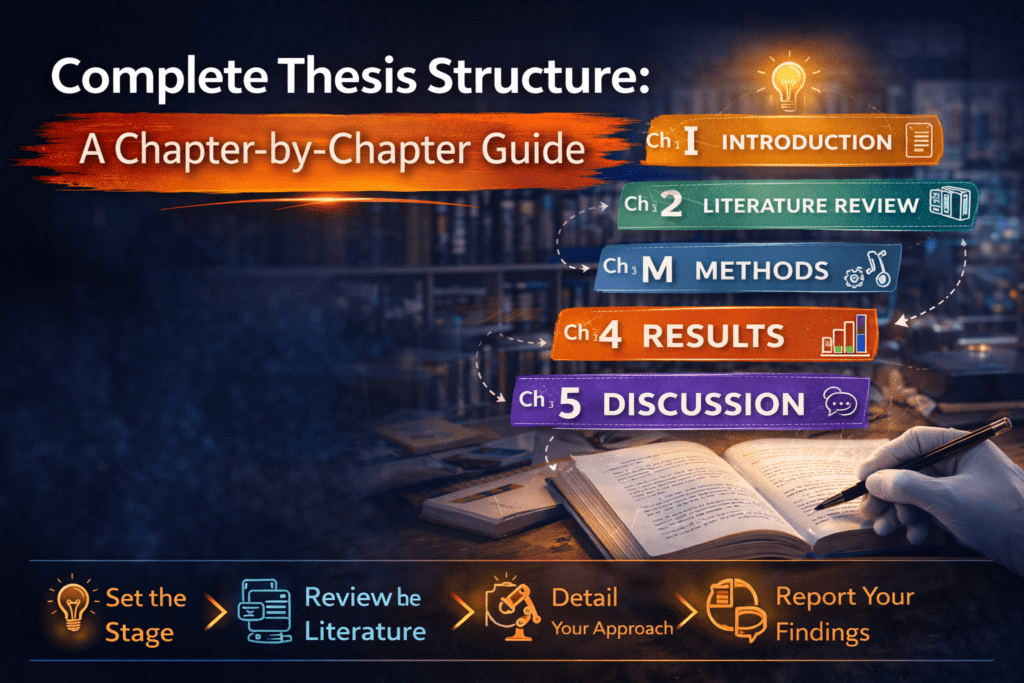
Complete Thesis Structure: A Chapter-by-Chapter Guide
Cluster Post 6 | Module 1: Understanding the Structure of Research Papers and Theses From…

10 Structural Mistakes That Get Research Papers Rejected — And How to Fix Every One
Cluster Post 7 | Module 1: Understanding the Structure of Research Papers and Theses From…

The Academic Writing Process: Complete Guide from First Draft to Submission (2026)
From Concept to Submission: A Complete Guide to Research Paper and Thesis Writing Module 2,…
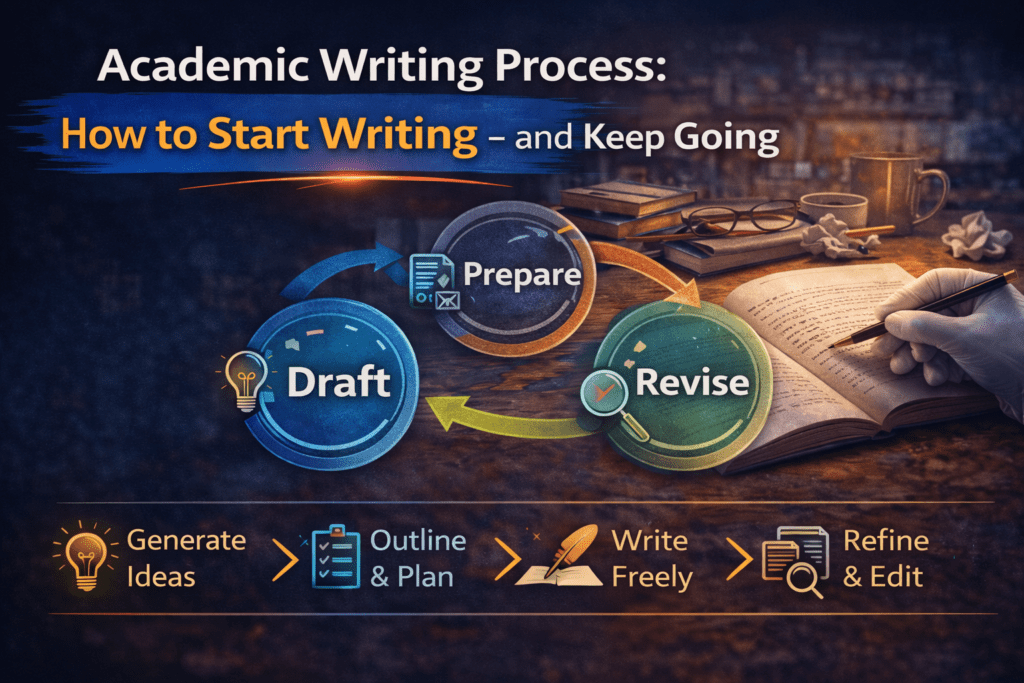
How to Start Writing — and Keep Going
Cluster Post 1 | Module 2: The Academic Writing Process From Concept to Submission Series …

How to Write Clear Engaging Academic Prose
Cluster Post 2 | Module 2: The Academic Writing Process From Concept to Submission Series …
The Revision Process: How to Turn a Draft Into a Submission
Cluster Post 3 | Module 2: The Academic Writing Process From Concept to Submission Series …
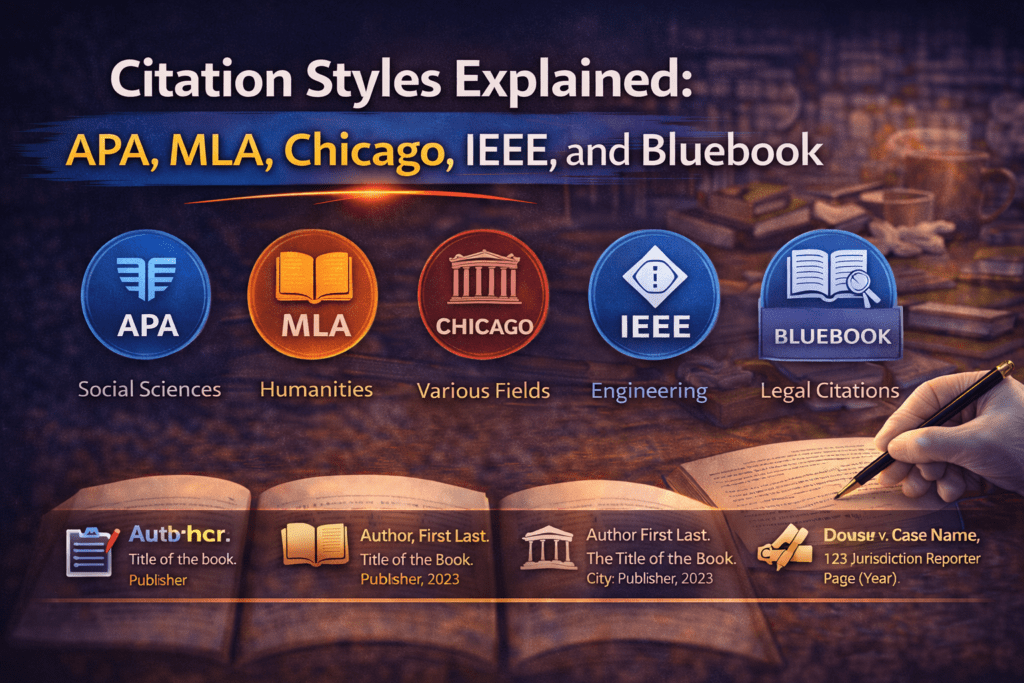
Citation Styles Explained: APA, MLA, Chicago, IEEE, and Bluebook
Cluster Post 4 | Module 2: The Academic Writing Process From Concept to Submission Series …
Reference Management: Zotero and Mendeley from Setup to Submission
Cluster Post 5 | Module 2: The Academic Writing Process From Concept to Submission Series …

Research Methodologies: Complete Guide to Quantitative, Qualitative, Mixed Methods & Legal Research (2026)
Why Methodology Determines Research Quality Here’s what thesis examiners focus on first: your methodology section…

Research Paradigms: Why Your Philosophical Stance Shapes Everything
Cluster Post 1 | Module 3: Research Methodologies From Concept to Submission Series | 2026 ←…

Quantitative Research Design: From Hypothesis to Valid Results
Cluster Post 2 | Module 3: Research Methodologies From Concept to Submission Series | 2026…
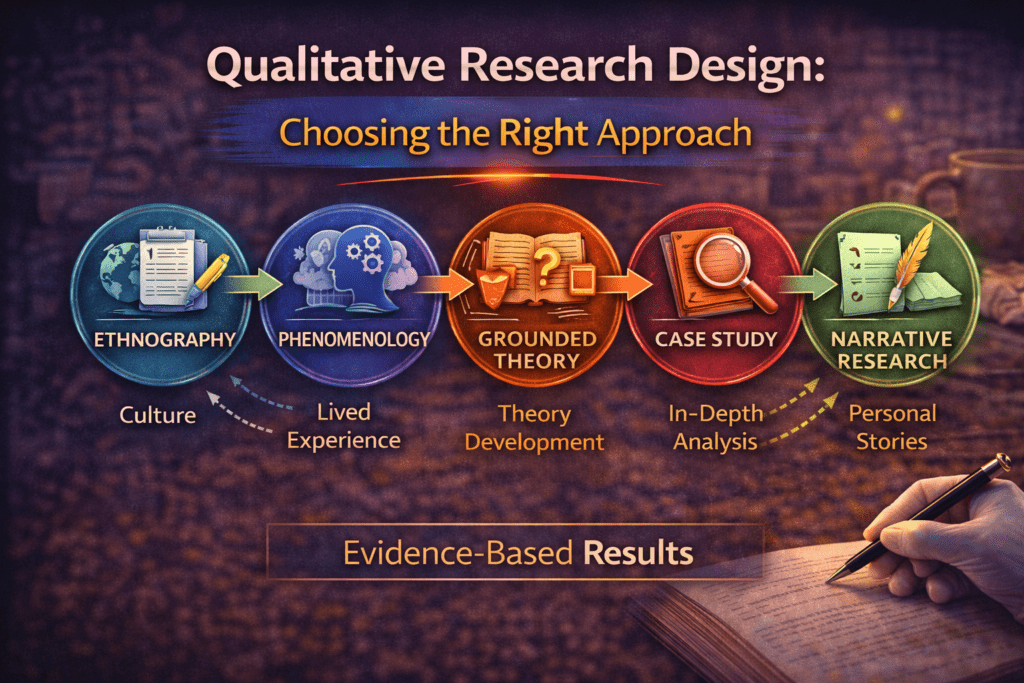
Qualitative Research Design: Choosing the Right Approach
Cluster Post 3 | Module 3: Research Methodologies From Concept to Submission Series | 2026…

Qualitative Data Collection and Analysis: Interviews, Coding, and Trustworthiness
Cluster Post 4 | Module 3: Research Methodologies From Concept to Submission Series | 2026…
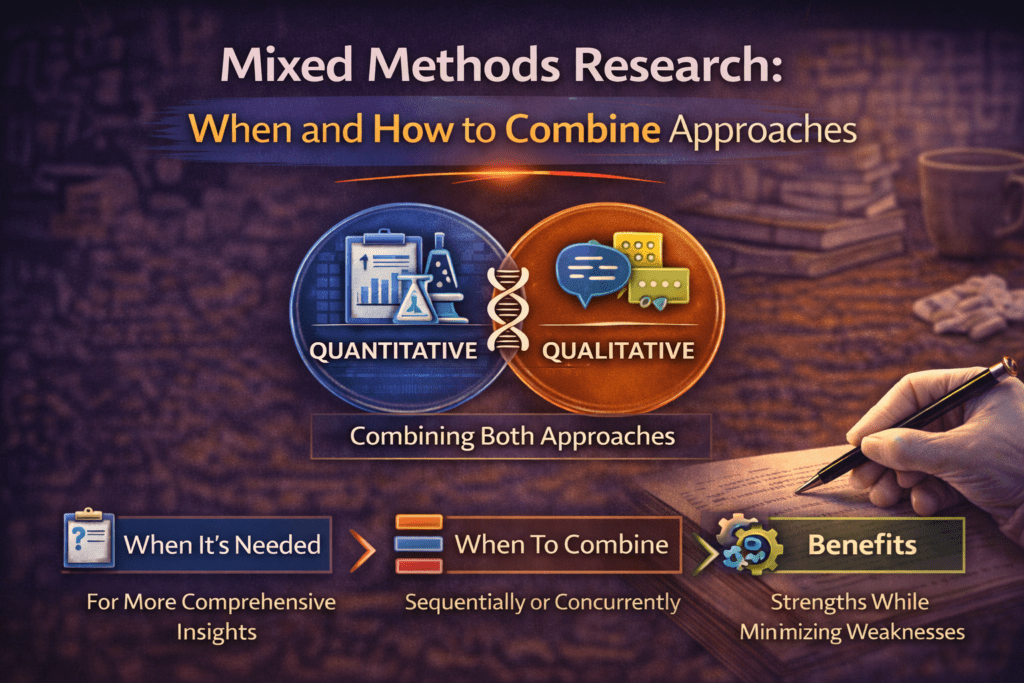
Mixed Methods Research: When and How to Combine Approaches
Cluster Post 5 | Module 3: Research Methodologies From Concept to Submission Series | 2026…
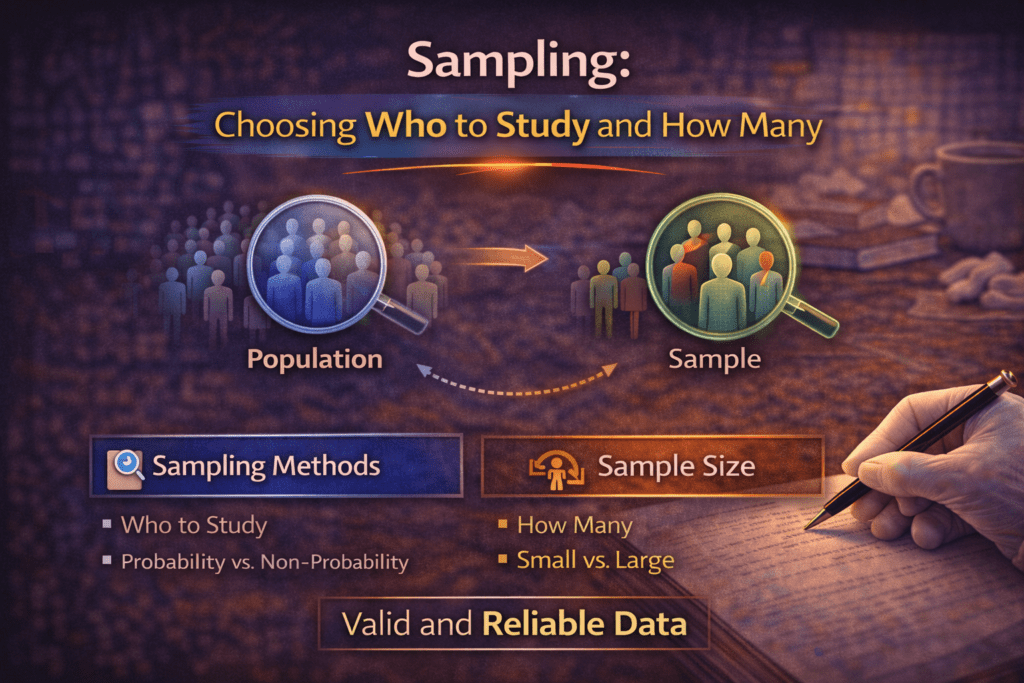
Sampling: Choosing Who to Study and How Many
Cluster Post 6 | Module 3: Research Methodologies From Concept to Submission Series | 2026…

Research Ethics in Practice: What Ethics Forms Don’t Tell You
Cluster Post 7 | Module 3: Research Methodologies From Concept to Submission Series | 2026…

Data Analysis and Results Presentation: Complete Guide for Quantitative, Qualitative & Legal Research (2026)
Data Analysis and Results Presentation: Why Data Analysis Determines Research Credibility Here’s what separates published…

Preparing Your Data: The Work That Determines Analysis Quality
Cluster Post 1 | Module 4: Data Analysis and Presenting Results From Concept to Submission…
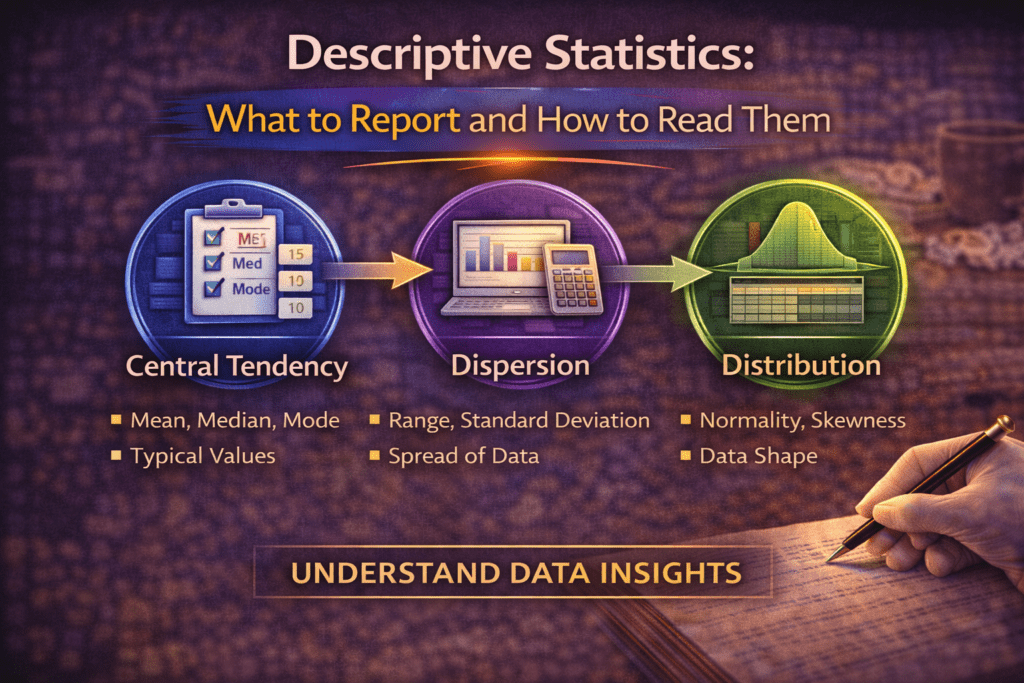
Descriptive Statistics: What to Report and How to Read Them
Cluster Post 2 | Module 4: Data Analysis and Presenting Results From Concept to Submission…
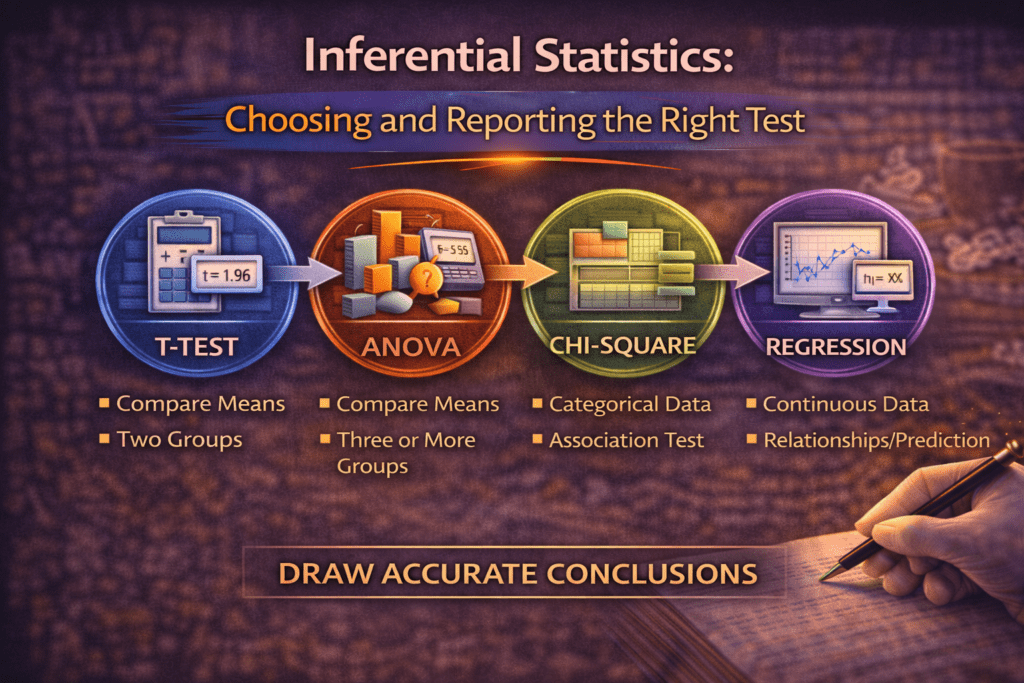
Inferential Statistics: Choosing and Reporting the Right Test
Cluster Post 3 | Module 4: Data Analysis and Presenting Results From Concept to Submission…
Statistical Assumptions: The Checks Most Researchers Skip
Cluster Post 4 | Module 4: Data Analysis and Presenting Results From Concept to Submission…
Presenting Qualitative Findings: Quotes, Themes, and the Balance Between Showing and Telling
Cluster Post 5 | Module 4: Data Analysis and Presenting Results From Concept to Submission…
Writing the Results Section: Separating Findings from Interpretation
Cluster Post 6 | Module 4: Data Analysis and Presenting Results From Concept to Submission…

Organization and Academic Tone: Complete Guide to Professional Scholarly Writing (2026)
Why Organization and Academic Tone Matter More Than You Think Here’s what thesis examiners notice…
The Complete Thesis Architecture: Chapter Functions and Proportions
Cluster Post 1 | Module 5: Organising Chapters, Maintaining Academic Tone, and Preparing Submission-Ready Documents…
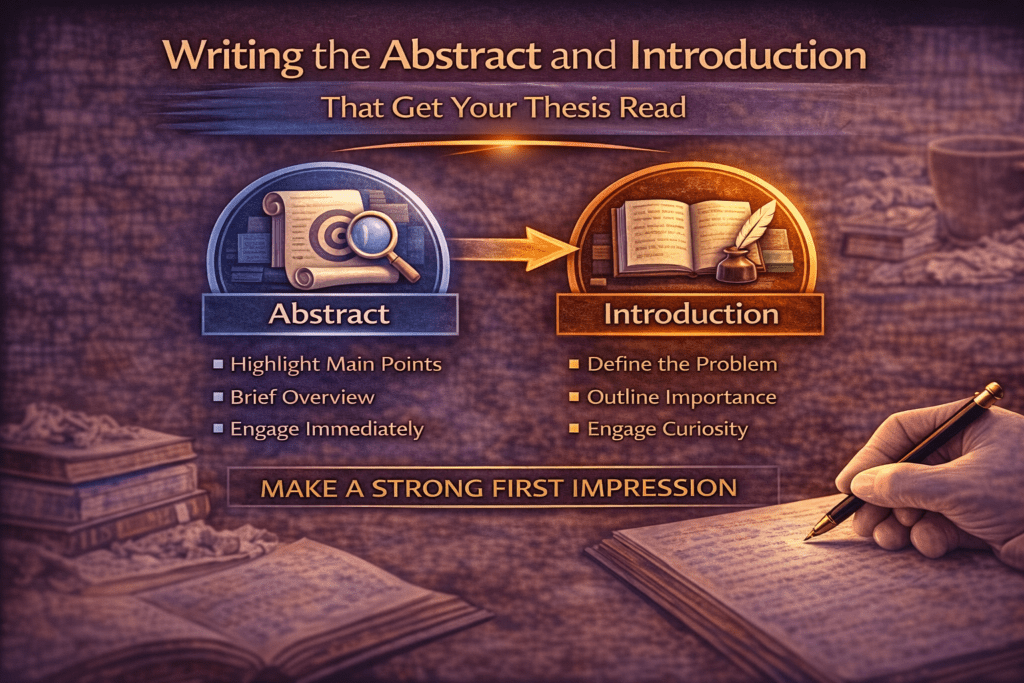
Writing the Thesis Abstract and Introduction
Cluster Post 2 | Module 5: Thesis Writing and Submission From Concept to Submission Series …

Academic Tone: From Principles to Practice
Cluster Post 3 | Module 5: Organising Chapters, Maintaining Academic Tone, and Preparing Submission-Ready Documents…
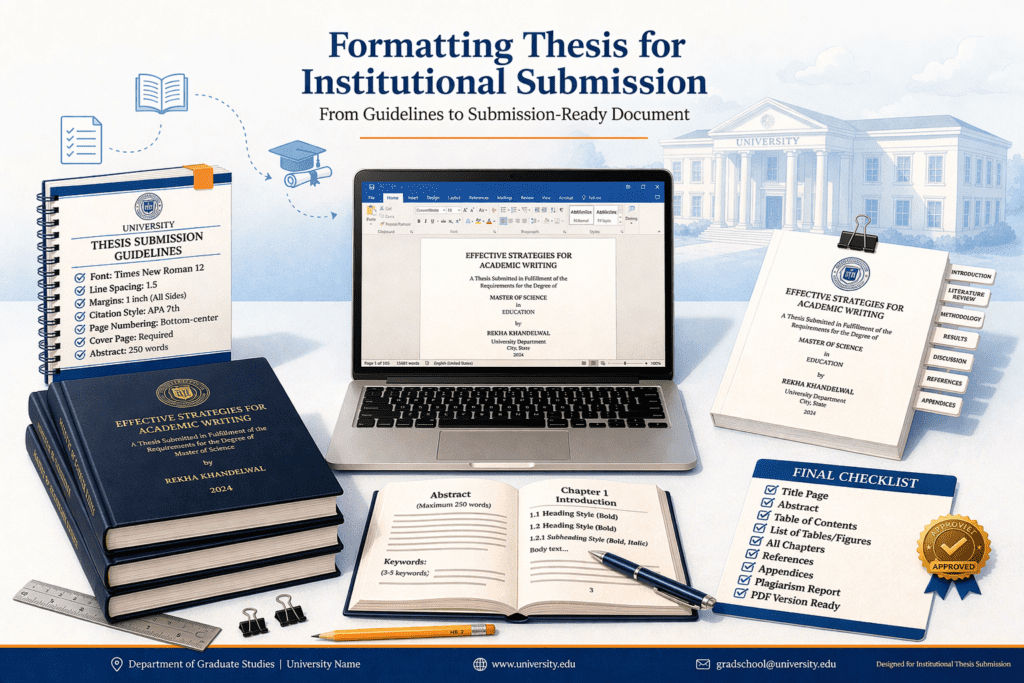
Formatting Thesis for Institutional Submission
Cluster Post 4 | Module 5: Thesis Writing and Submission From Concept to Submission Series …

The Final Week: Preparing a Submission-Ready Document
Cluster Post 5 | Module 5: Organising Chapters, Maintaining Academic Tone, and Preparing Submission-Ready Documents…

Academic Writing Mastery: The Complete 2026 Guide to Research Papers & Thesis Writing
Academic Writing Mastery Your research deserves to be read. This complete guide transforms your ideas…