
Cluster Post 4 | Module 5: Thesis Writing and Submission
From Concept to Submission Series | 2026
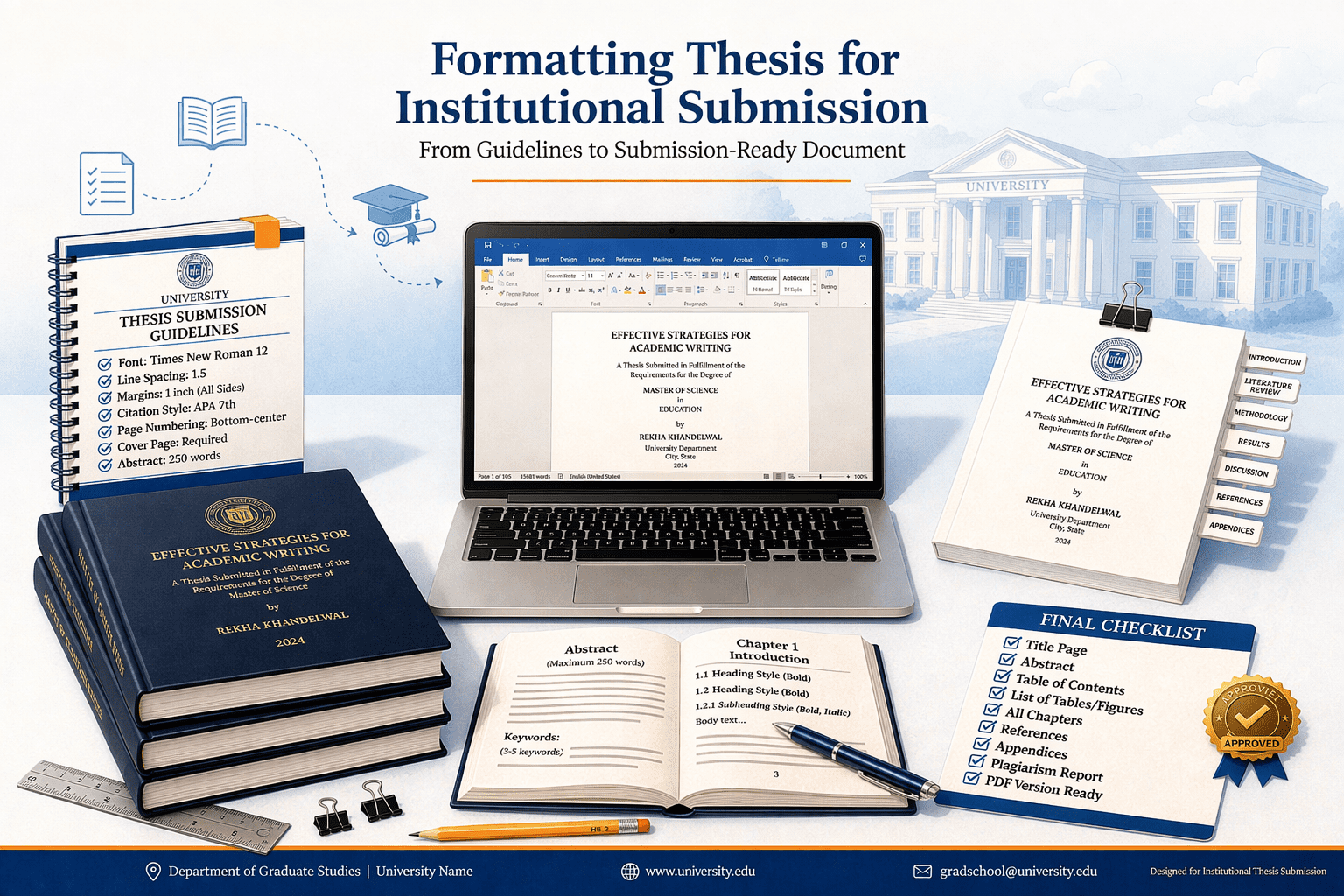
Formatting Thesis for Institutional Submission
The first rule of thesis formatting: your institution’s guidelines are the authoritative source — not this post, not your supervisor’s recollection, not what a senior student’s thesis looked like. Guidelines are updated, requirements vary by department and degree level, and discrepancies between what you were told verbally and what the official document says are resolved in favour of the official document. Download the current version, print it, and keep it beside you during final formatting.
That said, certain formatting conventions appear consistently across universities worldwide, and knowing these reduces the probability of the most common submission errors. This post covers those universal conventions first, then the differences by system, then the plagiarism check process.
Universal Formatting Standards
Paper size and margins
Two paper sizes dominate globally: A4 (210 × 297 mm) is standard in India, the UK, Australia, Europe, and most of Asia; US Letter (216 × 279 mm) is standard in the USA and Canada. Use whichever your institution specifies — do not substitute one for the other, as the difference affects page counts and margin calculations.
Binding margin: physical thesis copies require a wider left margin to prevent text from being obscured after binding. The standard is 1.5 inches (38 mm) on the left, 1 inch (25 mm) on all other sides. Some institutions specify 1.25 inches on all sides — check your guidelines. This is the single most commonly missed formatting requirement in physical submissions.
Font and size
| Element | Standard specification |
| Body text font | Times New Roman 12pt is the near-universal default. Arial, Calibri, and Georgia are accepted at many institutions. Use one typeface throughout — mixing is not acceptable. |
| Heading font | Same typeface as body, or a complementary sans-serif if your institution permits. Consistency is the requirement. |
| Footnote font | Same typeface as body, 10pt. |
| Block quotations | Same typeface, 11pt or 10pt, indented left and right, single-spaced. |
| Reference list | Same typeface, 11pt or 12pt, single-spaced with space between entries. |
Line spacing
| Element | Standard spacing |
| Main body text | 1.5 or double (2.0) spacing — most common specifications globally. Double spacing is more common in the USA and Australia; 1.5 is more common in the UK and India. |
| Footnotes | Single-spaced, no extra space between footnotes. |
| Block quotations | Single-spaced, indented, with one line space above and below. |
| Reference list / bibliography | Single-spaced entries, one blank line between entries. |
| Chapter headings and subheadings | No extra line spacing needed if paragraph spacing is set correctly in your word processor. |
Page numbering
The universal convention for academic theses: Roman numerals (i, ii, iii…) for all front matter pages before the first chapter; Arabic numerals (1, 2, 3…) from Chapter 1 onward. The title page is conventionally counted as page i but not numbered — the first visible number is typically ii on the second front matter page.
Page numbers are most commonly placed at the bottom centre or bottom right of the page. The first page of each chapter traditionally does not display a page number (though it is counted in the sequence). Set this in your word processor using section breaks, not manually.
Chapter and heading structure
Chapters are numbered sequentially and titled descriptively. The heading hierarchy should be consistent throughout: Chapter title at H1, major section headings at H2, subsection headings at H3. Do not use more than three levels of heading in most thesis chapters — deeper nesting usually signals a structural problem rather than a need for more headings.
Consistency is the non-negotiable requirement. If Chapter 1 uses ‘CHAPTER ONE: INTRODUCTION’ in all caps, every chapter must follow the same format. If H2 headings are bold and left-aligned, every H2 heading must be bold and left-aligned. Inconsistency in heading style is one of the most common formatting errors examiners notice immediately.
Front Matter: What Goes Where
Front matter is everything before Chapter 1. The order varies slightly by institution, but the following sequence is standard across most university systems globally:
- Title page — thesis title, your name, degree for which submitted, institution, department, year of submission. Some institutions require a supervisor’s name. Format exactly as specified.
- Declaration / Originality statement — your signed statement that the work is your own. Required at virtually all universities. Prescribed wording must be used verbatim where it exists.
- Supervisor’s certificate — signed by supervisor confirming the thesis is ready for submission. Required at most Indian universities; less common at UK/US/Australian institutions where the supervisor’s permission is assumed from their agreement to submit.
- Abstract — covered in Cluster Post 2. Typically follows the declaration pages.
- Acknowledgements — optional but conventional. Keep to one page.
- Table of contents — all chapters and major sections with page numbers. Generated automatically in Word/LaTeX — do not type manually.
- List of figures — required if the thesis contains figures.
- List of tables — required if the thesis contains tables.
- List of abbreviations — if the thesis uses more than five or six abbreviations regularly.
- Glossary — if the thesis uses specialised terms requiring definition.
The table of contents must be generated automatically, not typed manually. A manually typed table of contents that does not match the actual page numbers is a submission error that immediately creates a poor impression. Use your word processor’s built-in TOC generator, linked to your heading styles.
Formatting Conventions by University System
| System | Key conventions | Repository / deposit |
| India | A4 paper. Times New Roman 12pt standard. Double spacing most common. 1.5-inch left margin for binding. Declaration and supervisor certificate pages required with prescribed wording. Anti-ragging and originality undertakings required at many universities. | Shodhganga (INFLIBNET) — PDF/A format required. Mandatory for most Indian university PhD degrees. |
| United Kingdom | A4 paper. No single font standard — Times New Roman or Arial both common. 1.5 or double spacing depending on institution. Declaration of originality required. Word limit strictly enforced (typically 80,000–100,000 words for PhD; 15,000–20,000 for Master’s dissertation). | EThOS (British Library) and institutional repository. Most UK universities require digital deposit as condition of award. |
| United States | US Letter paper. Double spacing standard. No single font requirement — Times New Roman, Arial, Calibri all common. Abstract submitted separately to ProQuest (350 words). Word limits less common than in UK — page limits more typical. | ProQuest Dissertations and Theses. Most US universities require ProQuest submission. Open access or embargo options available. |
| Australia | A4 paper. Similar to UK conventions. Thesis by publication (incorporating published journal articles as chapters) increasingly common and requires specific formatting for the included articles. | Institutional repository (e.g., Research Bank, Minerva). Australian Digital Theses programme coordinates national access. |
| Europe | A4 paper. Conventions vary significantly by country and institution. Cumulative thesis (thesis by publication) very common in Germany, Scandinavia, Netherlands. Check country and institution-specific requirements carefully. | DART-Europe coordinates European thesis access. National repositories vary by country. |
The Plagiarism Check: What the Score Actually Means
Most universities now require a plagiarism check using Turnitin, iThenticate, or a similar tool before thesis submission. Understanding what the similarity score measures — and what it does not — prevents both unnecessary alarm and genuine compliance failures.
The similarity score measures text overlap with indexed sources — not plagiarism directly. A high score requires interpretation, not automatic alarm. The score includes: properly quoted and cited passages (which Turnitin counts as matches even when fully attributed), standard disciplinary phrases and terminology that appear across many sources, your own previously submitted work if your institution indexes student submissions, bibliographic entries, and boilerplate text such as ethics statements.
Similarity thresholds by system
| System | Typical threshold and approach |
| India (UGC guidelines) | 10–20% overall similarity is the typical institutional threshold. UGC Regulations 2018 specify levels: below 10% — accepted; 10–40% — minor/major revision depending on level; above 60% — rejected. Exclude bibliography and properly cited quotations before assessing. |
| United Kingdom | No single national threshold. Most UK universities set 15–20% as a review trigger, assessed by a human examiner rather than automatic rejection. Similarity in bibliography and quoted material is typically excluded from the assessed score. |
| United States | No federal standard. Individual universities set thresholds — typically 15–25% as a review trigger. ProQuest requires the thesis to be original work; similarity assessment is institutional. |
| Australia | Similar to UK — institutional thresholds typically 15–20% as a review trigger, with human assessment of what drives the score. |
What to do if your score is above the threshold: identify the highest-contributing sources in the detailed Turnitin report. Check whether the matches are properly cited quotations (legitimate — may need to exclude from the assessed score), standard phrases (legitimate), or unattributed text that should be paraphrased or cited. Address only the latter.
Never paraphrase by synonym substitution alone. Changing every fourth word while retaining sentence structure is still plagiarism — algorithmic detection and trained examiners both identify it. Genuine paraphrase restructures the sentence and restates the idea in your own voice, with the source cited. When in doubt, quote directly and cite — that is always preferable to poorly disguised copying.
Indian University Submission: Specific Requirements
Indian PhD submissions involve several requirements that are specific to the Indian system and not covered by the general guidance above.
Declaration and certificate pages
Indian universities require both a candidate’s declaration and a supervisor’s certificate, with prescribed wording that must be used verbatim. Theses submitted with incorrect wording or missing pages are typically returned before the examiner reads them. If your university does not provide prescribed wording, the following formulation covers the standard elements:
I hereby declare that the thesis entitled ‘[Title]’ submitted for the degree of [Degree] is my own work conducted under the supervision of [Supervisor Name], [Designation], [Department], [Institution]. I further declare that to the best of my knowledge the thesis does not contain any part of any work which has been submitted for the award of any degree either in this University or in any other University/Deemed University without proper citation. Date: Place: Signature of the Candidate
This is illustrative — your institution’s prescribed wording takes precedence.
Shodhganga submission
Shodhganga — the INFLIBNET national repository of Indian PhD theses — requires submission in PDF/A format (archival quality PDF with all fonts embedded). Most Indian university PhD regulations now require Shodhganga deposit as a condition of degree award, not merely post-award archiving. The institutional submission process requires library or research office coordinator involvement and may take one to two weeks.
Submit to Shodhganga several weeks before your viva date, not the day before graduation. Confirm with your institution’s library or research office exactly what is required, in what format, and by when.
Additional undertakings
Many Indian universities require additional certificates as part of the submission package — anti-ragging declarations, Research Advisory Committee certificates, and originality undertakings beyond the standard plagiarism check. These are administrative requirements with no bearing on the intellectual content of the thesis, but missing any of them delays processing. Maintain a checklist of every required document alongside your formatting checklist, and collect signatures progressively during the final months rather than in the final week.
🔱 For Law Students
Footnote formatting in legal theses
Legal theses use footnote citations rather than in-text citations. Formatting footnotes correctly is a frequent source of submission problems regardless of institution or country.
- Numbering: restart footnote numbering at 1 with each new chapter, not continuously through the thesis. This is standard for legal scholarship and makes navigation easier for examiners.
- Spacing: footnotes should be single-spaced with no extra space between footnotes. The same typeface as the main text at 10pt.
- Content: footnotes in legal theses are for citations and brief explanatory notes — not for substantive arguments. If your footnotes regularly exceed three or four lines, the content belongs in the main text, not the footnote. An examiner who finds the argument in footnotes rather than the main text will note this as a structural weakness.
Citation style by system
| System / jurisdiction | Standard legal citation style |
| India (NLUs and most law faculties) | OSCOLA (Oxford University Standard for Citation of Legal Authorities) is increasingly standard. Some institutions use institution-specific styles. Check your institution’s requirements. |
| United Kingdom | OSCOLA — universally standard across UK law schools. |
| United States | Bluebook — standard at US law schools and law reviews. |
| Australia | AGLC (Australian Guide to Legal Citation) — standard at Australian law schools. |
| International / comparative research | OSCOLA is the most internationally recognised and is appropriate for theses engaging multiple jurisdictions. If your thesis is primarily Indian law with comparative analysis, OSCOLA is appropriate. |
References
- Turabian, K. L. (2018). A Manual for Writers of Research Papers, Theses, and Dissertations (9th ed.). University of Chicago Press.
- OSCOLA (4th ed.). Faculty of Law, University of Oxford. law.ox.ac.uk/oscola
- Shodhganga — INFLIBNET National Repository. shodhganga.inflibnet.ac.in
- ProQuest Dissertations and Theses. proquest.com
- EThOS — British Library thesis deposit. ethos.bl.uk
- UGC Regulations on Academic Integrity and Prevention of Plagiarism 2018. ugc.gov.in
Module 5 Cluster Post 4 | Global edition

Academic Writing Mastery: The Complete 2026 Guide to Research Papers & Thesis Writing
Academic Writing Mastery Your research deserves to be read. This complete guide transforms your ideas…
The Final Week: Preparing a Submission-Ready Document
Cluster Post 5 | Module 5: Organising Chapters, Maintaining Academic Tone, and Preparing Submission-Ready Documents…
Formatting Thesis for Institutional Submission
Cluster Post 4 | Module 5: Thesis Writing and Submission From Concept to Submission Series …

Academic Tone: From Principles to Practice
Cluster Post 3 | Module 5: Organising Chapters, Maintaining Academic Tone, and Preparing Submission-Ready Documents…
Writing the Thesis Abstract and Introduction
Cluster Post 2 | Module 5: Thesis Writing and Submission From Concept to Submission Series …
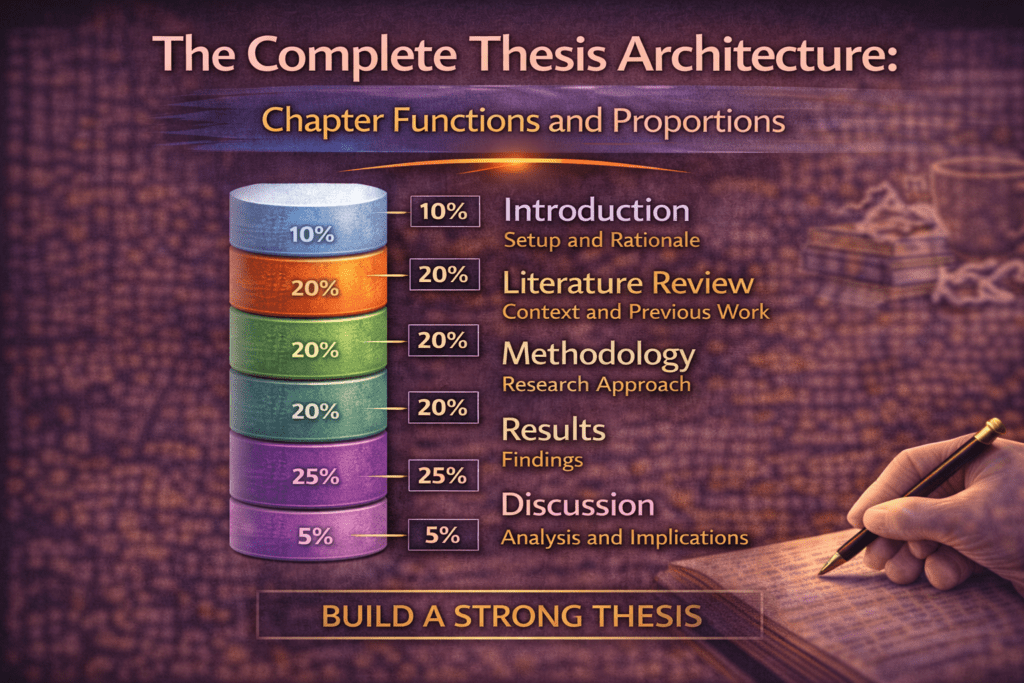
The Complete Thesis Architecture: Chapter Functions and Proportions
Cluster Post 1 | Module 5: Organising Chapters, Maintaining Academic Tone, and Preparing Submission-Ready Documents…
Organization and Academic Tone: Complete Guide to Professional Scholarly Writing (2026)
Why Organization and Academic Tone Matter More Than You Think Here’s what thesis examiners notice…
Writing the Results Section: Separating Findings from Interpretation
Cluster Post 6 | Module 4: Data Analysis and Presenting Results From Concept to Submission…
Presenting Qualitative Findings: Quotes, Themes, and the Balance Between Showing and Telling
Cluster Post 5 | Module 4: Data Analysis and Presenting Results From Concept to Submission…
Statistical Assumptions: The Checks Most Researchers Skip
Cluster Post 4 | Module 4: Data Analysis and Presenting Results From Concept to Submission…
Inferential Statistics: Choosing and Reporting the Right Test
Cluster Post 3 | Module 4: Data Analysis and Presenting Results From Concept to Submission…
Descriptive Statistics: What to Report and How to Read Them
Cluster Post 2 | Module 4: Data Analysis and Presenting Results From Concept to Submission…
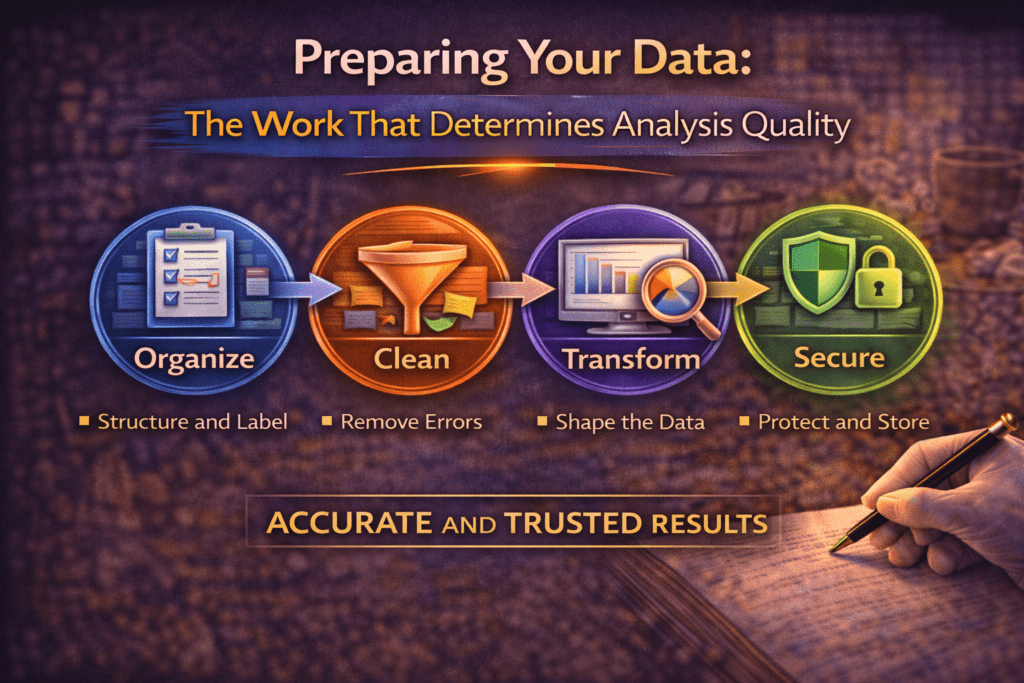
Preparing Your Data: The Work That Determines Analysis Quality
Cluster Post 1 | Module 4: Data Analysis and Presenting Results From Concept to Submission…
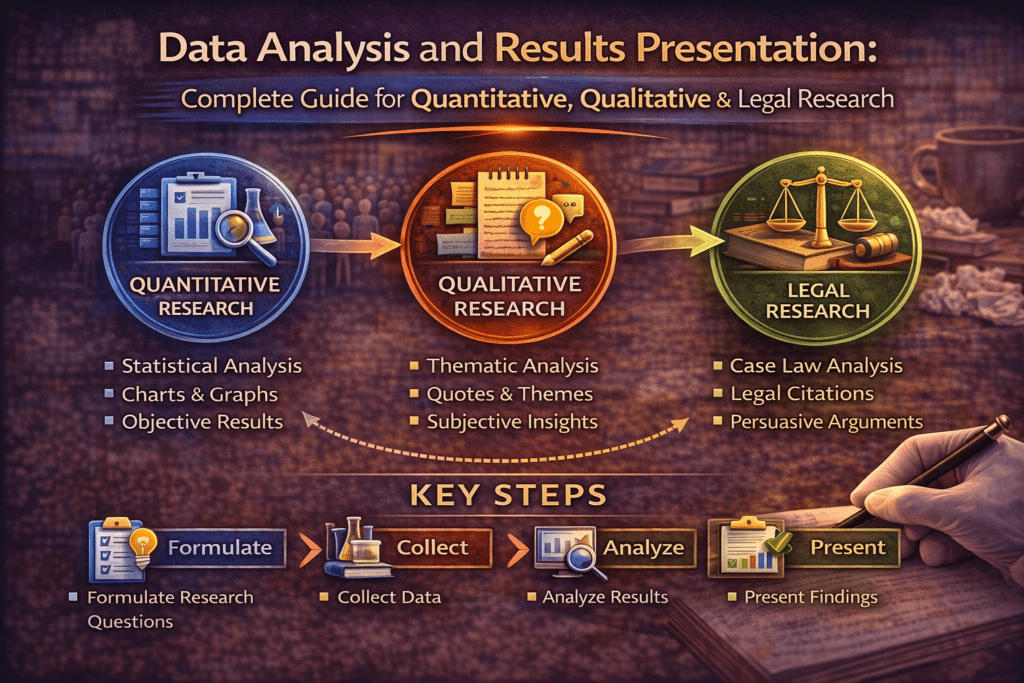
Data Analysis and Results Presentation: Complete Guide for Quantitative, Qualitative & Legal Research (2026)
Data Analysis and Results Presentation: Why Data Analysis Determines Research Credibility Here’s what separates published…
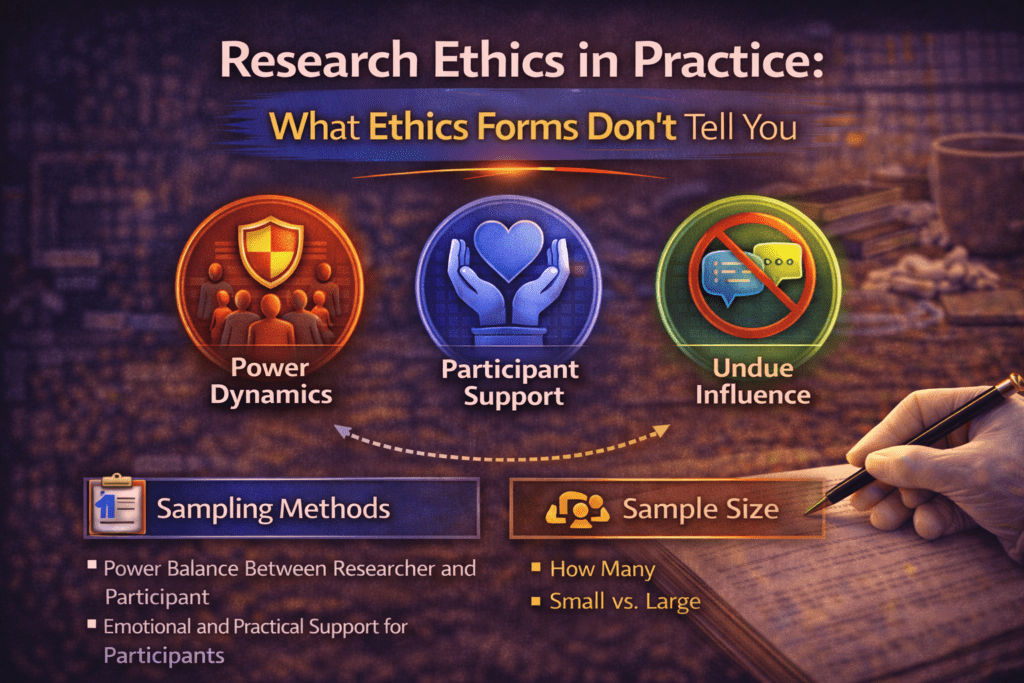
Research Ethics in Practice: What Ethics Forms Don’t Tell You
Cluster Post 7 | Module 3: Research Methodologies From Concept to Submission Series | 2026…
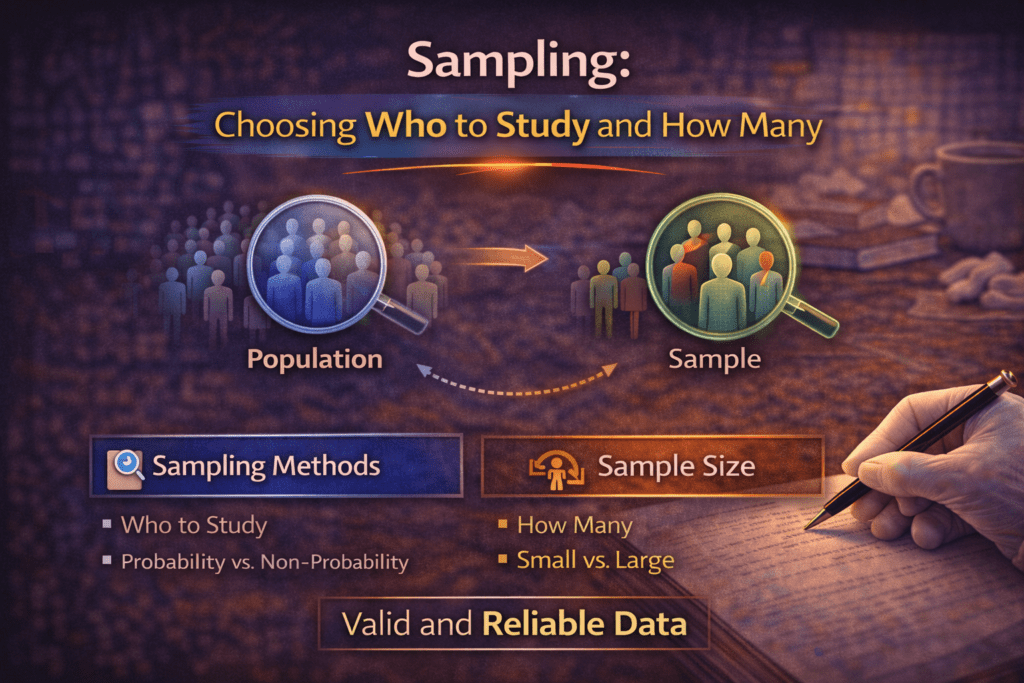
Sampling: Choosing Who to Study and How Many
Cluster Post 6 | Module 3: Research Methodologies From Concept to Submission Series | 2026…
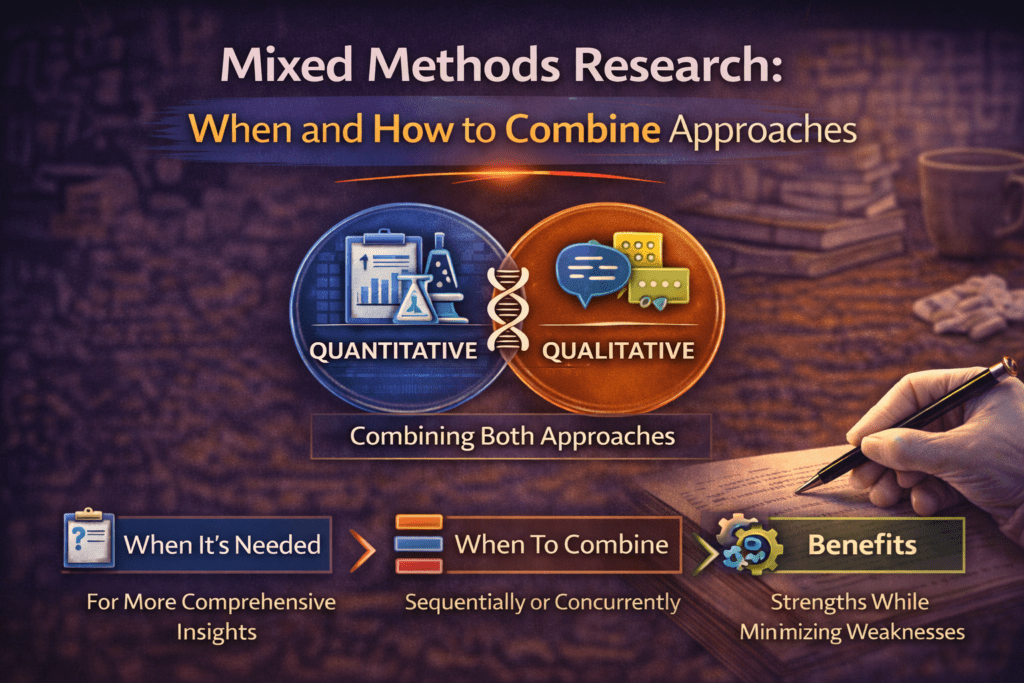
Mixed Methods Research: When and How to Combine Approaches
Cluster Post 5 | Module 3: Research Methodologies From Concept to Submission Series | 2026…
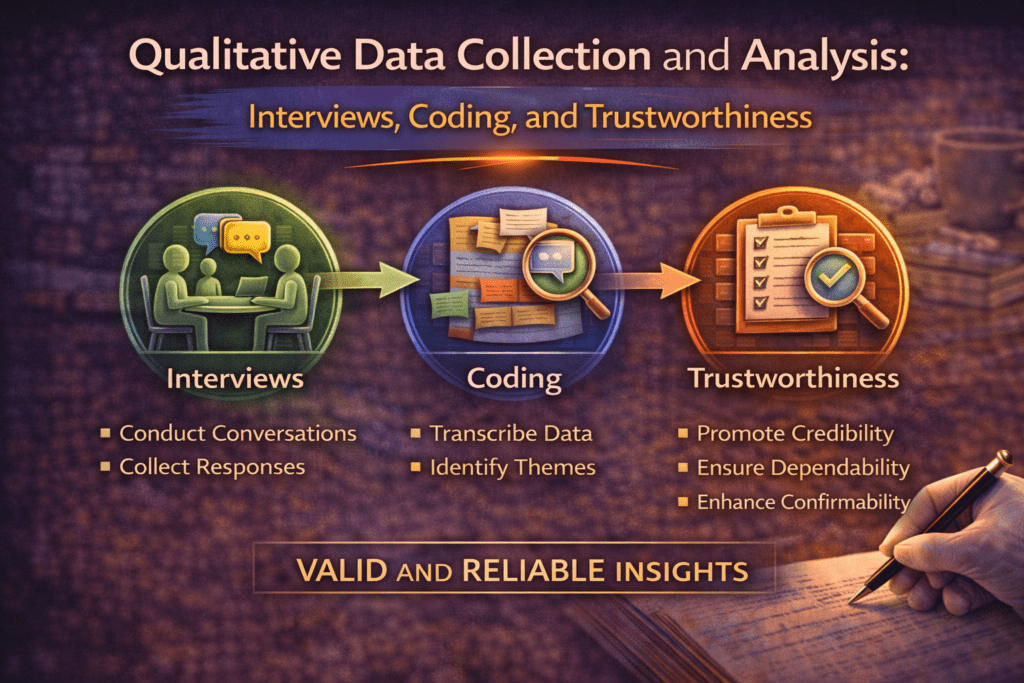
Qualitative Data Collection and Analysis: Interviews, Coding, and Trustworthiness
Cluster Post 4 | Module 3: Research Methodologies From Concept to Submission Series | 2026…
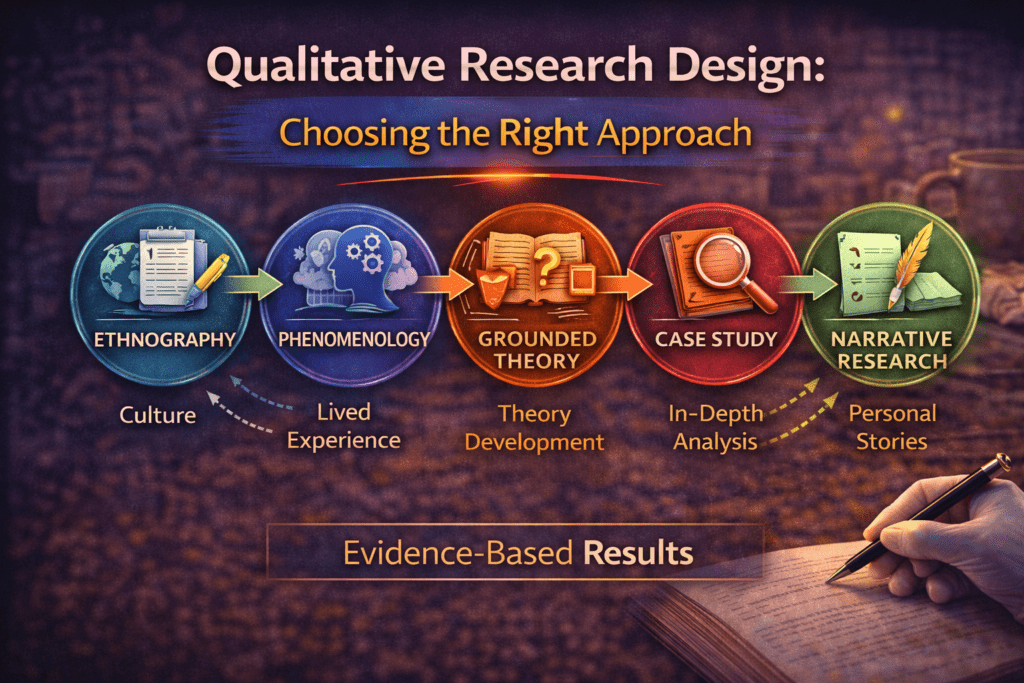
Qualitative Research Design: Choosing the Right Approach
Cluster Post 3 | Module 3: Research Methodologies From Concept to Submission Series | 2026…
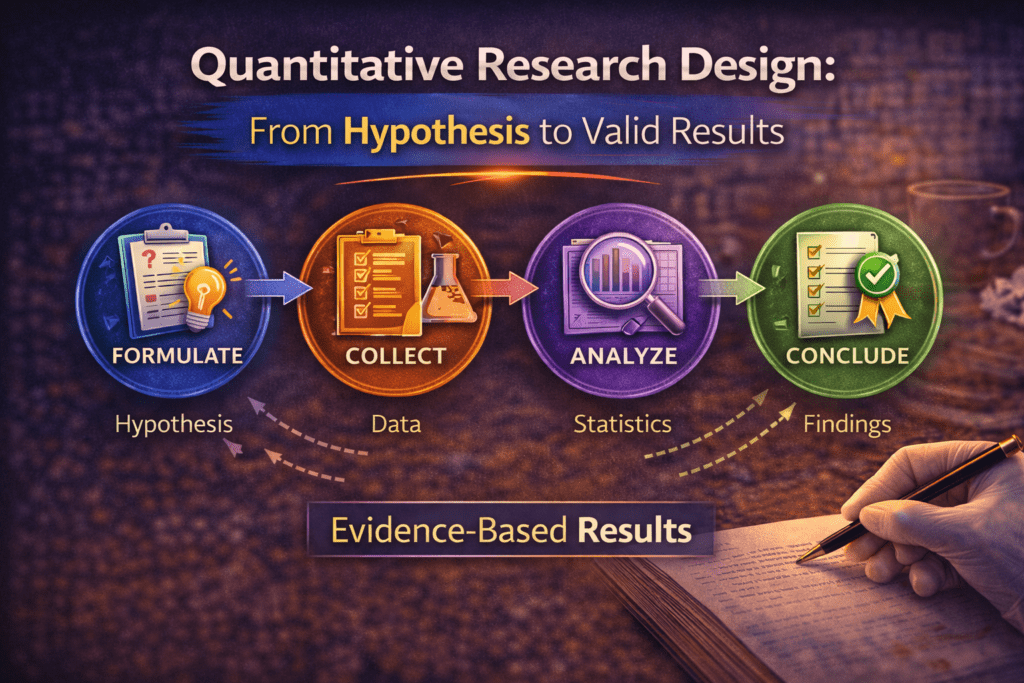
Quantitative Research Design: From Hypothesis to Valid Results
Cluster Post 2 | Module 3: Research Methodologies From Concept to Submission Series | 2026…

Research Paradigms: Why Your Philosophical Stance Shapes Everything
Cluster Post 1 | Module 3: Research Methodologies From Concept to Submission Series | 2026 ←…
Research Methodologies: Complete Guide to Quantitative, Qualitative, Mixed Methods & Legal Research (2026)
Why Methodology Determines Research Quality Here’s what thesis examiners focus on first: your methodology section…
Reference Management: Zotero and Mendeley from Setup to Submission
Cluster Post 5 | Module 2: The Academic Writing Process From Concept to Submission Series …
Citation Styles Explained: APA, MLA, Chicago, IEEE, and Bluebook
Cluster Post 4 | Module 2: The Academic Writing Process From Concept to Submission Series …
The Revision Process: How to Turn a Draft Into a Submission
Cluster Post 3 | Module 2: The Academic Writing Process From Concept to Submission Series …

How to Write Clear Engaging Academic Prose
Cluster Post 2 | Module 2: The Academic Writing Process From Concept to Submission Series …
How to Start Writing — and Keep Going
Cluster Post 1 | Module 2: The Academic Writing Process From Concept to Submission Series …
The Academic Writing Process: Complete Guide from First Draft to Submission (2026)
From Concept to Submission: A Complete Guide to Research Paper and Thesis Writing Module 2,…

10 Structural Mistakes That Get Research Papers Rejected — And How to Fix Every One
Cluster Post 7 | Module 1: Understanding the Structure of Research Papers and Theses From…
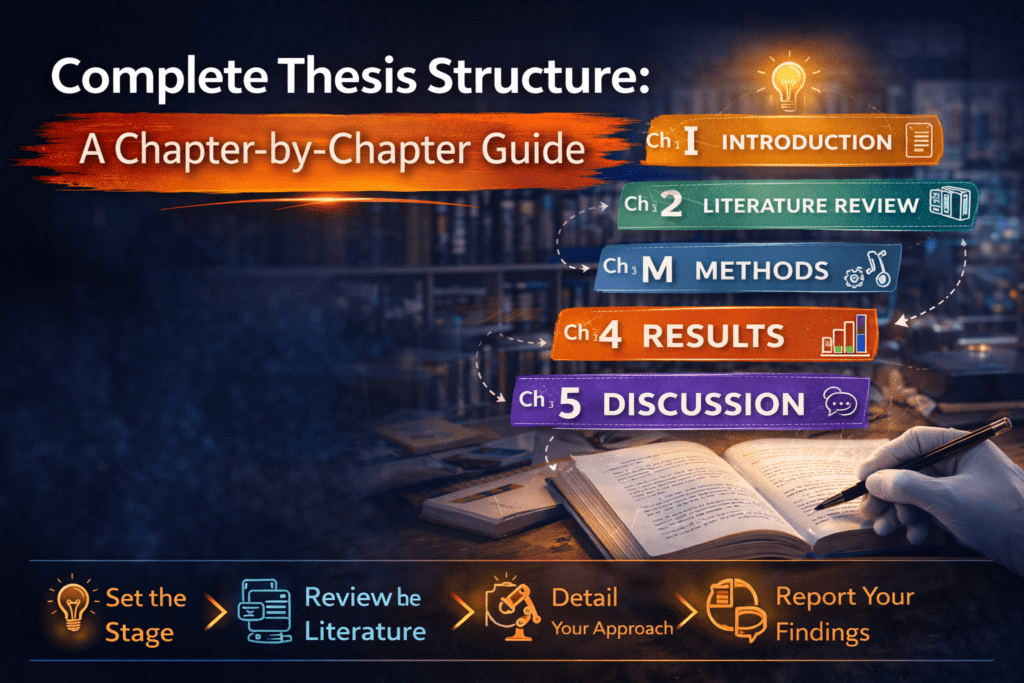
Complete Thesis Structure: A Chapter-by-Chapter Guide
Cluster Post 6 | Module 1: Understanding the Structure of Research Papers and Theses From…
The Discussion Section: How to Turn Findings Into Knowledge
Cluster Post 5 | Module 1: Understanding the Structure of Research Papers and Theses From…
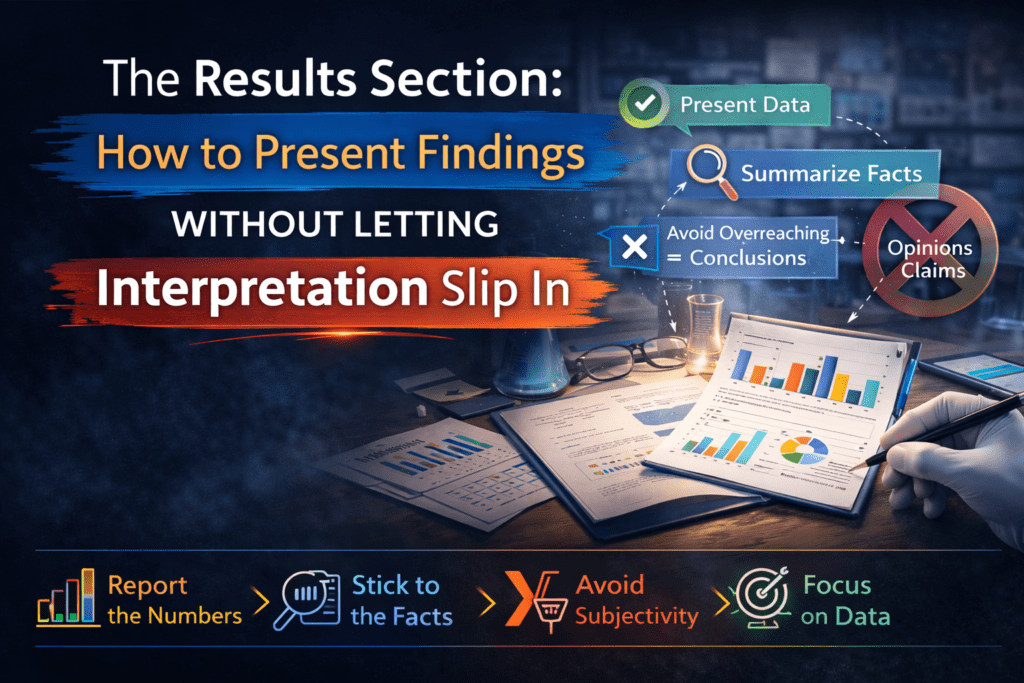
The Results Section: How to Present Findings Without Letting Interpretation Slip In
Cluster Post 4 | Module 1: Understanding the Structure of Research Papers and Theses From…

How to Write a Methods Section That Reviewers Will Trust
Cluster Post 3 | Module 1: Understanding the Structure of Research Papers and Theses From…

How to Write a Research Introduction That Reviewers Cannot Ignore
Cluster Post 2 | Module 1: Understanding the Structure of Research Papers and Theses From…
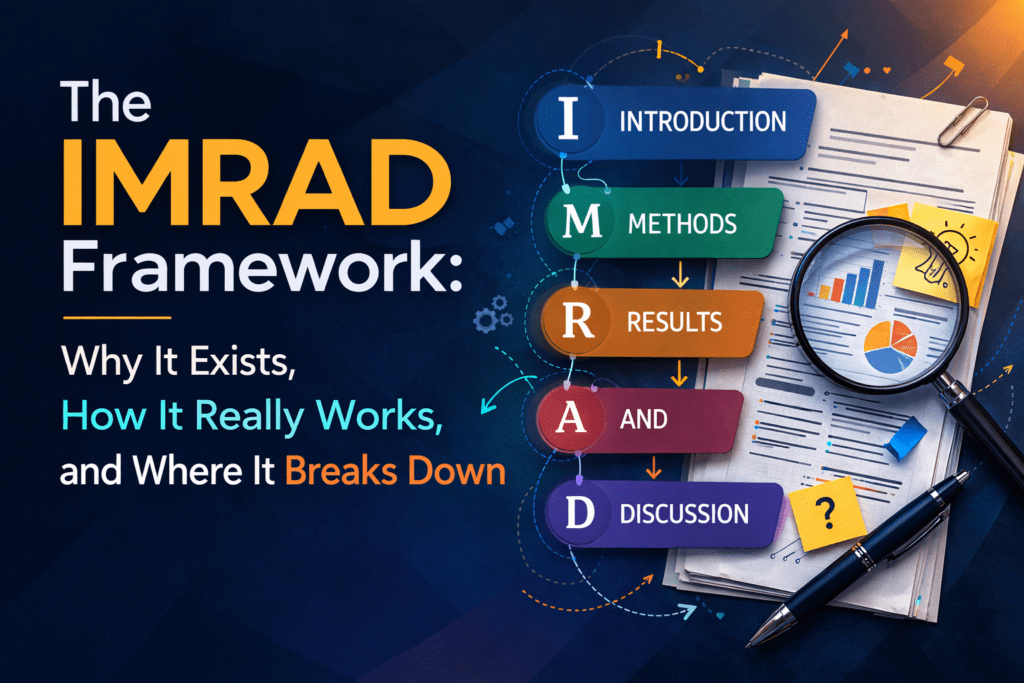
The IMRAD Framework: Why It Exists, How It Really Works, and Where It Breaks Down
Cluster Post 1 | Module 1: Understanding the Structure of Research Papers and Theses From…