Have you ever wondered how some writers create magic with their words—content that feels real, helpful, and memorable?
If you’re just starting out, learning how to start writing high-quality content can feel overwhelming. But the truth is, quality writing isn’t about fancy words—it’s about clarity, honesty, and consistency.
In this guide, you’ll learn how to start writing high-quality content step by step, in a simple and practical way that helps your writing connect with readers and perform well online.
Why High-Quality Content Matters
Understanding how to start writing high-quality content helps you build trust, credibility, and long-term readership.
High-quality content:
- Solves real problems
- Feels easy to read
- Builds connection
- Performs better in search engines
Without quality, even frequent publishing won’t deliver results.
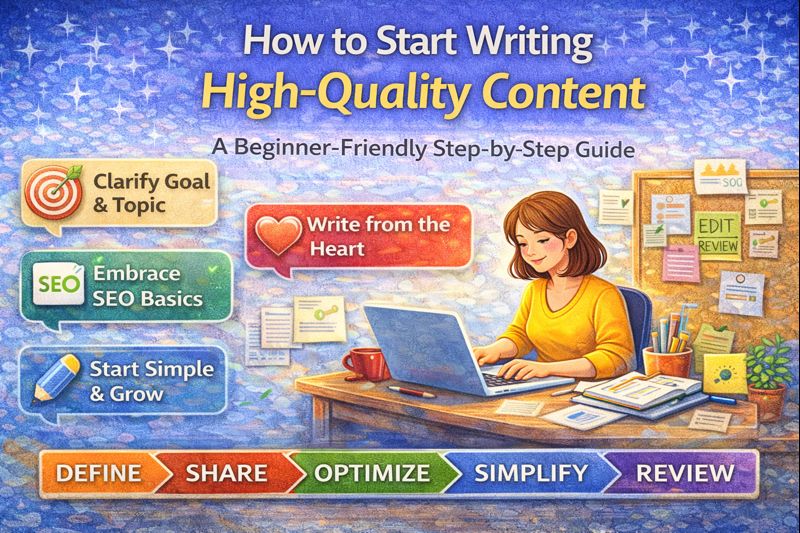
Step 1: Clarify Your Goal and Topic
Before you write a single word, ask yourself:
- Who am I writing for?
- What problem am I solving?
- What should the reader gain?
Clear goals give your content direction and purpose.
Tools like Trello or Notion help plan ideas and stay organized.
Knowing your goal is the first step in learning how to start writing high-quality content.
Step 2: Emotion and Truth Matter More Than Words
Great content feels human.
Write honestly. Share experiences. Be real.
Readers connect more with truth and emotion than with perfect vocabulary.
Machines can generate text—but only humans can share emotions. This is your biggest advantage when writing high-quality content.
Step 3: Understand and Embrace SEO
Even the best content needs visibility.
SEO helps your content reach the right audience.
Basic SEO includes:
- Using relevant keywords naturally
- Writing clear headings
- Adding internal links
Tools like Ahrefs and SEMrush help with keyword research and optimization.
SEO supports your content—it doesn’t replace quality.
Step 4: Start Simple, Then Go Deeper
Don’t aim for perfection on day one.
Start with:
- Short blog posts
- Simple explanations
- Clear ideas
As you gain confidence, expand your topics and depth.
This gradual approach makes how to start writing high-quality content feel achievable instead of stressful.
Step 5: Practice, Review, and Improve
Writing improves with repetition.
Set aside daily time to:
- Write consistently
- Review your work
- Improve clarity
Editing tools like Grammarly or Hemingway Editor help refine your writing and readability.
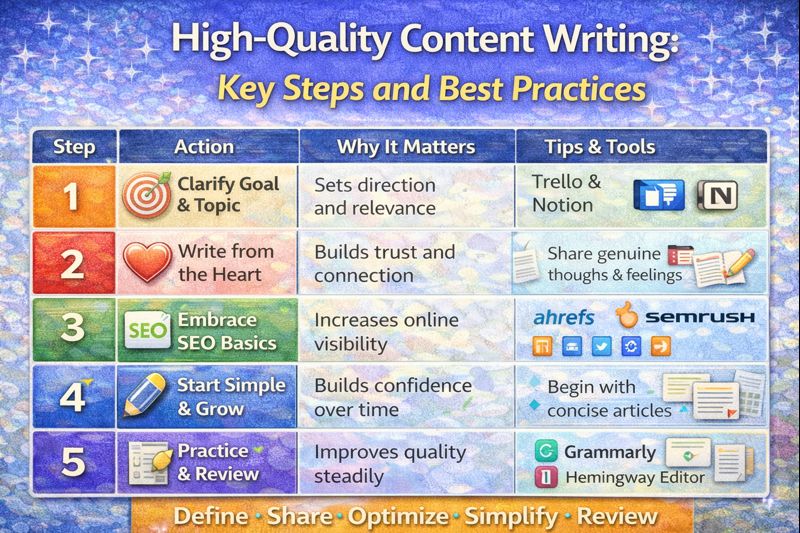
High-Quality Content Checklist
| Step | What to Do | Why It Matters |
|---|---|---|
| Goal | Define topic & audience | Gives direction |
| Emotion | Write honestly | Builds connection |
| SEO | Optimize naturally | Improves reach |
| Simplicity | Start small | Builds confidence |
| Review | Edit & improve | Enhances quality |
Conclusion
Learning how to start writing high-quality content is a journey, not a shortcut.
High-quality writing:
- Starts with intention
- Grows with understanding
- Improves with practice
When you combine clarity, honesty, SEO awareness, and consistency, your content naturally becomes powerful and impactful.
Frequently Asked Questions (FAQs)
1. What does content readability mean in writing?
Content readability means how easy it is for readers to understand and follow your content. Well-structured content uses clear headings, short paragraphs, and simple language to make reading easier and more engaging.
2. Why is content structure important for readability?
Content structure helps readers scan information quickly and understand key points without confusion. Proper structure also improves user experience and helps your content perform better in search engines.
3. How do headings improve content readability?
Headings divide content into clear sections, making it easier for readers to navigate and find information. They also help search engines understand your content better.
4. What is the best paragraph length for readability?
Short paragraphs of 2–4 lines are best for readability. Long paragraphs can feel overwhelming, especially for online readers, and may reduce engagement.
5. How does formatting improve readability?
Formatting elements like bullet points, numbered lists, bold text, and spacing make content easier to scan. This helps readers quickly identify important information.
6. Does readability affect SEO ranking?
Yes, readability improves SEO because search engines prefer content that provides a good user experience. Easy-to-read content keeps readers on your page longer and reduces bounce rate.
Common Content Writing Mistakes and How to Avoid Them (Beginner-Friendly Guide)
Every Content Writer Should Know These Tools: Essential Writing Tools Guide
Writing Clear and Engaging Blog Introductions: A Complete Guide for Content Writers
Understand Different Online Writing Formats: A Complete Guide for Content Writers
How to Pitch Articles to Blogs and Magazines: A Complete Guide for Writers
How to Build an Effective Personal Brand: A Complete Guide for Writers
How to Structure Content for Maximum Readability: A Practical Guide for Writers
The Role of Research in Effective Writing: How Research Builds Credibility and Trust
Freelance Writing: How to Build Your Portfolio (Step-by-Step Guide for Beginners)
Time Management for Writers: How to Make Your Writing Journey Productive
Content Writing Tips for Beginners: How to Start Writing High-Quality Content
Official Reference
- Google Search Central – Creating Helpful, Reliable, People-First Content
https://developers.google.com/search/docs/fundamentals/creating-helpful-content - Nielsen Norman Group – How Users Read on the Web
https://wwwnngroup.com/articles/how-users-read-on-the-web/
- Academic Writing
- AI Ethics & Future
- AI in Academic Research
- AI in Business & Marketing
- AI in Content Creation
- AI in Design & Development
- AI in Education/Teaching
- AI in Research
- AI Tools & Review
- Indian Laws
- Motivation
- SEO & Digital Marketing
- Writing & Content Creation
- Academic Writing
- Editing & Proofreading
- SME Writing Services
- SEO Blogwriting Services
- Creative & Ghostwriting

Holi & Dhulandi: More Than Colors — A Celebration of Victory, Renewal & Human Connection
Holi is not just a festival.It is a reminder that no matter how difficult life…
CCFS 2026: Clear Pending ROC Filings with Just 10% Penalty – Limited Time MCA Relief
Companies Compliance Facilitation Scheme 2026 (CCFS 2026): Waive Late fees on Delayed Filings – Act…
Research Methodologies: Complete Guide to Quantitative, Qualitative, Mixed Methods & Legal Research (2026)
Why Methodology Determines Research Quality Here’s what thesis examiners focus on first: your methodology section…
Academic Writing Mastery: The Complete 2026 Guide to Research Papers & Thesis Writing
Academic Writing Mastery Your research deserves to be read. This complete guide transforms your ideas…
AI Tools & Reviews: Complete Guide for Smart Business Decisions (2026)
AI in Content Creation: 2026 Guide, Tools & Best Practices
Explore AI in content creation for 2026 — tools, workflows, benefits, real use cases, and…
SEO & Digital Marketing: Complete 2026 Guide
Have you ever published a blog and waited… and waited… and still got no visitors?…
🇮🇳 77th Republic Day
🇮🇳 77th Republic Day – Patriotism from the Heart, Nation-Building through Action Read in hindi…

🇮🇳 77वाँ गणतंत्र दिवस: दिल से देश, कर्म से राष्ट्र मनाएँ
🇮🇳 77वाँ गणतंत्र दिवस – दिल से देशभक्ति, कर्म से राष्ट्र निर्माण 🇮🇳 77th Republic…

AI in Research: How Artificial Intelligence Is Transforming Academic Research 2026
AI in Research – Just Think About This… You’re buried under 5,000 research papers. Your…
Top 10 Free AI Tools for PhD Students in 2026
Top 10 Free AI Tools for PhD Students in 2026 – A Step-by-Step Guide to…
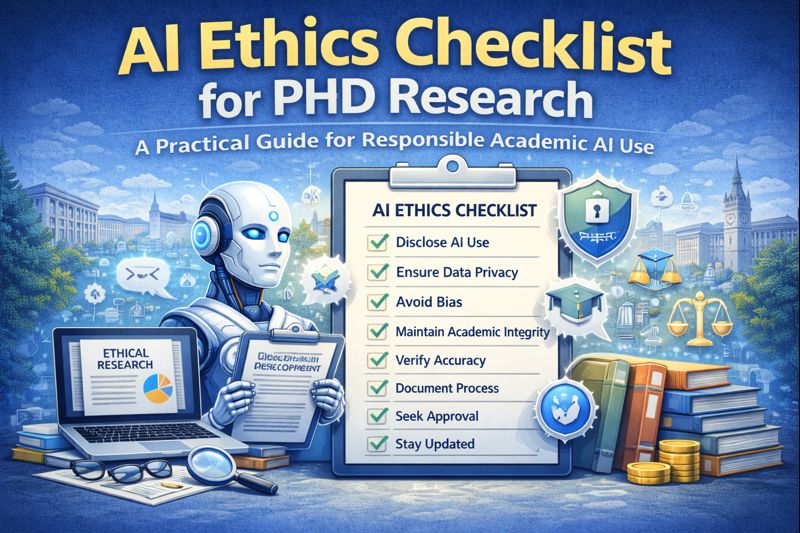
AI Ethics Checklist for PhD Research: A Practical Guide
A complete AI ethics checklist for PhD research. Learn how to use AI tools ethically,…
Best 10 AI Literature Review Tools for 2026: Save Hours on Research
Ever stared at a mountain of 500+ research papers, wondering where to even start? You’re…
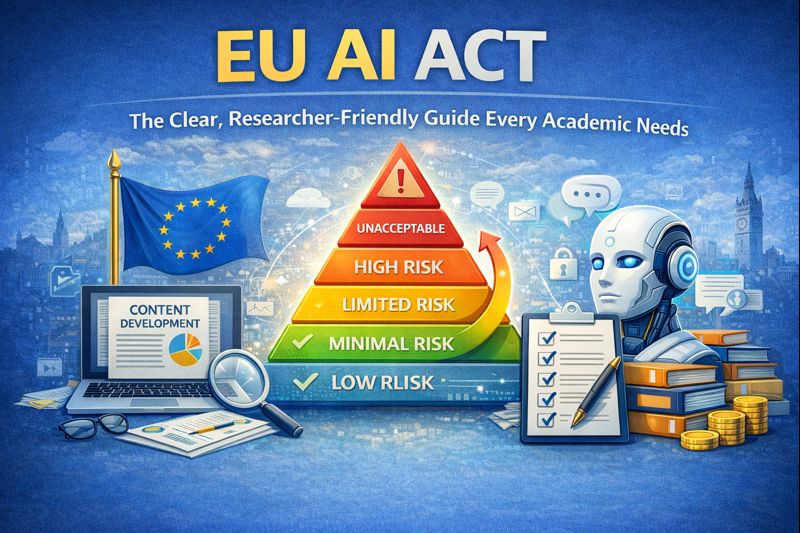
EU AI Act: Complete Researcher-Friendly Guide (Compliance Timeline to 2026)
Why the EU AI Act 2026 Matters Now The EU AI Act 2026 marks the…
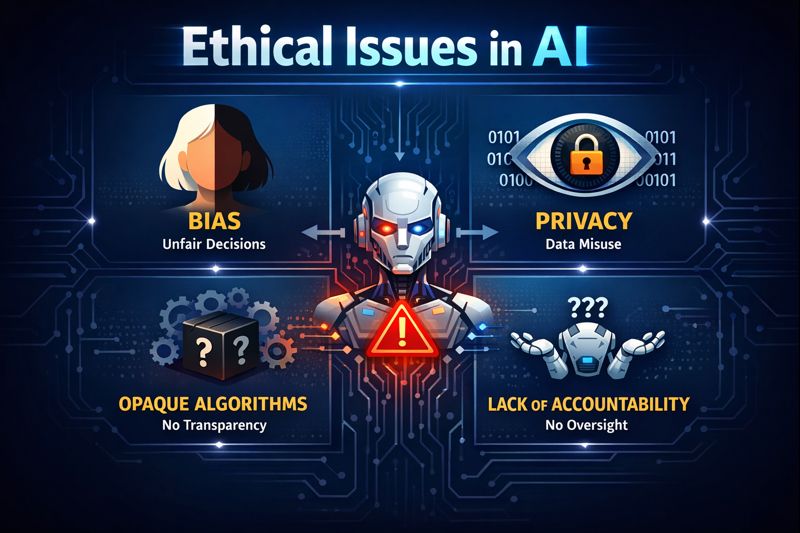
Ethical Issues in AI: A Complete 2026 Guide
Artificial Intelligence is no longer a “future technology.”It is already deciding who gets a job…