
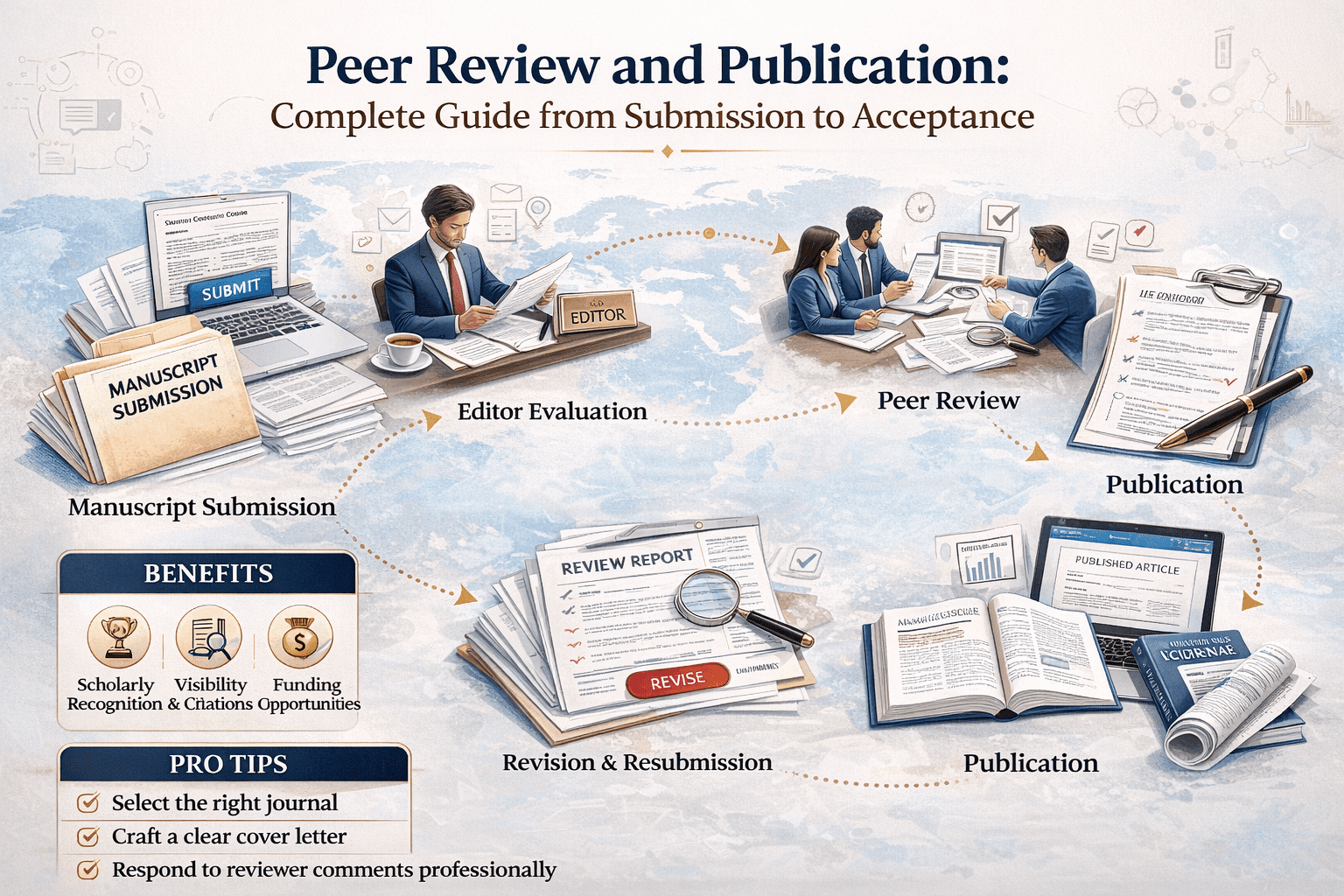
Module 6 – Complete Guide for Peer Review and Publication
Peer Review and Publication
Academic Writing Mastery: The Complete 2026 Guide To Research Papers, Thesis & Dissertation Writing
Why Understanding Peer Review Changes Everything
Here’s what nobody tells you about academic publishing: rejection is normal. Even excellent research gets rejected multiple times before publication. The difference between published researchers and unpublished PhD students isn’t quality—it’s understanding the publication process and persisting through rejection.
Journal editors reject 70-90% of submissions. Even top researchers face constant rejection. But they know how the system works, how to respond to reviews, and where to resubmit.
This comprehensive guide demystifies the publication process:
- How peer review actually works
- Choosing the right journal
- Preparing your manuscript
- Responding to reviewer comments
- Handling rejection professionally
- Publishing in law journals (for law students)
- Open access and predatory journals
Whether submitting your first manuscript or revising after rejection, understanding this process is essential for publication success.
Understanding the Peer Review Process
What Happens After You Submit
Week 1-2: Initial Screening
- Editor reviews manuscript
- Checks fit with journal scope
- Assesses basic quality
- Desk rejection: 30-50% rejected here without peer review
- If passes: Sent to 2-3 peer reviewers
Week 3-12: Peer Review
- Reviewers (experts in your field) evaluate manuscript
- Assess methodology, contribution, significance
- Provide detailed comments and recommendations
Week 12-16: Editorial Decision
- Editor reads reviews
- Makes final decision based on reviewer recommendations
- Sends decision letter with reviews
Possible Outcomes
1. Accept (Rare – <5% of submissions) Minor copyediting only. Celebrate!
2. Minor Revisions (<10%) Small changes required, likely acceptance after revision
3. Major Revisions / Revise and Resubmit (20-30%) Substantial changes needed, no guarantee of acceptance after revision but good chance if you address concerns
4. Reject and Resubmit (10-15%) Fundamental issues, can resubmit after major overhaul but treated as new submission
5. Reject (40-60%) Paper doesn’t fit journal, insufficient contribution, or major methodological flaws
Choosing the Right Journal
Know Your Options
Tier 1: Top journals in your field
- Highest prestige
- Lowest acceptance rates (5-15%)
- Longest review times (6-12 months)
- Highest impact
Tier 2: Strong field journals
- Good reputation
- Moderate acceptance (20-30%)
- Reasonable review times (3-6 months)
- Solid impact
Tier 3: Specialized journals
- Niche topics
- Higher acceptance (30-40%)
- Faster review (2-4 months)
- Growing impact
Matching Your Paper to Journal
Check:
Scope and aims:
- Does your topic fit?
- Read recent issues
- Check “aims and scope” page
Example:
Your paper: AI surveillance and privacy in India
Good fit: Journal of Information Technology & Politics, Asian Journal of Law and Society
Poor fit: Journal of Marketing Research, Developmental Psychology
Impact factor (if it matters in your field):
- Sciences: Very important
- Social sciences: Moderately important
- Humanities/Law: Less important
Open access:
- Some journals require payment to publish
- Check if you have funding
- Many offer waivers
Review time:
- Check journal’s average time to first decision
- If you need publication quickly (job market, etc.), consider faster journals
Creating Your Target List
Strategy: Aim high, have backups
- First choice: Top journal (ambitious but realistic)
- Second choice: Solid field journal (good fit)
- Third choice: Specialized journal (safe option)
Plan for rejection. If Journal 1 rejects, submit to Journal 2 immediately.
Preparing Your Manuscript
Follow Formatting Guidelines Exactly
Journals reject manuscripts for:
- Wrong format (APA vs. Chicago vs. MLA)
- Exceeded word limit
- Missing required sections
- Improper reference format
Before submission:
- Read author guidelines thoroughly
- Check word limit (including/excluding references?)
- Format references per journal style
- Include all required sections
- Format tables/figures per guidelines
- Create title page with author info
- Prepare blind manuscript (remove author identity)
Write an Effective Cover Letter
Cover letter should:
Paragraph 1: Introduction
“I am pleased to submit our manuscript entitled ‘Peer Mentoring and First-Year Retention: A Quasi-Experimental Study in India’ for consideration in the Journal of Higher Education.”
Paragraph 2: Significance
“This manuscript reports findings from a year-long quasi-experimental study examining peer mentoring’s impact on retention at three government colleges in India. Given increasing attention to retention challenges in expanding higher education systems, and Journal of Higher Education‘s focus on evidence-based retention strategies, we believe this work will interest your readers.”
Paragraph 3: Fit and contribution
“This study contributes original empirical evidence on a scalable, low-cost retention intervention in a under-studied context. It extends existing retention theory to Indian higher education, addressing a significant gap in the literature.”
Paragraph 4: Confirm originality
“This manuscript has not been published previously and is not under consideration elsewhere. All authors have approved the manuscript and agree with its submission to Journal of Higher Education.”
Keep it brief: One page maximum
Understanding Reviewer Comments
Types of Reviewers
Reviewer 1: The Constructive Critic
- Detailed, specific feedback
- Points out real issues
- Suggests improvements
- Your best friend even if comments are extensive
Reviewer 2: The Nitpicker
- Focuses on minor issues
- Obsesses over details
- Often misses bigger picture
- Annoying but usually easy to address
Reviewer 3: The Skeptic
- Questions everything
- Often fundamentally disagrees with approach
- May recommend rejection
- Hardest to satisfy but feedback can strengthen paper
Reading Reviews Productively
First read: Emotional reaction
- Feel frustrated, defensive, angry
- This is normal
- Don’t respond yet
Wait 24-48 hours
Second read: Analytical
- What are legitimate concerns?
- What can I fix easily?
- What requires substantial work?
- What is unreasonable?
Create response plan:
- Easy fixes (do immediately)
- Major revisions (plan carefully)
- Unreasonable requests (decide how to diplomatically decline)
Responding to Revise and Resubmit
The Response Letter
Structure:
Opening:
“We thank the editor and reviewers for their constructive feedback on our manuscript. We have carefully considered all comments and substantially revised the manuscript accordingly. Below, we provide point-by-point responses to each comment.”
Point-by-point responses:
Quote reviewer comment, then respond:
Reviewer 1, Comment 3: “The authors should provide more detail on the peer mentoring intervention—specifically, how mentors were trained and how frequently they met with mentees.”
Response: We agree this information was insufficient in the original manuscript. We have added substantial detail on pages 12-14 (revised manuscript). Specifically:
- We now describe the 8-hour mentor training program, including topics covered and training methods (page 12)
- We report meeting frequency: mentors and mentees met bi-weekly throughout the academic year, with 87% of pairs meeting at least 20 times (page 13)
- We include a table showing meeting frequency distribution (Table 2, page 14)
For each comment:
- Acknowledge the concern
- Explain what you changed
- Point to specific pages in revised manuscript
When You Disagree
Sometimes reviewers are wrong or request unreasonable changes.
How to disagree diplomatically:
Reviewer 2, Comment 5: “The authors should conduct a randomized controlled trial rather than quasi-experimental design.”
Response: We appreciate this suggestion. However, random assignment of colleges to conditions was not feasible given institutional constraints—college administrators could not be randomly assigned to implement or not implement peer mentoring programs. Quasi-experimental designs are widely accepted for educational research when randomization is not feasible (Shadish et al., 2002). We have added text explicitly acknowledging this limitation and discussing how we controlled for potential confounds through statistical methods (page 21).
Key:
- Be respectful
- Provide rationale
- Cite supporting evidence
- Acknowledge limitations
Handling Rejection
Types of Rejection
Desk rejection (before peer review):
- Paper doesn’t fit journal scope
- Quality below journal standards
- Technical problems (methods, ethics)
Post-review rejection:
- Reviewers found fundamental flaws
- Insufficient contribution
- Better fit elsewhere
What to Do After Rejection
1. Don’t take it personally
- Even excellent papers get rejected
- Fit matters more than quality sometimes
2. Read rejection letter carefully
- Does editor suggest revisions?
- Any invitation to resubmit?
- Feedback to incorporate?
3. Decide next steps
If desk rejected:
- Submit elsewhere immediately (same version or minor tweaks)
If rejected after review:
- Read reviews carefully
- Decide if reviews identify real weaknesses
- Revise based on feedback
- Submit to different journal
4. Revise if appropriate
- Use reviewer feedback even if rejected
- Improve paper before next submission
- Next reviewers may raise same issues
5. Submit to next journal on your list
- Don’t wait months
- Submit within 1-2 weeks
- Momentum matters
Rejection Statistics
Normal rejection rates:
- Your first paper: 5-10 rejections before acceptance (normal!)
- Experienced researchers: 2-4 rejections per paper (still normal!)
- Top journals: 85-95% rejection rate
Remember: Rejection ≠ your paper is bad. Often = wrong fit or bad luck with reviewers.
The Publication Timeline
Realistic timeline from submission to publication:
Fast journals:
- Submit → First decision: 2-3 months
- Revise and resubmit → Final decision: 1-2 months
- Accepted → Published online: 1-2 months
- Total: 4-7 months
Average journals:
- Submit → First decision: 4-6 months
- Revise and resubmit → Final decision: 2-3 months
- Accepted → Published: 2-4 months
- Total: 8-13 months
Slow journals:
- Submit → First decision: 6-12 months
- Revise and resubmit → Final decision: 3-6 months
- Accepted → Published: 3-6 months
- Total: 12-24 months
Plan accordingly: If you need publications for job market, start early!
Open Access Publishing
What Is Open Access?
Traditional publishing: Readers/libraries pay to access articles
Open access: Articles freely available to anyone
Types of Open Access
Gold open access:
- Article immediately freely available
- Author pays Article Processing Charge (APC)
- APCs: $500-$5,000 USD depending on journal
Green open access:
- Author posts preprint or postprint in repository
- Often after embargo period (6-12 months)
- Free for authors
Hybrid:
- Traditional journal offers open access option for fee
Should You Publish Open Access?
Advantages:
- Higher visibility
- More citations
- Broader impact
- Required by some funders
Disadvantages:
- Cost (if you don’t have funding)
- Some open access journals less prestigious
Check:
- Does your university/funder cover APCs?
- Do journals in your field offer waivers?
Avoiding Predatory Journals
What Are Predatory Journals?
Journals that:
- Charge fees but provide no real peer review
- Accept almost anything
- Damage your reputation
- Waste your work
Red Flags
- Excessive flattery in invitation emails
- Very short review times (accepted in 1 week)
- Unclear or missing peer review process
- No clear editorial board
- Poor website quality
- Spelling/grammar errors in journal materials
- Impossible claims (“impact factor 10.5” for brand-new journal)
How to Check
Verify legitimacy:
- Check journal is indexed (PubMed, Web of Science, Scopus)
- Look at editorial board (are they real scholars?)
- Read published articles (are they good quality?)
- Check acceptance rates (>50% is suspicious)
Resources:
- Think. Check. Submit. (checklist)
- Directory of Open Access Journals (legitimate OA journals)
- Ask your supervisor or colleagues
Managing Multiple Submissions
Sequential vs. Simultaneous
Sequential (Standard in most fields):
- Submit to Journal 1
- Wait for decision
- If rejected, submit to Journal 2
- Repeat until accepted
Simultaneous (NOT acceptable in most fields):
- Submitting same manuscript to multiple journals at once
- Considered unethical
- Can result in blacklisting
Exception: Some fields allow conference + journal submission simultaneously
Always check journal policies
Building Your Publication Pipeline
Don’t wait for one paper to be published before starting next
Productive researchers have:
- Paper 1: Under review
- Paper 2: Being revised based on feedback
- Paper 3: Being drafted
- Paper 4-5: In planning
Pipeline ensures:
- Constant productivity
- Rejections less devastating
- Multiple shots at publication
Legal Research and Writing: Complete Guide for Law Students and Legal Researchers
Conclusion
Peer review and publication involve rejection, revision, and persistence. Understanding the process demystifies it and increases your success rate.
For all disciplines: Choose appropriate journals, prepare manuscripts carefully, respond to reviews professionally, persist through rejection, build publication pipeline.
For law students: Master legal citation formats, understand student-edited vs. peer-reviewed differences, respond to current legal developments, plan strategic publication record.
For everyone: Publication is essential for academic careers. Start early, accept rejection as normal, learn from feedback, keep submitting.
Your research deserves publication. Master this process to share your work with the world.
References
- Belcher, W. L. (2019). Writing Your Journal Article in Twelve Weeks (2nd ed.). University of Chicago Press.
University of Chicago Press - Silvia, P. J. (2019). How to Write a Lot (2nd ed.). American Psychological Association.
APA Books - ICMJE (International Committee of Medical Journal Editors). (2024). Recommendations for the Conduct, Reporting, Editing, and Publication of Scholarly Work in Medical Journals.
http://www.icmje.org/recommendations/ - COPE (Committee on Publication Ethics). (2023). Core Practices.
https://publicationethics.org/core-practices
Author
Dr. Rekha Khandelwal, a legal scholar and academic writing expert, is the founder of AspirixWriters. She has extensive experience in guiding students and researchers in writing research papers, theses, and dissertations with clarity and originality. Her work focuses on ethical AI-assisted writing, structured research, and making academic writing simple and effective for learners worldwide.
Author Profile Dr. Rekha Khandelwal | Academic Writer, Legal Technical Writer, AI Expert & Author | AspirixWriters
- Decoding the Decision Letter: What Editors and Reviewers Are Really Telling You
- Writing the Response Letter That Gets Your Paper Accepted
- Making Revisions That Actually Work
- Preparing for Your Viva Voce
- Publication Strategy for Indian Academic Careers
Part of: Complete Research Writing Guide Series
- Module 1 Overview The Complete Guide to Research Paper and Thesis Structure
- Module 2 Overview The Academic Writing Process: Complete Guide from First Draft to Submission (2026)
- Module 3 Overview Research Methodologies: Complete Guide to Quantitative, Qualitative, Mixed Methods & Legal Research (2026)
- Module 4 Overview Data Analysis and Results Presentation: Complete Guide for Quantitative, Qualitative & Legal Research (2026)
- Module 5 Overview Organization and Academic Tone: Complete Guide to Professional Scholarly Writing (2026)
Next in Series:
- Module 6 Overview Peer Review and Publication: Complete Guide from Submission to Acceptance (2026)
- Module 7 Overview AI Tools in Academic Research: Opportunities, Ethics, and Best Practices (2026)
- Module 8 Overview Grant Writing and Research Funding: Complete Guide to Finding Money for Your Research (2026)
- Module 9 Overview Academic Career Development: Complete Guide to Building Your Professional Life in Research (2026)
- Module 10 Overview Research Ethics and the IRB Process: Complete Guide to Doing Research Responsibly (2026)
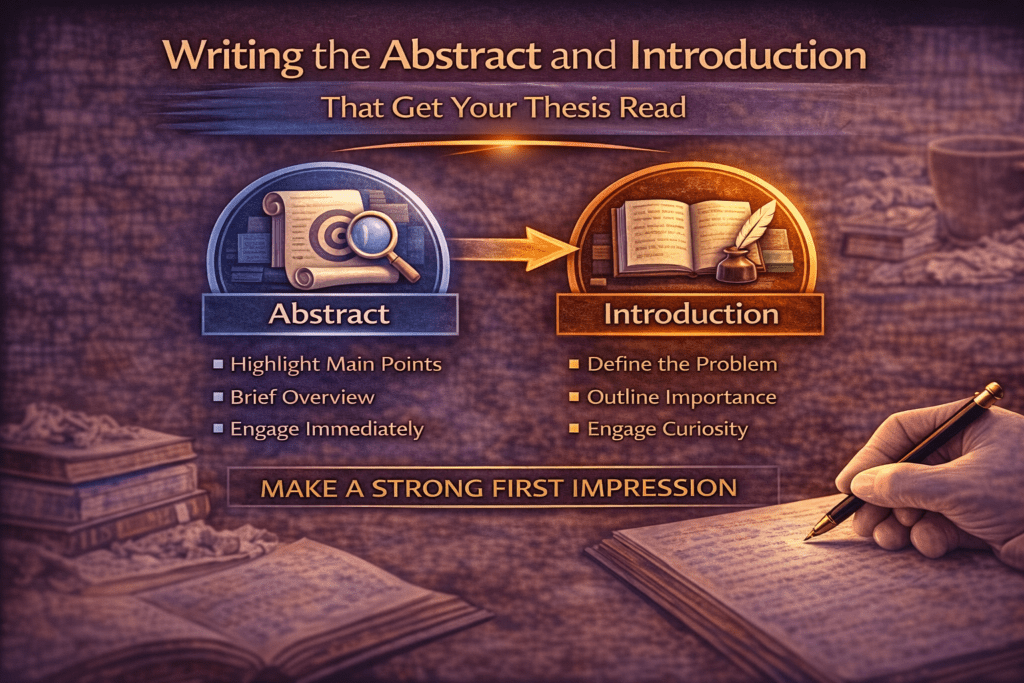
Writing the Thesis Abstract and Introduction
Cluster Post 2 | Module 5: Thesis Writing and Submission From Concept to Submission Series …
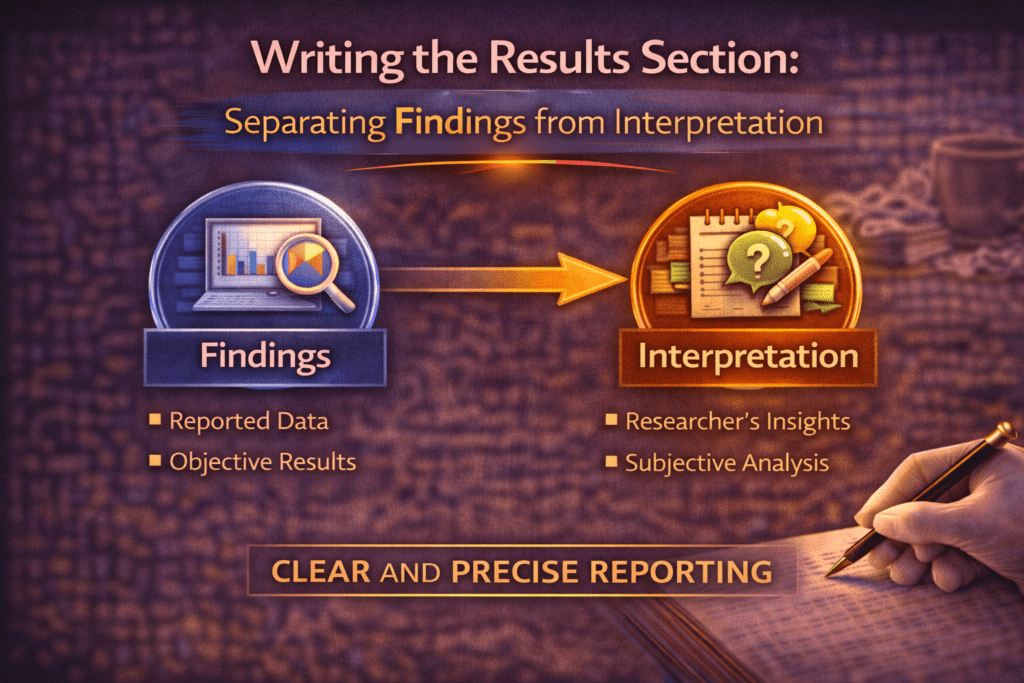
Writing the Results Section: Separating Findings from Interpretation
Cluster Post 6 | Module 4: Data Analysis and Presenting Results From Concept to Submission…
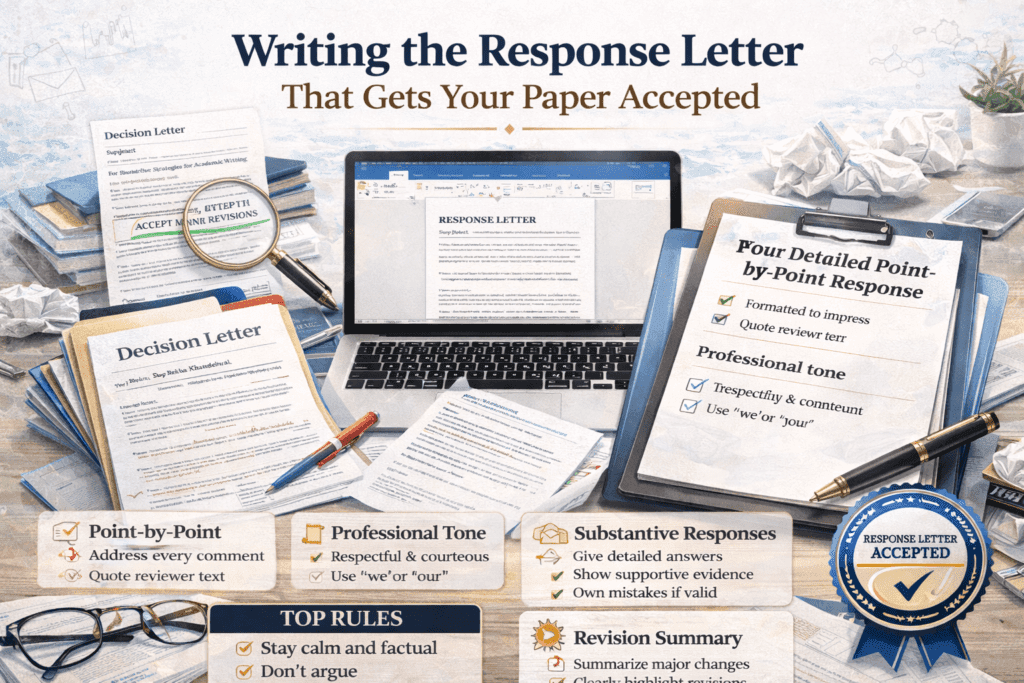
Writing the Response Letter That Gets Your Paper Accepted
Cluster Post 2 | Module 6: Peer Review, Responding to Feedback, and Publication Strategies From…
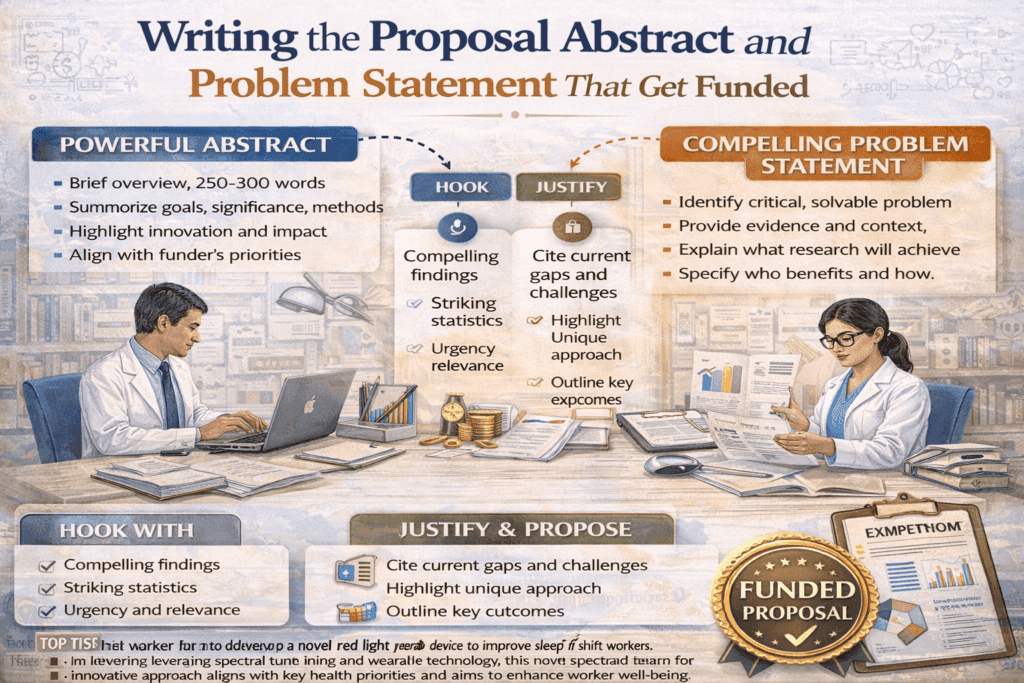
Writing the Proposal Abstract and Problem Statement That Get Funded
Cluster Post 2 | Module 8: Grant Writing and Research Funding From Concept to Submission…
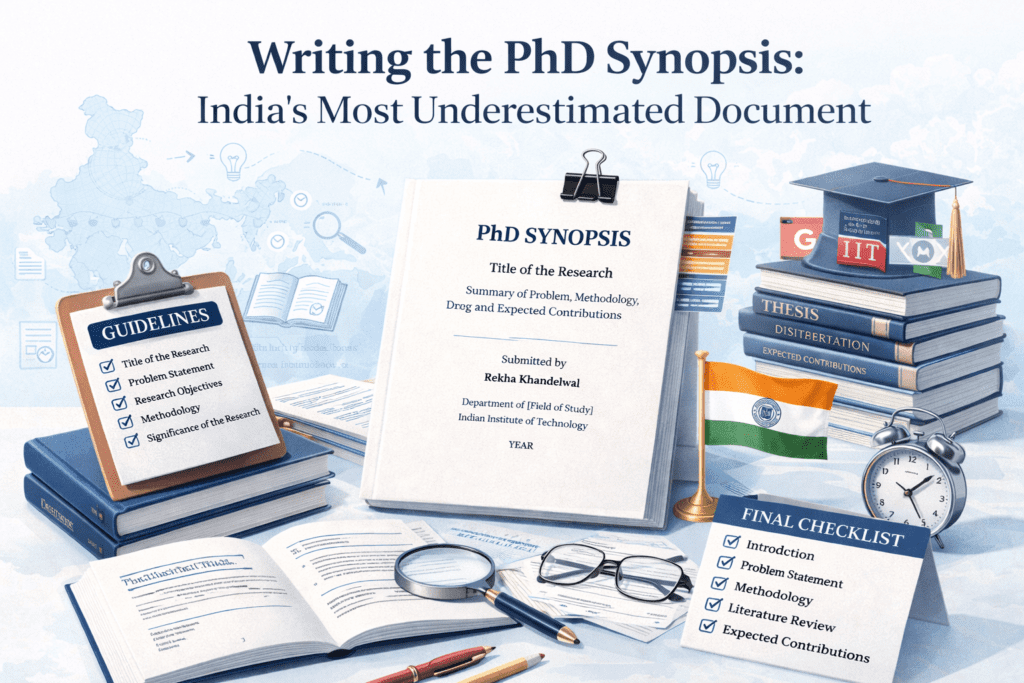
Writing the PhD Synopsis: India’s Most Underestimated Document
Cluster Post 6 | Module 5: Thesis Writing and Submission From Concept to Submission Series …
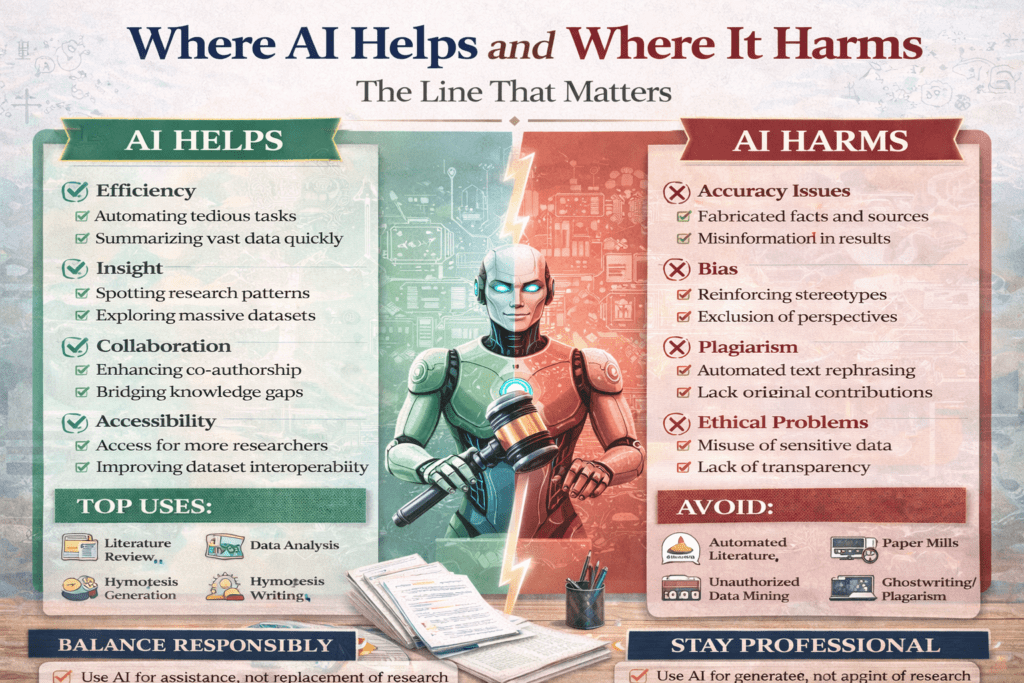
Where AI Helps and Where It Harms: The Line That Matters
Cluster Post 2 | Module 7: AI Tools in Academic Research — Opportunities, Ethics, and…