Academic Writing

Explore expert guides on academic writing, research methodology, thesis and dissertation writing, literature reviews, journal publishing, citation styles, legal research, and AI-powered research tools. Whether you are a student, researcher, educator, or academic professional, this category provides practical tips, evidence-based writing strategies, and step-by-step resources to help you produce high-quality, original, and well-structured academic work while maintaining academic integrity.

Mistake of Fact in Tort Law

Mistake of Fact in Tort Law: Meaning, Rule, Exceptions & Important Cases

Law of Torts Complete LLB Notes Mistake of Fact in Tort Law Mistake of Fact in Tort Law is an important topic under General Defences in the Law of Torts. However, it must be explained carefully because mistake of fact is generally not a complete defence to tortious liability. The legal effect of a mistake

Judicial and Quasi-Judicial Acts in tort law

Judicial and Quasi-Judicial Acts as a Defence in Tort Law

Judicial and Quasi-Judicial Acts in Tort Law Judicial and Quasi-Judicial Acts form an important part of the General Defences in the Law of Torts. The underlying principle is that persons exercising judicial functions must be able to decide matters independently and without the constant fear of personal civil liability for every error made while performing

Law Essay Competititons 2026

Law Essay Competitions 2026 in India: Latest Essay Writing Competitions for Law Students

Law Essay Competitions 2026 Last Updated: 24 August 2026 Are you looking for Law Essay Competitions 2026 in India? Essay writing competitions provide law students with an opportunity to develop legal research, analytical reasoning, academic writing and argumentation skills while gaining recognition for their work. This page lists verified law and legal essay competitions in

Basis of Tortious Liability

Basis of Tortious Liability — Meaning, Principles, Theories & Important Cases

Founation of Tortious Liability Basis of Tortious Liability is an important topic under the general principles of the Law of Torts. It explains the legal foundation on which a person may be held liable for a tort. The central idea is that tortious liability is primarily connected with the breach of a legal duty imposed

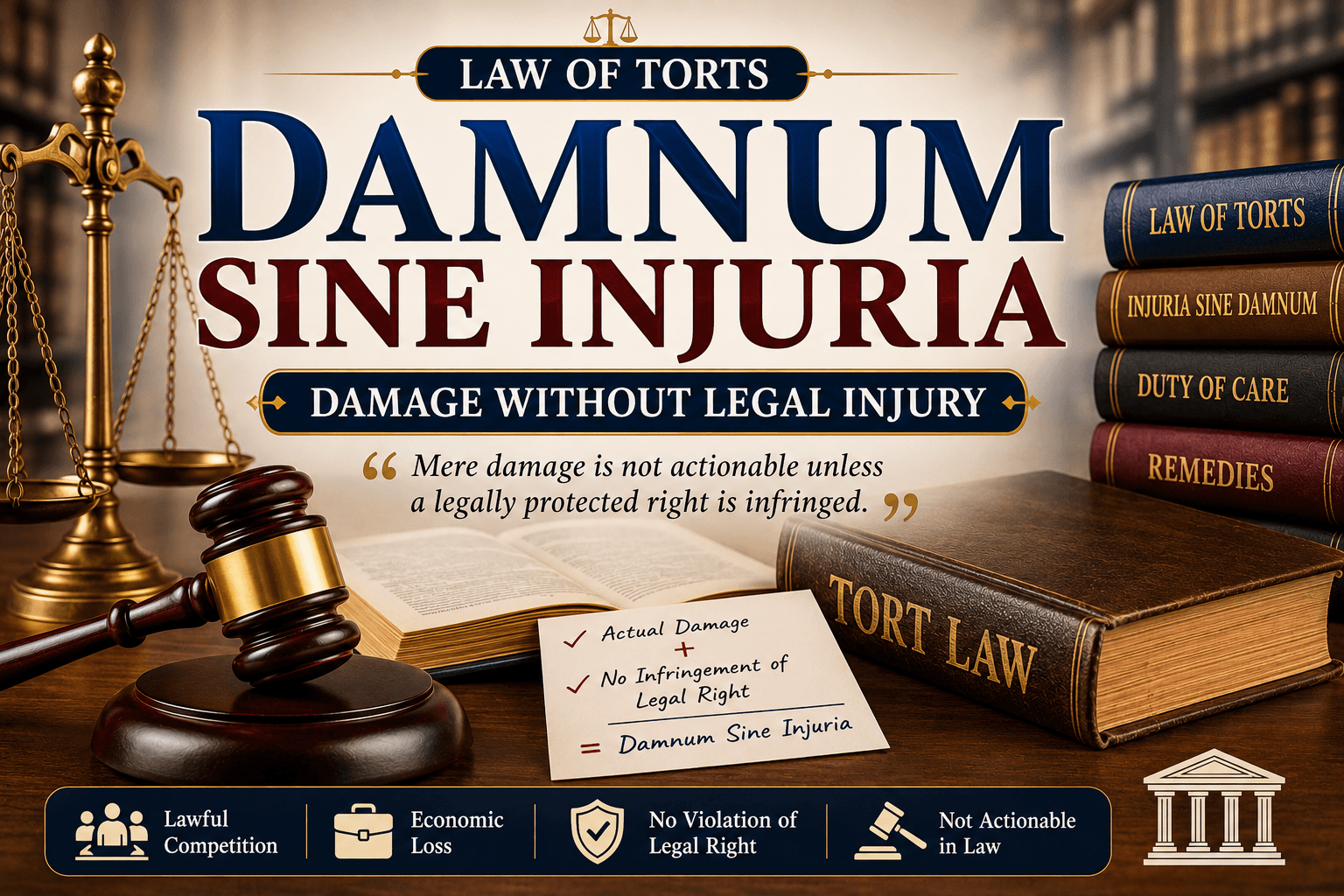
Damnum Sine Injuria

Damnum Sine Injuria — Meaning, Essentials & Important Cases in Tort Law

Damnum Sine Injuria Damnum Sine Injuria is an important maxim in the Law of Torts. It explains that a person may suffer actual loss or damage, but the loss will not ordinarily be actionable in tort unless a legally protected right has been infringed or another recognised cause of action is established. The classic illustration

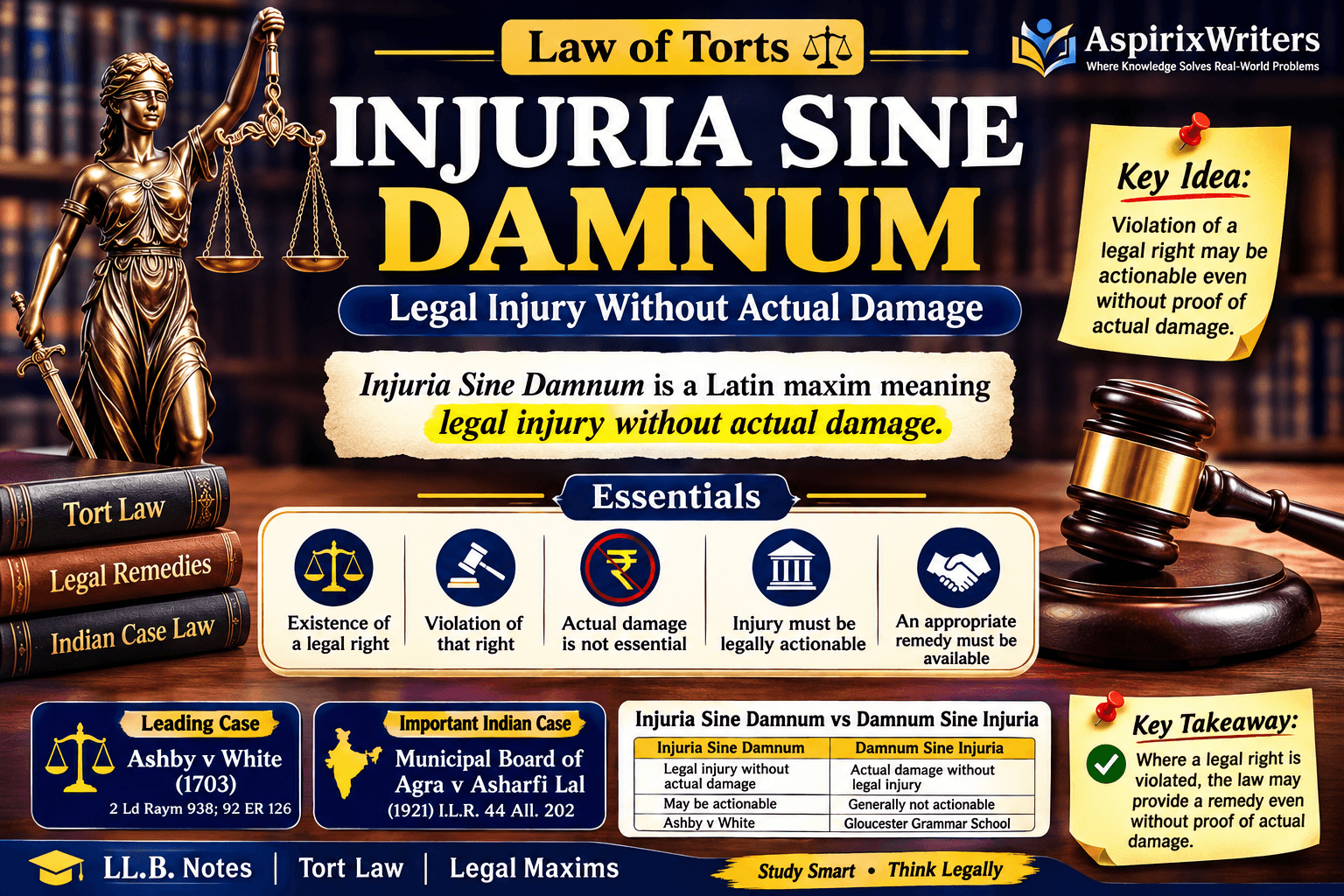
Injuria Sine Damnum

Injuria Sine Damnum — Legal Injury Without Actual Damage | LL.B. Notes

Injuria Sine Damnum — Legal Injury Without Actual Damage Law of Torts Notes 1. Meaning of Injuria Sine Damnum Injuria Sine Damnum is a Latin legal maxim meaning “legal injury without actual damage.” In simple words, it means that when a person’s legally recognised right is violated, the person may have a cause of action

Historical Background & Development of Law of Torts

Historical Background and Development of Law of Torts | LL.B. Notes

Law of Torts Complete Notes Historical Background and Development of Law of Torts Introduction The Law of Torts is a branch of civil law concerned with civil wrongs for which the law provides a remedy, generally in the form of damages or other appropriate relief. Unlike contract, tortious liability does not ordinarily arise from an

Contributory Negligence in Tort Law

Plaintiff’s Default in Tort Law: Meaning, Scope, Contributory Negligence & Important Cases

Law of Torts Notes Plaintiff’s Default in Tort Law Plaintiff’s Default is an important topic under Justification/General Defences in the Law of Torts and is expressly included in several Indian LL.B. and B.A. LL.B. syllabi. Don’t Miss New Law Opportunities! Join our WhatsApp community for verified updates on Law Jobs, Internships, Competitions, Scholarships, LLB Notes

Statutory authority

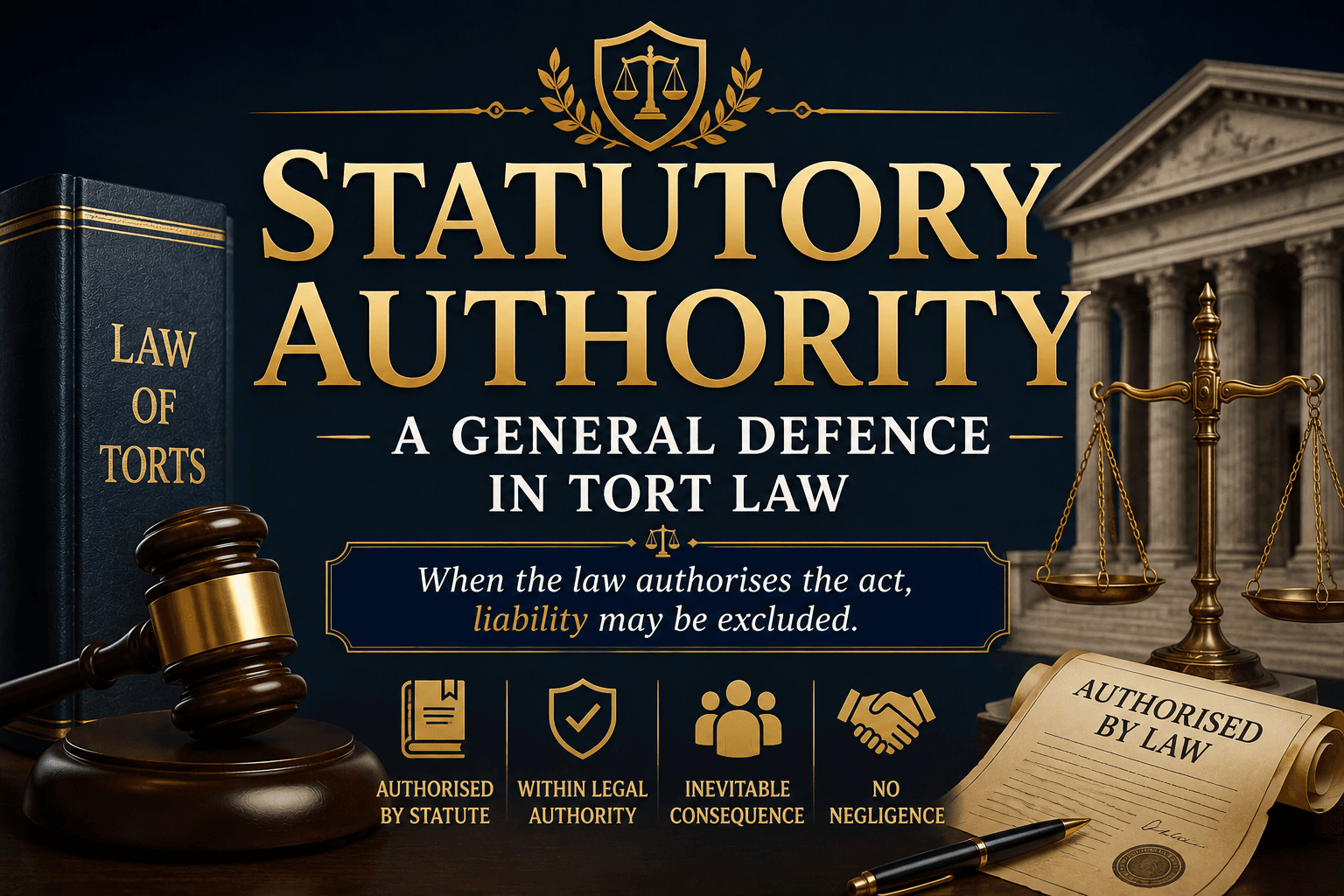
General Defence Statutory Authority in Tort Law

Statutory Authority in Tort Law Law of Torts Notes 1. Meaning of Statutory Authority Statutory Authority is a general defence in tort law where the defendant shows that the act causing the alleged harm was authorised by legislation, either expressly or by necessary implication. In simple words: If the law authorises a person or public

Private defence in tort law

Private Defence in Tort Law: Self-Defence and Defence of Property

Private Defence in Tort Law — General Defence Law of Torts Notes 1. Meaning of Self-Defence Lawful self-defence, also called private defence, is a general defence in tort law that allows a person to use reasonable and necessary force to protect their person or property from an unlawful attack or immediate threat. In simple words:

Necessity in tort law

A General Defence Necessity in Tort Law

Law of Torts Notes Necessity in Tort Law — A General Defence 1. Meaning of Necessity Necessity is a general defence in tort law where an act that would otherwise amount to a tort is done to prevent a greater or more serious harm. In simple words: Necessity means doing a lesser harm to prevent

Act of god in tort law

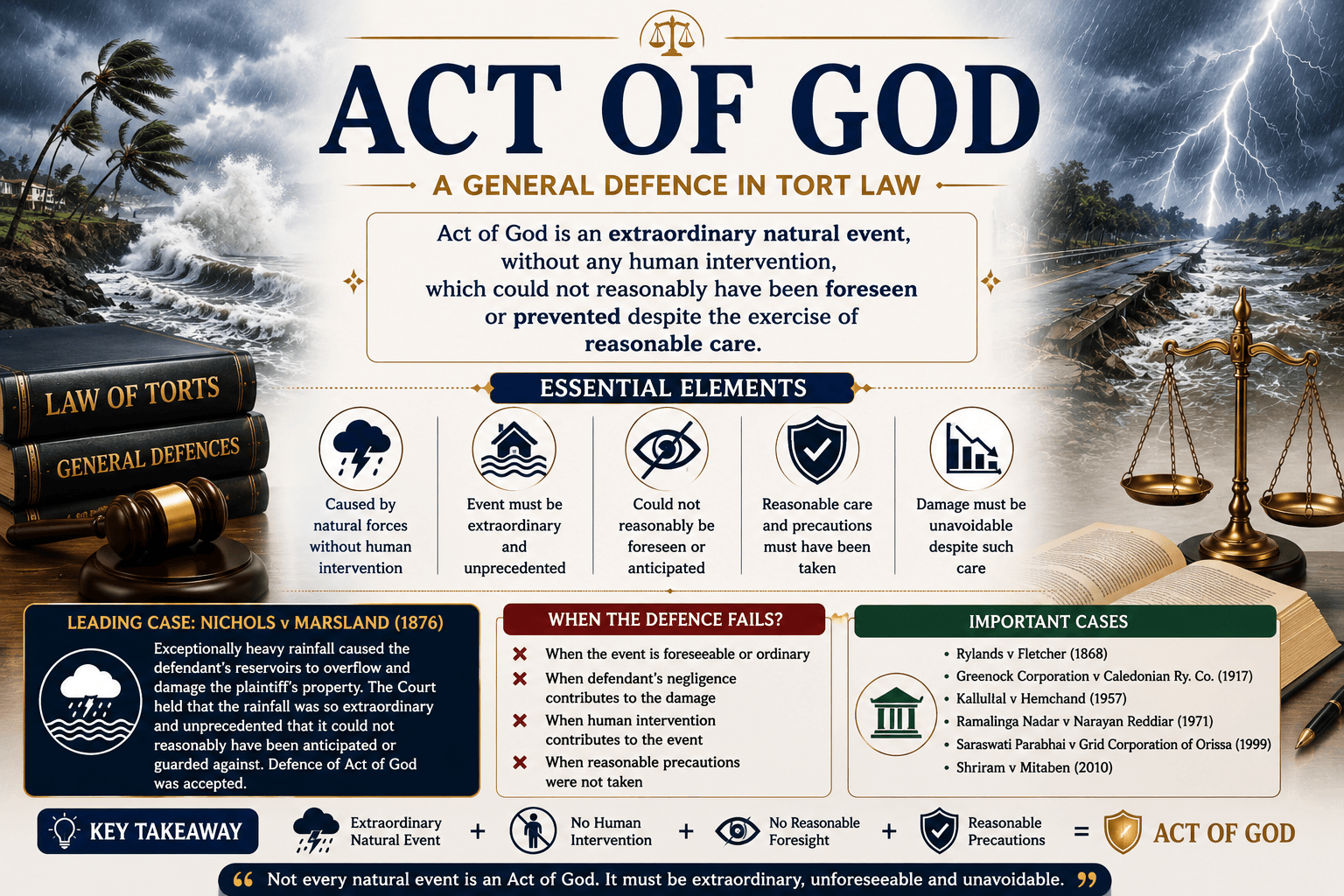
A General Defence Act of God in Tort Law

Act of God in Tort Law Law of Torts Notes General Defences in Law of Torts — General Exceptions | LL.B. Notes 1. Meaning of Act of God Act of God is a general defence in tort law where the defendant escapes liability because the damage was caused by an extraordinary natural event that occurred

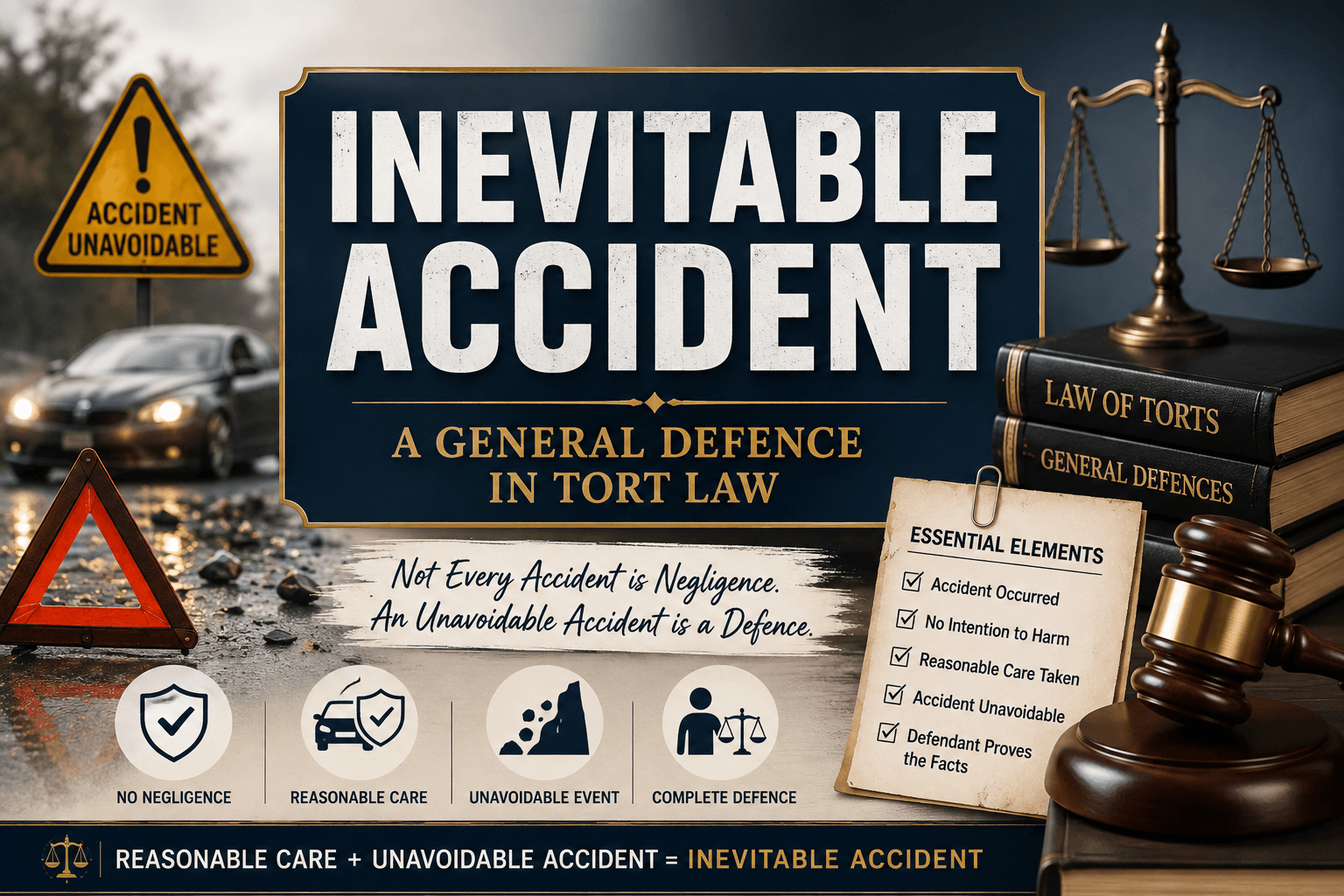
Inevitable accident

A General Defence Inevitable Accident in Tort Law

Inevitable Accident in Tort Law Law of Torts Complete Notes LLB General Defences in Law of Torts — General Exceptions | LL.B. Notes Volenti Non Fit Injuria 1. Meaning of Inevitable Accident Inevitable accident is a general defence in tort law. It applies where an injury is caused by an accident that could not have

Volenti Non Fit Injuria

Volenti Non Fit Injuria — Law of Tort Notes

Volenti Non Fit Injuria — Consent as a Defence in Tort Volenti non fit injuria is one of the most important general defences in the Law of Torts. It is based on the principle that a person who knowingly and freely accepts a particular risk cannot ordinarily complain of injury resulting from that accepted risk.

Scroll to Top