Last Updated: August 2026
Best AI Tools in 2026
There are thousands of AI tools available today. The difficult part is no longer finding an AI tool—it is deciding which one is actually worth using.
I have used and explored a number of AI tools in my own writing, research, content development and professional workflows. For tools that I have not personally tested, I did not simply add them to this list because they are popular. I researched their current features, pricing, capabilities, limitations, reviews and practical use cases before deciding whether they deserved a recommendation.
So this is not simply a list of the most popular AI tools.
My objective is to answer a more useful question:
Which AI tool should you choose for your particular need?
A student does not necessarily need the same AI tool as a PhD researcher. A lawyer has different requirements from a content creator, while a small business may care more about affordability and automation than advanced image generation.
That is why I have organized this guide around real users and real tasks.
My Approach to Reviewing AI Tools
I use two levels of assessment for this guide.
1. Tools I personally used or tested
Where I have actually used a tool, I consider factors such as:
- How easy it is to use
- Quality of the output
- Accuracy
- How well it handles real-world tasks
- Whether it saves meaningful time
- Free-plan limitations
- Whether the paid version provides enough additional value
- How useful it is in my actual workflow
2. Tools I researched before recommending
I have not personally tested every tool mentioned in this guide.
For those tools, I reviewed available information including:
- Official product information
- Current features
- Pricing and plans
- Documentation
- Independent reviews
- User experiences
- Practical use cases
- Limitations
- Privacy considerations
- Suitability for different types of users
I then considered whether the tool genuinely deserves a place in this guide.
This distinction is important because I do not want to present research-based observations as personal experience.
My Best AI Tools Recommendations for Different Users
Instead of asking “Which is the No. 1 AI tool?”, I recommend choosing according to what you actually want to accomplish.
Here is my practical shortlist.
| If you are a… | My recommendation | Why |
|---|---|---|
| Student | ChatGPT + NotebookLM + Perplexity | Study, explanations, research and documents |
| PhD/Academic Researcher | Elicit + Perplexity + NotebookLM + Scite | Literature review and research workflow |
| Law Student | ChatGPT + Perplexity + reliable legal databases | Learning + research assistance |
| Lawyer/Legal Researcher | Specialist legal AI + legal databases | Better grounding in legal sources |
| Writer | Claude / ChatGPT | Long-form writing and editing |
| Content Creator | ChatGPT + Canva + Runway | Writing, graphics and video |
| SEO Professional | Semrush / Ahrefs / Surfer SEO | SEO research and optimization |
| Small Business | ChatGPT + Canva + automation tools | Broad business utility |
| Developer | Cursor / Claude Code / GitHub Copilot | AI-assisted programming |
| Researcher working with PDFs | NotebookLM | Source-based document analysis |
| Presentation creator | Gamma / Canva | Fast presentation development |
| Budget-conscious user | Free ChatGPT + Perplexity + NotebookLM | Useful starting stack without several subscriptions |
The important point is that “best” depends on the job.
Best AI Tools for Students
If you are a student, you probably do not need ten AI subscriptions.
I would start with:
ChatGPT — Best All-Round Study Assistant
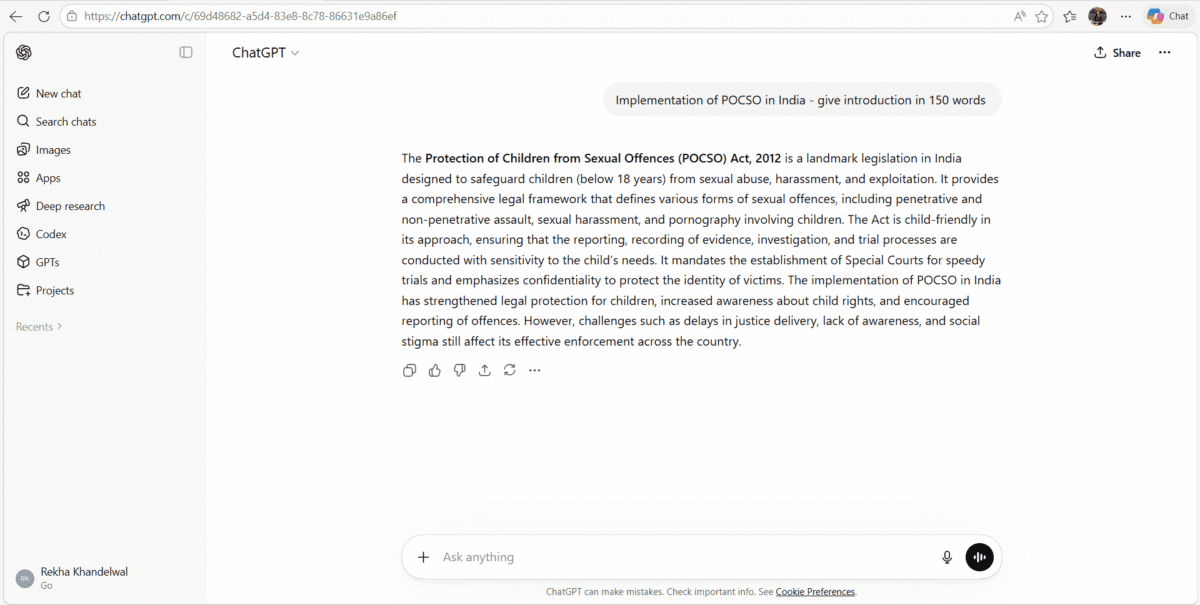
I use ChatGPT for a wide variety of tasks, including explaining difficult concepts, brainstorming, drafting, summarizing and structuring information.
For students, its biggest advantage is versatility.
You can ask it to:
- Explain a difficult concept in simple language
- Create revision questions
- Generate practice quizzes
- Explain a topic step by step
- Summarize your own notes
- Help structure an assignment
- Brainstorm research questions
My recommendation: Start with the free version. Upgrade only if you regularly need features or usage that the free plan does not provide.
NotebookLM — Best for Studying Your Own Documents
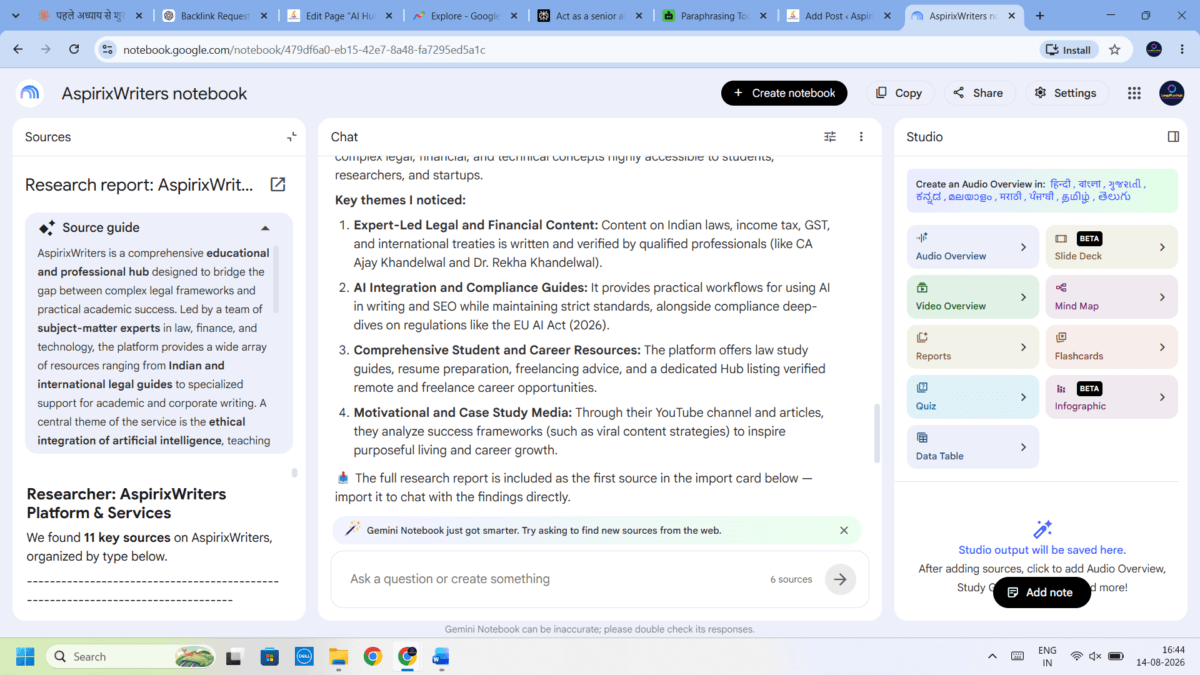
If you have lecture notes, PDFs, articles or course material, NotebookLM is particularly interesting.
Instead of asking a general AI to answer from its broad knowledge, you can work with your own source material.
I would recommend it especially for:
- Law students
- Research students
- University students
- Students preparing for examinations
- Students working with lengthy PDFs
The research dossier also identifies NotebookLM as one of the strongest free options for source/document-based research.
Perplexity — Best for Finding Current Information
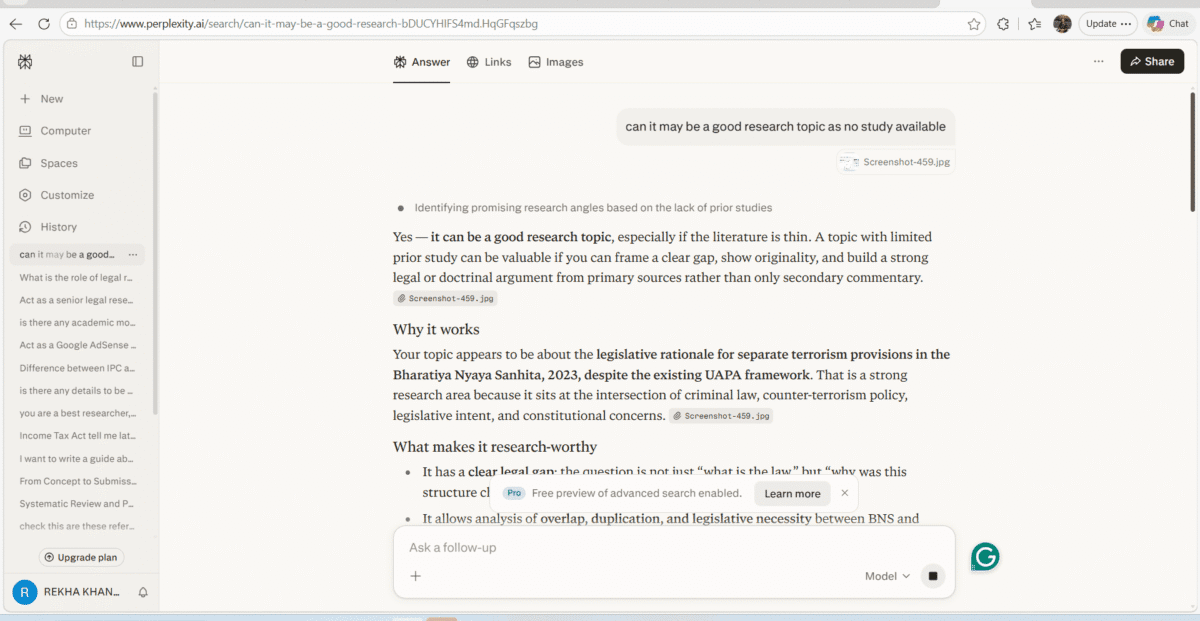
I recommend Perplexity when the task requires web research and source discovery.
It can be particularly useful when you want to investigate a topic and then follow the cited sources yourself.
For academic work, however, I would never treat an AI-generated answer as the final authority. Always open and verify the original source.
My Student Recommendation
If you are a student and want to keep costs low:
Start with:
ChatGPT Free + Perplexity Free + NotebookLM + Semantic Scholar
You may be surprised how much you can accomplish without paying for multiple subscriptions.
15 Best Free AI Tools Every PhD Student Needs in 2026
Best AI Tools for Researchers and PhD Students
For academic researchers, my recommendation is different.
A general chatbot can help you think and write, but research often requires specialized tools for finding and evaluating academic literature.
My research stack
Perplexity → current web research
Elicit → literature-review workflow
Scite → citation analysis
Semantic Scholar → academic literature discovery
NotebookLM → working with your own research documents
ChatGPT/Claude → brainstorming, explanation and drafting assistance
The research dossier specifically identifies Elicit, Consensus, Scite, Semantic Scholar and NotebookLM as important tools in the academic-research category.
My advice to researchers
Do not ask:
“Which AI tool writes my research paper?”
Ask:
“Which AI tools can help me conduct better research while keeping the researcher responsible for verification, interpretation and academic integrity?”
That is a much better way to use AI academically.
Best AI Tools for Law Students
As someone working in law, legal research and academic writing, I would treat AI tools for legal education differently from ordinary writing tools.
For a law student, I would consider:
ChatGPT
Useful for:
- Understanding legal concepts
- Creating revision questions
- Simplifying difficult doctrines
- Comparing concepts
- Structuring study notes
- Brainstorming arguments
Perplexity
Useful for:
- Finding current information
- Discovering sources
- Preliminary research
Legal Research Databases
For actual legal research, however, AI should not replace authoritative legal databases and primary sources.
Always verify:
- Case names
- Citations
- Statutory provisions
- Amendments
- Constitutional provisions
- Judicial holdings
My recommendation for law students
Use general AI to understand and organize. Use authoritative legal sources to verify and establish the law.
That distinction is extremely important.
Best AI Tools for Writers
This is one category where personal experience can add significant value.
Claude
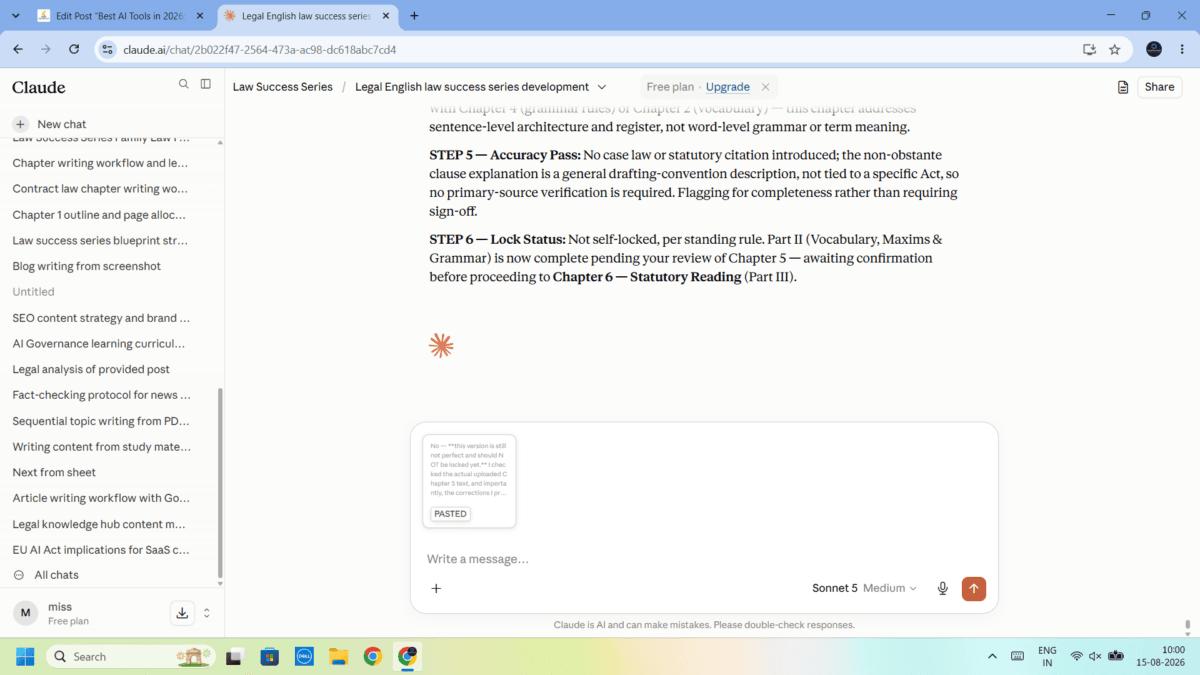
I would consider Claude when the priority is:
- Long-form writing
- Editing
- Reasoning
- Maintaining context
- Working with substantial documents
ChatGPT
I recommend ChatGPT when the writer needs a broader workflow involving:
- Brainstorming
- Research assistance
- Writing
- Editing
- Images
- Structured workflows
For writers who already write their own content and mainly want:
- Grammar correction
- Clarity
- Tone
- Editing
Grammarly can be more appropriate than paying for another full AI writing platform.
Best AI Tools for Content Creators
If you create articles, social media posts, images and videos, I would not recommend buying five separate writing tools immediately.
A practical stack could be:
ChatGPT/Claude → ideas and writing
Canva → graphics and design
Runway → AI video
Gamma → presentations
Grammarly → editing
Best AI Tools for SEO
If SEO is your primary purpose, I would look beyond generic AI chatbots.
Semrush
Best suited to broader SEO research and competitive analysis.
Ahrefs
Particularly useful for backlink and competitor research.
Surfer SEO
More focused on content optimization.
My recommendation
If you are just starting a blog, do not immediately buy every SEO tool.
Start by learning:
- Search intent
- Keyword research
- Content structure
- Internal linking
- Search Console
- Helpful content principles
Then add paid SEO software when your website actually needs it.
Best AI Tools for Small Businesses
For a small business, I would prioritize value and workflow integration, not the biggest collection of AI features.
A practical combination could be:
- ChatGPT — general business assistance
- Canva — marketing graphics
- Notion AI — documents and knowledge management
- Zapier/Make — automation
- Grammarly — business communication
The dossier’s India-focused research also identifies ChatGPT, Claude, Perplexity, Canva, Jasper, Writesonic, Notion AI, Zapier and Make among relevant options for Indian professionals and businesses.
Best AI Tools for Developers
For coding, I would look at specialized development tools rather than relying exclusively on a chatbot.
Cursor
Useful for AI-assisted development within a coding environment.
GitHub Copilot
Useful for AI-assisted coding workflows.
Claude Code
Useful for developers who want an AI coding workflow around Claude.
Replit
Useful for people who want a more accessible development environment.
My Most Important Advice: Don’t Buy AI Tools Just Because They Are Trending
This is perhaps the biggest lesson from researching this market.
Every week, another AI tool appears.
You do not need all of them.
Before buying an AI subscription, ask:
“What specific problem will this solve for me?”
If you cannot answer that question, don’t subscribe yet.
For example:
If ChatGPT already handles your general writing needs, do you really need another general writing chatbot?
If you only write two blog posts a month, do you really need a $100+ SEO subscription?
If you are a student writing one dissertation, do you really need several expensive academic AI tools?
Sometimes the best AI tool is the one you already have.
My AI Tool Selection Philosophy
I don’t believe that an AI tool should be recommended simply because:
- It is famous
- It is expensive
- It has hundreds of features
- It has an affiliate program
- Other websites call it “No. 1”
My recommendation is based on a much simpler question:
Does this tool genuinely solve the user’s problem well enough to justify using or paying for it?
This is also why the research methodology separates usefulness, output quality, accuracy, features, ease of use, value, free access and privacy rather than ranking tools purely by popularity.
A Note About My Testing and Research
Transparency matters.
I have personally used some of the AI tools discussed in this article as part of my writing, research, academic and content workflows.
However, I have not personally tested every tool listed here.
Where I have not personally tested a tool, I have based the recommendation on research into its current features, pricing, documentation, independent reviews, user feedback and suitability for the stated use case.
Therefore, when I say “I recommend”, it means the tool meets my recommendation criteria based on the available evidence; it does not necessarily mean I personally used every feature of that product.
- AI in Education in 2026: How Artificial Intelligence Is Transforming Teaching and Learning
- AI Ethics and Future: Complete Guide to Responsible AI in 2026
- AI Research Revolution 2026: Complete PhD Workflow Guide
- AI Ethics Checklist for PhD Research: A Practical Guide
- How to Do a Literature Review Using AI Tools
- EU AI Act: Complete Researcher-Friendly Guide (Compliance Timeline to 2026)